

‘It’s not our approach’: Walmart COO says digital shelf labels aren’t for surge pricing
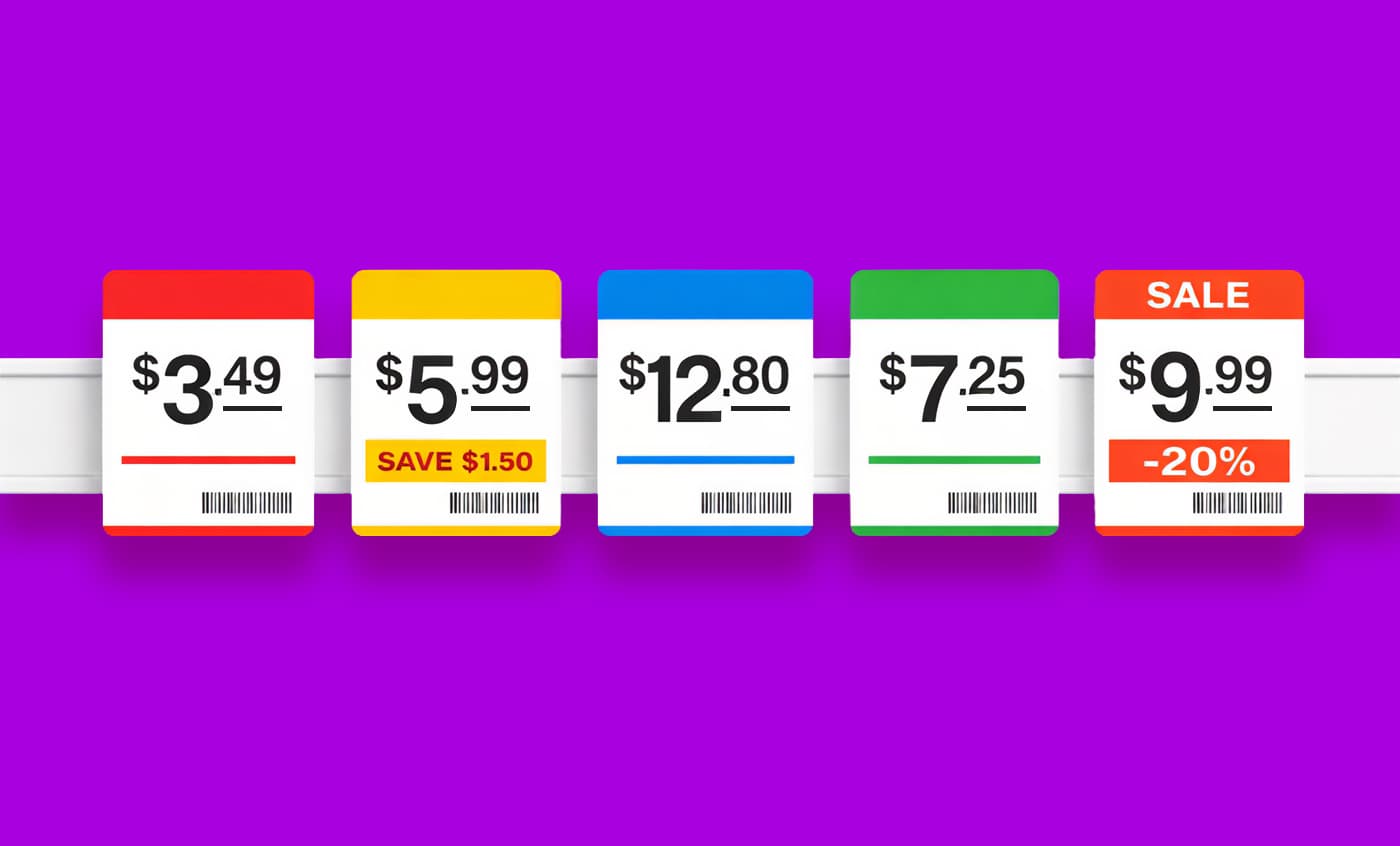
As digital price tags have gained more prominence over the last few years, some shoppers and legislators have feared they would lead to "dynamic pricing," charging customers different prices based on the timing of their purchase or, worse, their individual data.
Source Lens
Industry Context
Useful background context, but lower-priority than direct platform, community, or operator intelligence.
Impact Level
medium
Use this briefing to decide whether your team needs an immediate workflow, policy, or reporting change.
Key Stat / Trigger
No single quantitative trigger surfaced in this report.
Focus on the operational implication, not just the headline.
Full Coverage
Store of the Future // June 9, 2026 ‘It’s not our approach’: Walmart COO says digital shelf labels aren’t for surge pricing By Mitchell Parton As digital price tags have gained prominence over the last few years, some shoppers and legislators have feared they would lead to “dynamic pricing,” charging customers different prices based on the timing of their purchase or, worse, their individual data.
Walmart plans to roll out digital shelf labels to all its U. S. stores by the end of this year, according to CNBC. The small devices sit near each product on the shelf with all the information you’d expect on a paper price tag, such as the current price, previous price and price per unit.
They also have a small light that employees can activate to flash when they are looking for a specific item. At Walmart’s Associates Week and shareholder meeting in Bentonville, Arkansas last week, the company gave reporters about 15 minutes to ask Walmart U. S. chief operating officer Kieran Shanahan specifically about these concerns.
One reporter asked whether Walmart is using digital shelf labels to better position it to price certain SKUs differently in different places or different situations. “No,” Shanahan said. “We have a principle of everyday low price; we’ve had that since the company was started.”
“The things you just described, the [digital shelf label] has no bearing on any of that,” Shanahan added. “We don’t typically do the things you just described. Never is a long time, so I’m loath to say never, but we don’t do that as a policy. It’s not our approach, and we want to have consistent prices that build trust with customers.”
Another reporter read a statement from the website of the United Food and Commercial Workers International Union, which does not represent Walmart workers but other grocery employees. “Behind these screens is a concerning reality,” the statement reads. “With the help of AI, ESL systems can collect your personal information.
With access to your information, grocery giants can introduce ‘surveillance pricing’ or charging different customers different prices based on who they are.” Shanahan responded, saying that he’s not aware of any way the labels at Walmart could do that. “They’re absolutely not collecting people’s personal information,” he said.
“To be clear on the other aspects of that around surveillance or the types of pricing, I’m not entirely familiar with exactly what that would entail. But to charge one customer one price and another customer another price, I’ve never seen us do that.” He said that would be incredibly difficult to accomplish in stores.
“If you and I stood next to each other looking at the bottled water, I don’t know how [Walmart] would distinguish between us to say, ‘You’re gonna see one price, and I’ll see another,’ so I don’t know how practically you would even do that.” “That’s not who we are,” he added.
“It’s not how we price, it’s not how we’ve worked, certainly not anything I’ve seen us do in the time I’ve been here — and I don’t see any plans or anything afoot that’s going to change that.”
Kroger, for its part, was criticized by senators Elizabeth Warren of Massachusetts and Bob Casey of Pennsylvania in fall 2024 for a partnership with Microsoft to install cameras in grocery aisles and to offer personalized deals based on shoppers’ gender and age, according to the Associated Press.
Kroger told the AP that the labels were not connected to facial recognition technology and that it did not surge prices based on demand. A Maryland law is set to ban dynamic pricing in grocery stores in that state in October.
It specifically prohibits retailers from using dynamic pricing to set higher prices on tax-exempt groceries, defining “dynamic pricing” as the practice of setting a personalized price for a specific consumer based on their personal data. It still allows grocers to use electronic shelf labels and make multiple price changes a day.
Connecticut passed a similar bill last week, and another is awaiting action by the governor of New York, Grocery Dive reported. Still, Shanahan said Walmart’s prices can, of course, go up and down depending on different factors, and that the digital shelf labels are meant to speed up the process of new prices appearing on the shelf.
“I did it as an associate, when I was an hourly associate,” Shanahan said, describing how a store may get 2,000-3,000 price changes, forcing employees to change out paper labels one by one. “It’s a lot of work to go out and change out the labels. We want our prices to be accurate. We want to build trust with custom
Original Source
This briefing is based on reporting from Modern Retail. Use the original post for full primary-source context.
Style
Audience