

The State Department is processing trucker Visa apps again
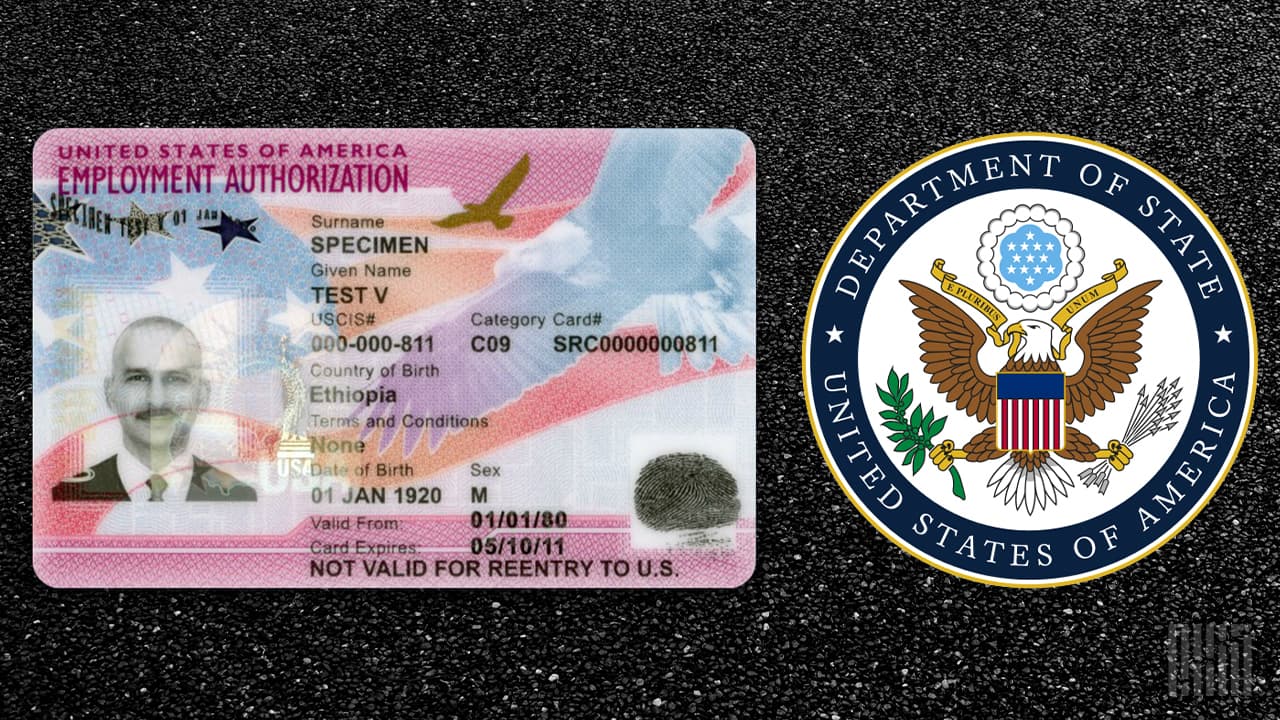
The State Department resumed processing commercial truck driver visa applications on April 23, 2026, under stricter standards requiring English proficiency, valid CDLs, and verified safe driving history. This follows an 8-month regulatory overhaul after fatal crashes involving foreign drivers with unverified backgrounds.
Tighter trucking regulations could reduce driver availability and increase freight costs, hitting sellers with higher shipping expenses and longer transit times. Monitor your inbound freight costs and consider locking in shipping contracts before capacity tightens further.
This reflects broader supply chain tightening as regulatory shifts prioritize security over efficiency, potentially adding margin pressure across ecommerce fulfillment networks.
Review your freight spend reports in Seller Central or vendor portals -- if trucking costs rise 10%+, negotiate longer-term shipping contracts now.
Build 2-3 extra days into your inventory replenishment timelines to account for potential driver shortages affecting delivery schedules.
Bottom Line
Stricter trucker visa rules mean higher shipping costs for sellers.
Source Lens
Industry Context
Useful background context, but lower-priority than direct platform, community, or operator intelligence.
Impact Level
medium
Stricter trucker visa rules mean higher shipping costs for sellers.
Key Stat / Trigger
8-month regulatory overhaul period
Focus on the operational implication, not just the headline.
Full Coverage
On April 23, a State Department spokesperson confirmed on background that the Trump administration is processing commercial truck driver visa applications again, this time under stricter standards than the system that existed before eight months of regulatory overhaul forced a fundamental change to how foreign nationals obtain commercial driver’s licenses in the United States.
The Trump Administration is protecting Americans by preventing the entry of individuals who pose a threat to U. S. national security or public safety, including those who threaten safety on America’s roads.
As part of a coordinated policy, the Department of State is thoroughly vetting and applying strict standards to every visa applicant seeking to operate a commercial truck in the United States, including ensuring applicants have sufficient English language skills, a valid U. S. -issued or U. S.
-recognized CDL or the ability to obtain one, and a prior history of safe commercial truck operation. That confirmation emphasizes eight months of the most aggressive overhaul of the non-domiciled CDL system since the credential category was created. To understand what was fixed, you need to understand what was broken, and it had been broken for a long time.
Every American CDL holder is tracked through the Commercial Driver’s License Information System, which captures violations, crashes, disqualifications, and out-of-service orders across all fifty states. When a carrier runs a background check, when a state issues a renewal, when a roadside inspector runs a license check, that history is there.
It is the backbone of driver accountability in American commercial transportation. For foreign nationals holding non-domiciled CDLs, none of that existed. A driver could arrive in the United States, present an Employment Authorization Document to a state DMV, and walk out with a Class A CDL. The EAD confirmed work authorization.
It said nothing about whether that driver had a history of crashes, DUI convictions, license suspensions, or disqualifications in their home country. States had no mechanism to check because there is no international equivalent of CDLIS. The federal government knew it.
Transportation Secretary Sean Duffy said so plainly when the final rule was announced on February 11, 2026. “For far too long, America has allowed dangerous foreign drivers to abuse our truck licensing systems, wreaking havoc on our roadways. This safety loophole ends today.”
FMCSA Administrator Derek Barrs added that “a critical safety gap allowed unqualified drivers with unknown driving histories to get behind the wheel of commercial vehicles” and that “if we cannot verify your safe driving history, you cannot hold a CDL in this country.” The crashes that made the political cost of inaction too high came in a cluster.
The official FMCSA record documents four fatal incidents in 2025 involving non-domiciled CDL holders who would be ineligible under the new rules. A February 14 multi-vehicle crash inside an I-80 tunnel in Wyoming killed three and injured 20. An August 12 illegal U-turn on the Florida Turnpike killed three more.
An October 21 California highway collision involving eight vehicles killed three people. A December 3 collision with a train at a marked crossing in Ontario, California, killed a crew member. The August Florida crash was the political trigger.
Secretary of State Marco Rubio announced an immediate pause on the issuance of commercial truck driver visas within days. Six weeks after that pause, FMCSA issued an emergency interim final rule. The agency’s own release described a nationwide audit that revealed widespread non-compliance among state driver licensing agencies.
The rule closed the EAD pathway entirely and limited eligibility to holders of H-2A, H-2B, and E-2 visas, classifications that require consular vetting and interagency screening. The interim rule was stayed by the D. C. Circuit while legal challenges proceeded.
The administration completed the full federal rulemaking process and published the final rule in the Federal Register on February 13, 2026, effective March 16. The FMCSA press release stated that the nationwide audit exposed systemic non-compliance in more than 30 states, which had been illegally issuing tens of thousands of licenses to ineligible drivers.
Twenty-eight states and jurisdictions were placed under special enforcement orders. The final rule added mandatory SAVE verification, requiring states to query the Systematic Alien Verification for Entitlements system to confirm every applicant’s lawful immigration status before issuing a credential.
The FMCSA issued North Dakota a December 11 letter of a preliminary determination of noncompliance based on a sample audit of 526 non-domiciled licenses. The state was told to fix the deficiencies or risk losing $34. 95 million in federal funds. Of the 526 credentials in the audit sample, approximately 150 met reissuance standards.
Robin Rehborg, NDDOT Deputy Director for Driver Safety, announced recertification on April 13. Non-domiciled CDL applicants must now complete all transactions in person, present an unexpired foreign passport and valid immigration documentation, and accept credentials valid for only 1 year.
The recertified states as of April 23 include South Dakota, Iowa, Texas, Delaware, Utah, Rhode Island, North Dakota, Minnesota, and New Jersey. The structural changes are real. The EAD loophole is closed. Consular screening is now the background check mechanism that the system never had.
Credentials expire with the driver’s authorized stay, rather than running for four-year terms, regardless of immigration status.
The administration identified a decades-old gap, documented it with crash data and audit findings, drafted a rulemaking that survived a federal court challenge, and forced 28 states through compliance reviews that exposed systemic failures. That is a record worth stating plainly. Or is it?
I’ve long emphasized the need for a federal commercial licensing program for Interstate CDL operators. Why? Well, because State management of commercial driver programs is more often than not an exercise in classic failure. The National Registry II program asked states to implement a basic digital upload feature for CDL medical self-certifications.
It gave them ten years. We are nearly a year from the implementation deadline, and there are still states that have needed extension after extension to complete what anyone building software in 2026 could work out in a morning. That is not an isolated example. It is the pattern.
The non-domiciled CDL audit found more than 30 states issuing credentials improperly. Some of those states had been doing it that way for years before federal auditors looked. Systemic problems in bureaucratic institutions do not get fixed by a corrective action plan and a press release.
They get fixed by sustained oversight, repeated audits, and consequences for backsliding. The initial audit created that pressure. Whether FMCSA maintains it after the political urgency fades is a different question. The administration closed a real gap. The new system is meaningfully better than what existed before.
The State Department confirmed the pathway is open and the standards are real. What is not confirmed is whether the states tasked with running that pathway every day, in every DMV office, with every applicant, have the institutional muscle to sustain what federal audit pressure forced them to fix.
The question many are asking is, “Why do we continue to participate in trial-and-error programs with US highway safety?” The post The State Department is processing trucker Visa apps again appeared first on FreightWaves.
Original Source
This briefing is based on reporting from Freightwaves. Use the original post for full primary-source context.
Style
Audience