

Ocean rates weaker after tariff-driven peak season
Fuel prices climb anew as U.S., Iran battle over Strait of Hormuz, but near-term outlook for tariff pressures uncertain ahead of midterm elections. The post Ocean rates weaker after tariff-driven peak season appeared first on FreightWaves.
Source Lens
Industry Context
Useful background context, but lower-priority than direct platform, community, or operator intelligence.
Impact Level
medium
Use this briefing to decide whether your team needs an immediate workflow, policy, or reporting change.
Key Stat / Trigger
No single quantitative trigger surfaced in this report.
Focus on the operational implication, not just the headline.
Full Coverage
A post-peak season calm for the global container market is anything but amid a hot war in the Middle East and geopolitical uncertainty where expected tariff pressures may cool off ahead of the midterm elections. Ocean rates fell 6% on the benchmark Asia-U. S.
West Coast route to $7,067 per forty foot equivalent unit (FEU) for the week ending July 17, according to the Baltic Index compiled by SONAR data input platform Freightos (NASDAQ: CRGO). Asia-U. S. East Coast prices were unchanged at $9,102 per FEU. “The U. S.
and Iran have traded strikes for 10 days straight, with Iranian actions also targeting neighbor states and area vessels, and missile attacks reaching as far as US positions in Jordan,” where the U. S. suffered casualties, said Freightos Analyst Judah Levine, in a weekly update.
“Traffic through the Strait of Hormuz has again slowed to a trickle, and the conflict has now extended to the Bab el-Mandab strait [at the south end of the Red Sea] as well.”
A 2022 ceasefire between Saudi Arabia and Yemen-based Houthi rebels was tested earlier this week when the Saudis turned their weapons on Sanaa’s capital airport, preventing the landing of a flight from Iran.
The Houthis in response said the Red Sea is closed to Saudi-linked vessels and ships calling at Saudi ports, though it is unclear how they will enforce the blockade. window. googletag = window. googletag || {cmd: []}; googletag. cmd. push(function() {googletag.
defineSlot('/21776187881/FW-Responsive-Main_Content-Slot1', [[300, 100], [320, 50], [728, 90], [468, 60]], 'div-gpt-ad-1709668545404-0'). defineSizeMapping(gptSizeMaps. banner1). addService(googletag. pubads()); googletag. pubads(). enableSingleRequest(); googletag. pubads(). collapseEmptyDivs(); googletag. enableServices(); }); googletag. cmd.
push(function() {googletag. display('div-gpt-ad-1709668545404-0'); }); A number of feeder vessels headed in the area were observed on GPS altering their voyages after the Houthi announcement.
The Houthi blockade could have a significant impact on container shipping supply/demand globally if Asia-Saudi cargo now has to be shipped around Africa, said analyst Lars Jensen, as Asia-Mediterranean services will see substantial demand pressure.
The recent events could also force Maersk (OTC: AMKBY) and CMA CGM to alter new plans to resume scheduled services through the Red Sea, including calls at Saudi Arabia.
At the same time, the Saudis have diverted a significant share of pre-war oil flows away from the Strait of Hormuz via pipelines reaching Jeddah port in the Red Sea, Levine said, where volumes continue on by tankers passing Yemen on their way east.
Global crude oil prices are up 20% since weakening in early July, and bunker prices have risen 12%, erasing more than a month of decline, Levine said. One wild card: 50% tariffs on Canada announced by President Trump. Some analysts speculate that Ottawa could retaliate with tariffs on crude exports, which could raise prices at the pump for Americans since U.
S. refiners are set up for Canada’s heavy crude, and not the light sweet intermediary extracted in west Texas. “But even with fuel prices rising, container rates are easing – slightly – for the first time since April, as carriers add capacity to some lanes and an early unwind from an early peak season begins,” said Levine.
Spot rates declined slightly across the major east-west lanes with Asia-North America East Coast prices staying level, defying significant general rate increases and peak season surcharges set to take effect July 15. window. googletag = window. googletag || {cmd: []}; googletag. cmd. push(function() {googletag.
defineSlot('/21776187881/fw-responsive-main_content-slot3', [[728, 90], [468, 60], [320, 50], [300, 100]], 'div-gpt-ad-1665767553440-0'). defineSizeMapping(gptSizeMaps. banner1). addService(googletag. pubads()); googletag. pubads(). enableSingleRequest(); googletag. pubads(). collapseEmptyDivs(); googletag. enableServices(); }); googletag. cmd.
push(function() {googletag. display('div-gpt-ad-1665767553440-0'); }); “Daily rates so far this week show West Coast and Asia- Mediterranean prices continuing to slide,” Levine wrote. “That carriers decided against the mid-month hikes suggest that recent projections of cooling demand after a red hot, frontloaded, June and early July may be playing out now.”
Falling rates coincide with the arrival of extra ships sent to Far East hubs by carriers to accommodate surging demand. “The capacity aspect may explain the slight discrepancy between trans-Pacific West and East Coast rates, as more vessels were added to West Coast services,” said Levine.
Port congestion in Asia is also absorbing capacity, mitigating the downward pressure on spot rates. Surging volumes that spurred delays at major origin ports have worsened due to bad weather, including last week’s Typhoon Bavi.
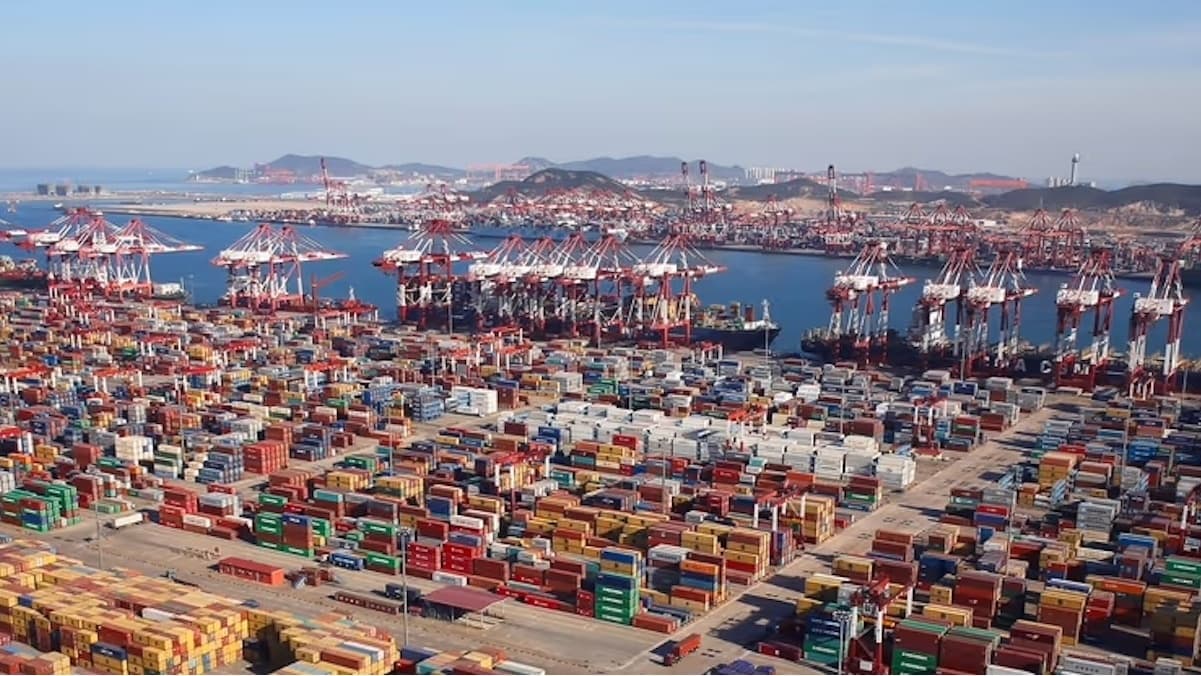
Levine said that the storm temporarily shut down several major ports, leading to serious vessel bunching in Shanghai and Ningbo, and multi-day waits in Qingdao,
Original Source
This briefing is based on reporting from Freightwaves. Use the original post for full primary-source context.
Style
Audience