

AI shifts from planning to execution as manufacturers confront tariff uncertainty
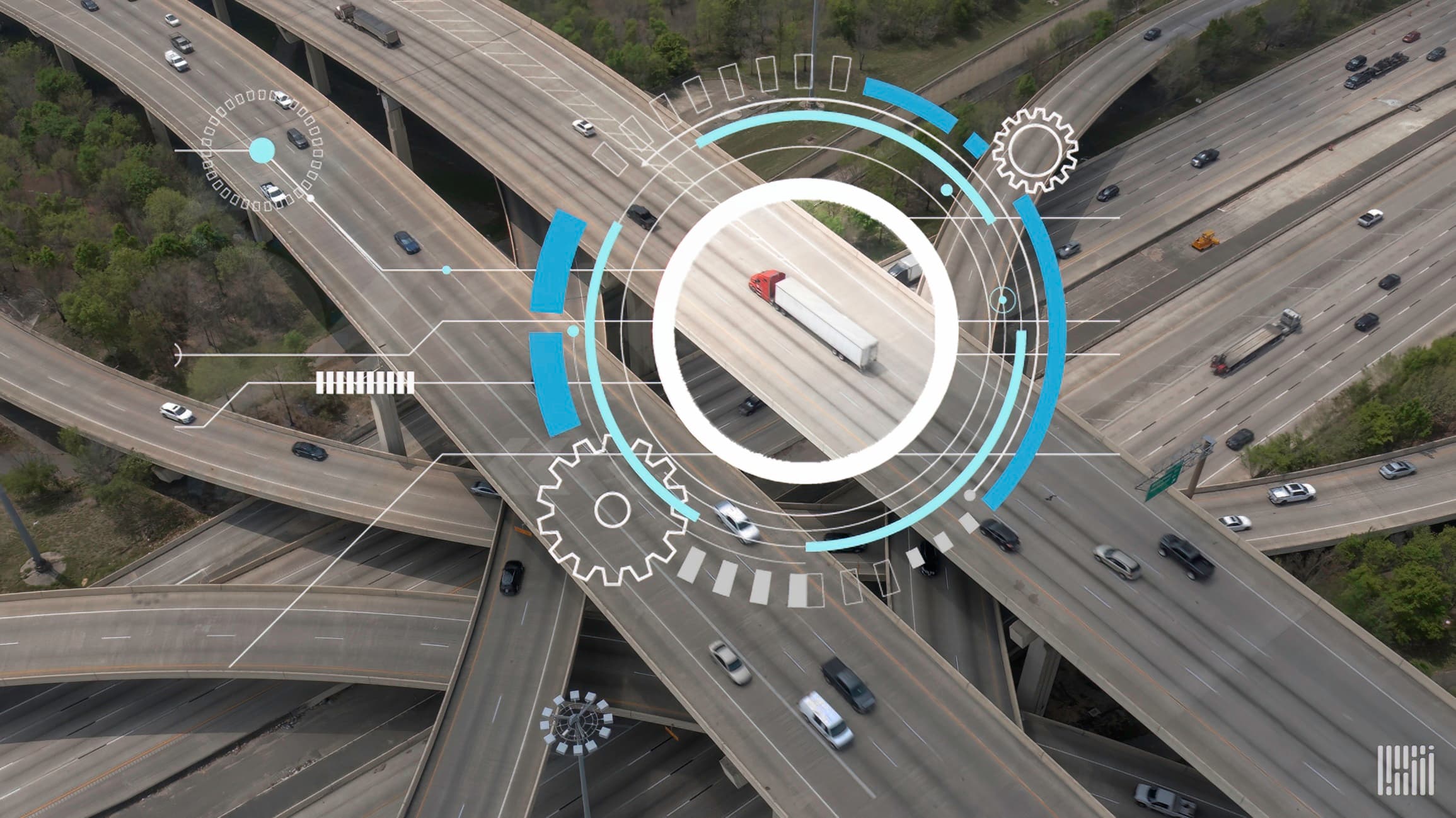
Kinaxis says manufacturers are increasingly relying on AI-powered supply chain orchestration to evaluate tariffs, nearshoring strategies and sourcing decisions. The post AI shifts from planning to execution as manufacturers confront tariff uncertainty appeared first on FreightWaves.
Source Lens
Industry Context
Useful background context, but lower-priority than direct platform, community, or operator intelligence.
Impact Level
medium
Use this briefing to decide whether your team needs an immediate workflow, policy, or reporting change.
Key Stat / Trigger
No single quantitative trigger surfaced in this report.
Focus on the operational implication, not just the headline.
Full Coverage
As tariffs, geopolitical tensions and shifting trade policies continue to reshape global manufacturing, companies are increasingly turning to artificial intelligence to evaluate sourcing decisions before disruptions ripple through their supply chains, according to executives at supply chain software provider Kinaxis.
During a recent interview with FreightWaves, Fabrizio Brasca, senior vice president of market strategy at Ottawa-based Kinaxis, said manufacturers are moving beyond traditional supply chain planning and embracing AI-powered supply chain orchestration to better understand the downstream impacts of business decisions.
“Tariffs and trade disruptions create consequences that extend far beyond sourcing,” Brasca said. “A change in supplier location can affect inventory levels, factory schedules, logistics costs, customer commitments and profitability across the network.”
Kinaxis is a supply chain orchestration, powering complex global supply chains, and supporting the people who manage them window. googletag = window. googletag || {cmd: []}; googletag. cmd. push(function() {googletag. defineSlot('/21776187881/FW-Responsive-Main_Content-Slot1', [[300, 100], [320, 50], [728, 90], [468, 60]], 'div-gpt-ad-1709668545404-0').
defineSizeMapping(gptSizeMaps. banner1). addService(googletag. pubads()); googletag. pubads(). enableSingleRequest(); googletag. pubads(). collapseEmptyDivs(); googletag. enableServices(); }); googletag. cmd. push(function() {googletag.
display('div-gpt-ad-1709668545404-0'); }); On Monday, President Donald Trump announced a new 50% tariff on certain Canadian goods, responding to Canada’s retaliatory trade policies. Meanwhile, the administration is levying a 25% tariff on Brazilian imports and pursuing global investigations that could impose 10% to 12.
5% tariffs on 60 economies, including China and the European Union. Rather than relying on multiple departments to evaluate sourcing changes over days or weeks, Kinaxis’ Maestro platform allows manufacturers to compare multiple scenarios simultaneously, including alternative suppliers, transportation options, production plans and inventory strategies.
“The value isn’t simply making decisions faster,” Brasca said. “It’s helping organizations understand the full business implications of a decision and move confidently from decision to outcome.”
Related: AI booking agent aims to give freight brokers an ‘Iron Man suit’ Nearshoring adds complexity Brasca said manufacturers pursuing nearshoring and “China-plus-one” sourcing strategies are facing increasingly complex planning decisions that extend well beyond labor costs.
Companies now must weigh tariffs, transportation expenses, supplier risk, lead times, inventory requirements and geopolitical considerations while balancing service levels and overall supply chain resilience. Using Maestro, customers can model sourcing alternatives across the U. S.
, Mexico and Canada before making operational changes, allowing them to evaluate the tradeoffs between cost, service and resilience, according to Brasca. “What we”re seeing is a shift from supply chains optimized solely for efficiency to supply chains designed for resilience,” Brasca said.
“Companies want greater flexibility and optionality so they can adapt as conditions change.” window. googletag = window. googletag || {cmd: []}; googletag. cmd. push(function() {googletag. defineSlot('/21776187881/fw-responsive-main_content-slot3', [[728, 90], [468, 60], [320, 50], [300, 100]], 'div-gpt-ad-1665767553440-0'). defineSizeMapping(gptSizeMaps.
banner1). addService(googletag. pubads()); googletag. pubads(). enableSingleRequest(); googletag. pubads(). collapseEmptyDivs(); googletag. enableServices(); }); googletag. cmd. push(function() {googletag.
display('div-gpt-ad-1665767553440-0'); }); Faster decisions, lower costs Brasca said manufacturers adopting Maestro typically see measurable improvements within the first year, including lower inventory levels, improved customer service and faster responses to disruptions.
Better coordination across planning functions also helps companies reduce expedited freight, last-minute operational changes and other logistics inefficiencies. “Organizations also see faster response times to disruptions,” Brasca said.
“Instead of reacting after the fact, teams can evaluate trade-offs in real time and take action sooner, helping protect both revenue and customer experience.”
AI supports planners—not replaces them While agentic AI has become one of the hottest topics in enterprise software, Brasca said Kinaxis views AI as a tool that broadens access to supply chain intelligence rather than replacing planners.
Maestro Agent Studio helps employees beyond traditional supply chain teams to analyze scenarios, evaluate sourcing alternatives, assess tariff impacts and respond to disruptions using the same underlying planning data. window. googletag = window. googletag || {cmd: []}; googletag. cmd. push(function() {googletag. defineSlot('/21776187881/fw-responsive-main_
Original Source
This briefing is based on reporting from Freightwaves. Use the original post for full primary-source context.
Style
Audience