Cargo thieves are ‘laundering freight’ through the supply chain, Cornell warns
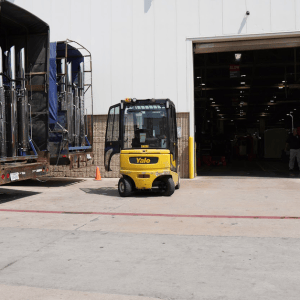
Cargo theft rings are 'laundering freight' by swapping shipping documents across cross-docks and warehouses, moving stolen goods into legitimate commerce — sometimes reaching overseas markets within days of theft. Sellers on Amazon, Walmart, and Target are potential downstream buyers of laundered inventory without knowing it.
Cargo fraud is a growing compliance risk for marketplace sellers, especially as counterfeit and gray-market enforcement tightens on Amazon and Walmart — sourcing from compromised suppliers could trigger IP complaints, account flags, or law enforcement action.
Brands sourcing from secondary wholesalers or liquidators face real exposure to receiving stolen inventory, which creates legal liability and account suspension risk if flagged by rights holders or law enforcement. Audit your supplier chain now — any vendor offering steep discounts with vague provenance documentation is a red flag.
Operational Impact
This story may require teams to revisit workflows, monitoring, or platform assumptions.
Bottom Line
Laundered stolen freight is entering legitimate supply chains — sellers may be buying stolen goods.
Source Lens
Industry Context
Useful background context, but lower-priority than direct platform, community, or operator intelligence.
Impact Level
medium
Laundered stolen freight is entering legitimate supply chains — sellers may be buying stolen goods.
Key Stat / Trigger
Stolen headphones began pinging in Europe within one week of theft
Focus on the operational implication, not just the headline.
Full Coverage
Cargo thieves can steal a load, change its identity on paper and move it back into legitimate commerce. Scott Cornell, EVP, Crime and Theft Specialist at SPG Cargo & Logistics and chair of TAPA Americas, describes the process as “laundering freight.”
Cross-docks, warehouses, even a parking lot or side street where a load can be transferred, and replacement shipping documents can help disguise where merchandise originated. In some cases, those products can reach overseas markets within days. Cornell worked a case involving a popular headphone brand that showed how quickly stolen merchandise can move.
About one week after the theft, the devices began pinging in Europe. That timeline suggested little room between the initial crime and international movement. “They stole it, took it right to the port,” Cornell explained. A warehouse could also provide another stop before products enter a container.
Workers can transfer merchandise, create different paperwork and apply another seal. Each move creates additional distance from the original shipment. Once documentation changes, identifying stolen goods becomes increasingly difficult. ‘They’re laundering freight’ Cornell used a hypothetical load of televisions to explain how criminals can disguise cargo.
Thieves could move televisions through a cross-dock and create another bill of lading. The new paperwork might describe those products simply as electronics. Another transfer could eventually identify the shipment as FAK, or freight of all kinds. “You have a new bill of lading,” Cornell said. “All the players on the transaction have been changed.”
A new bolt seal adds another barrier to inspection. That combination can make stolen merchandise appear legitimate during later movements. Cornell sees a major weakness in that system. Transportation companies continue investing in technology, yet paper documents still carry enormous authority. “Bill of lading and bolt seal trump it all,” he said.
Criminals can exploit that trust after changing shipment information. Cornell has also encountered warehouses where stolen merchandise moved through sophisticated operations. Some groups prepared products for export while simultaneously filling online orders. “They’re hiding in plain sight in a lot of these cases,” he said.
“It’s kind of a shadow economy that operates within the supply chain.” When the average person thinks of this kind of theft activity they often picture a dark grungy warehouse in an offbeat location. But more often than not it’s just the opposite. They’re right in the thick of the transportation areas in a warehouse surrounded by similar businesses.
Buyers may never know Not every business purchasing those products necessarily knows their origin, according to Cornell. Repeated transfers can make an illicit shipment appear increasingly legitimate. Professional websites and clean paperwork can strengthen that appearance. Overseas buyers may eventually believe they are dealing with an ordinary supplier.
“You could literally think that you’re dealing with a legitimate supplier,” Cornell said. That creates another challenge when investigators follow stolen property across borders. Criminal organizations can disguise merchandise before it reaches an unsuspecting retailer. The original theft may become difficult to recognize from the final transaction.
Cornell believes digital bills of lading could help close that gap. A scannable record could allow law enforcement to verify shipment information during a traffic stop. Changes to commodity descriptions could also create an auditable trail. Investigators could then determine who altered specific details during transit.
“This isn’t that hard to do with the technology,” Cornell said. The bigger challenge involves getting the entire supply chain onto compatible systems. He compared that transition with trucking’s move toward electronic logging devices. A phased requirement could eventually bring companies onto the same digital standard.
Why it matters Cargo theft does not end when a load disappears. Stolen freight can reenter legitimate commerce, making its origin harder to identify with every move. Click here for more articles on cargo theft and freight fraud by Phil Brink.
Feds charge semi-truck business owner in $105M investment fraud scheme – FreightWaves FBI’s Memphis Cargo Theft Task Force warns cyber schemes put millions in freight at risk – FreightWaves Federal indictments target nearly $600K in interstate cargo theft tied to Memphis – FreightWaves The post Cargo thieves are ‘laundering freight’ through the supply chain, Cornell warns appeared first on FreightWaves.
Audit all third-party or wholesale suppliers in your next 30 days: request original manufacturer invoices and chain-of-custody docs — if a supplier can't produce them, stop purchasing.
Set up Google Alerts or brand registry monitoring for your own SKUs appearing on overseas marketplaces — early pings can signal your product was stolen and relaundered.
Original Source
This briefing is based on reporting from Freightwaves. Use the original post for full primary-source context.
Style
Audience