

Will the end of DEF sensors mean a reduction in its consumption?
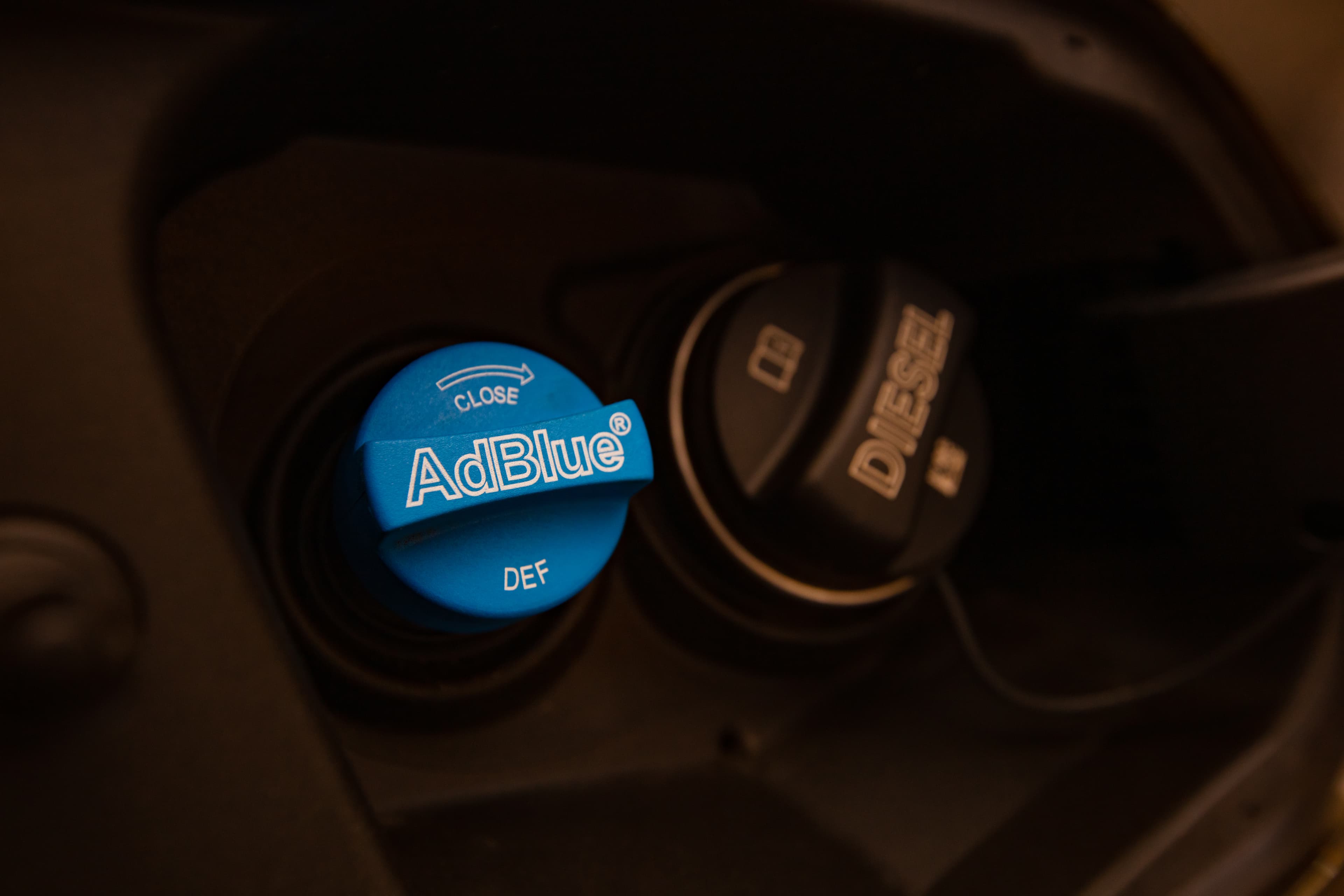
EPA allows trucks to deactivate DEF sensors that previously forced speed reductions when diesel exhaust fluid levels were low, effective late March 2026. Truckers can now skip DEF usage without automatic enforcement, though it remains legally required for post-2010 engines.
Freight costs could decrease if truckers skip DEF to save money, potentially improving shipping margins for sellers. However, long-term engine damage risks may eventually drive up transportation costs as truck maintenance increases.
Transportation deregulation continues as agencies balance environmental goals with operational costs, potentially creating short-term logistics savings before long-term price corrections.
Monitor shipping rate trends in Q2 2026 -- if freight costs drop 2-3%, negotiate longer-term shipping contracts to lock in savings.
Review logistics partnerships to identify carriers most likely to benefit from reduced DEF compliance costs.
Bottom Line
DEF sensor deactivation could reduce freight costs for sellers.
Source Lens
Industry Context
Useful background context, but lower-priority than direct platform, community, or operator intelligence.
Impact Level
medium
DEF sensor deactivation could reduce freight costs for sellers.
Key Stat / Trigger
Post-2010 model year engines still legally required to use DEF
Focus on the operational implication, not just the headline.
Full Coverage
If a truck driver wants to save a few bucks by running some of its miles without diesel exhaust fluid (DEF), it’s now going to be possible for that to occur without the prospect of regulatory “enforcement” provided by a DEF sensor slowing down the vehicle. But what are the other consequences if that money-saving route of reducing DEF consumption is chosen?
The Environmental Protection Agency (EPA) is allowing trucks and other diesel-fueled equipment like agricultural products to deactivate their DEF sensors, following a late March announcement by the agency.
DEF sensors have sort of a built-in enforcement mechanism to ensure that trucks were using a proper amount of DEF, in that after first notifying the drivers of issues with the DEF mix via a warning light, they would start to slow the truck’s speed after a certain number of miles are driven in that condition. window. googletag = window.
googletag || {cmd: []}; googletag. cmd. push(function() {googletag. defineSlot('/21776187881/FW-Responsive-Main_Content-Slot1', [[300, 100], [320, 50], [728, 90], [468, 60]], 'div-gpt-ad-1709668545404-0'). defineSizeMapping(gptSizeMaps. banner1). addService(googletag. pubads()); googletag. pubads(). enableSingleRequest(); googletag. pubads().
collapseEmptyDivs(); googletag. enableServices(); }); googletag. cmd. push(function() {googletag. display('div-gpt-ad-1709668545404-0'); }); The rule on the sensors does not change the requirement to use DEF for engines post-2010 model year. It also doesn’t change the fact that failing to use DEF can threaten a truck’s warranty. Can a driver go without it?
With the EPA permitting DEF sensors to be deactivated, driven primarily by concerns about wayward devices leaving drivers stuck on the side of the road (or out in the field for agricultural equipment), it raises the question: what if a driver just decides to drive without DEF, knowing that the sort of invisible enforcement capabilities of the DEF sensor no longer can impact them through what is known as a “derating,” the forced reduction in a truck’s speed?
Allan Schaeffer, who studies diesel engines and their efficiency as head of the Engine Technology Forum, said that such a decision, even if there was no immediate impact beyond saving a few dollars, could have negative consequences later.
“If you don’t put DEF in a system that’s designed for Selective Catalytic Reduction (SCR), you’re going to risk long-term damage to the vehicle,” Schaeffer told FreightWaves in a phone interview. The ETF has scheduled an April 20 online webinar to discuss the impacts of the recent EPA decision.
This looks like a good forum for #trucking on the recent EPA changes impacting #diesel emissions fluid (DEF) and the impact on Selective Catalyst Reduction systems. Lots going on there with recent EPA changes. The webinar is on April 20. pic. twitter.
com/cJeadiQdMi— John Kingston (@JohnHKingston) April 9, 2026 DEF is a water-urea mixture designed to reduce nitrogen oxide (NOx) emissions. The mixture splits the NOx molecules coming off an engine into atmospheric nitrogen and oxygen. It is generally about 32. 5% urea, which has wider use as a fertilizer.
Trucks also have a separate NOx sensor, which without DEF sensors will now be more on the front lines of notifying a driver that their vehicle is possibly in violation of NOx standards. A software fix, not hardware window. googletag = window. googletag || {cmd: []}; googletag. cmd. push(function() {googletag.
defineSlot('/21776187881/fw-responsive-main_content-slot3', [[728, 90], [468, 60], [320, 50], [300, 100]], 'div-gpt-ad-1665767553440-0'). defineSizeMapping(gptSizeMaps. banner1). addService(googletag. pubads()); googletag. pubads(). enableSingleRequest(); googletag. pubads(). collapseEmptyDivs(); googletag. enableServices(); }); googletag. cmd.
push(function() {googletag. display('div-gpt-ad-1665767553440-0'); }); The DEF sensor can be deactivated through a software fix, with the EPA specifically noting that software adjustments that might have been illegal previously are now permitted. It does not require the extraction of any equipment.
If there is evidence that a truck operated for any significant period of time without using DEF, “you’re going to have problems with any warranty claims you might present,” Schaeffer said. “You’re going to have problems with the trade-in.
And ultimately, the engine is not going to be a happy engine because DEF and SCR systems are not just something that’s bolted on.” Rather, Schaeffer said, they are “fully integrated into the entire engine.”
“If you believe that what EPA has done gives you the ability to skirt this requirement, you’re going to be a lot unhappier in the long run,” Schaeffer said. What if it’s just a little bit? But a theoretical economics model could envision DEF consumption declining as a result of the change, at least on the margin. window. googletag = window.
googletag || {cmd: []}; googletag. cmd. push(function() {googletag. defineSlot('/21776187881/fw-respons
Original Source
This briefing is based on reporting from Freightwaves. Use the original post for full primary-source context.
Style
Audience