A Virtual Compliance Department for Every Fleet
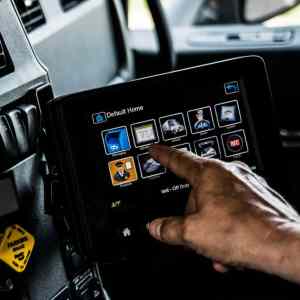
Dotra Compliance, an AI-driven platform built to serve as a carrier's "virtual compliance department," is helping small and midsize carriers close the gap between regulatory volume and in-house resources. Co-founder David Vincent explains why, after a Supreme Court ruling reshaped broker liability, a clean compliance record has become as important to winning freight as avoiding fines. The post A Virtual Compliance Department for Every Fleet appeared first on FreightWaves.
Source Lens
Industry Context
Useful background context, but lower-priority than direct platform, community, or operator intelligence.
Impact Level
medium
Use this briefing to decide whether your team needs an immediate workflow, policy, or reporting change.
Key Stat / Trigger
No single quantitative trigger surfaced in this report.
Focus on the operational implication, not just the headline.
Full Coverage
Ask carriers what’s changed about trucking compliance lately, and you’ll likely hear about the accumulation of new rules that change faster than most back offices can absorb them. David Vincent has had a front-row seat to that accumulation.
He’s co-founder of Visionary Ventures, the technology company that built and operates Dotra Compliance, a platform designed to serve as what Vincent calls a virtual compliance department. FreightWaves sat down with Vincent to talk through where carriers are losing ground and where a software layer can realistically help.
He laid out a picture of an industry squeezed from multiple directions at once, including a faster enforcement, a Supreme Court ruling that rewrote how brokers vet carriers, and a volume of paperwork that outpaces small compliance departments. The current compliance environment, Vincent says, feels more difficult than it used to because it is.
Carriers have been dealt a stretch of regulatory change that would challenge any safety department.
“In the last 18 months alone, carriers have absorbed English proficiency becoming an out-of-service violation, revoked ELDs, a non-domiciled CDL crackdown, a new FMCSA registration system and a Supreme Court ruling that changed how brokers choose carriers,” Vincent said.
None of that replaces the baseline workload that never stops, including medical cards, MVRs, testing, inspections, and filings. The disparity in who can absorb that load, according to Vincent, comes down to headcount rather than intent. “A large carrier has a safety department, while a 10-truck fleet has the owner,” Vincent said.
“The volume of change is the same for both, and that’s the gap we built Dotra to close.” The data backs up the sense that enforcement has intensified. Roadside inspections, Vincent says, fell to about 2. 6 million in 2020 and passed 3. 1 million in 2025, with more than 23. 5 percent of trucks inspected placed out of service.
Part of that climb is a pandemic-era rebound, but Vincent pointed to something more deliberate behind the numbers: “The bigger driver is policy, with enforcement focused on things that stop a truck on the spot, like English proficiency, revoked ELDs and driver qualification,” he said. What makes a violation expensive is rarely the citation itself.
“An out-of-service order parks a truck and a load,” Vincent said. “Violations feed safety scores, which brokers, shippers and insurers all screen on. And most carriers who get hurt aren’t cutting corners. They missed a date nobody was watching.” That last point has taken on new weight since May, when the U. S. Supreme Court ruled 9-0 in Montgomery v.
Caribe Transport II that freight brokers can be sued under state law for negligently selecting an unsafe carrier. Vincent says the ruling has changed what compliance is actually for: “It means compliance is now how you get loads, not just how you avoid fines.”
The carrier at the center of that case carried a conditional safety rating along with problems in driver qualification, hours of service, and maintenance, all things a broker could have checked. With the legal shield brokers used to lean on gone, Vincent says that buying behavior has already shifted. “Brokers are checking,” Vincent said.
“They’re asking for safety records and compliance documents before tendering freight, and they’ll pass on carriers who can’t produce them.” There’s no uniform definition yet of what “safe enough” means from a broker’s perspective, which Vincent says is part of the problem.
“The broker association has even asked FMCSA to write a federal standard for what a safe carrier looks like,” he said. “Until that exists, every broker sets their own bar, and a clean, documented compliance record is the surest way to clear it.” If brokers are screening harder, the next question is where carriers are most likely to come up short.
According to Vincent, it’s rarely a single document causing trouble. “Most carriers are struggling with the volume [of documents],” Vincent said. “Between driver files, medical cards, MVRs, testing records, inspections, registrations and filings, it’s hard to keep everything in order.
And even a carrier who does still has to remember to check what needs updating.” The items most likely to slip, Vincent says, are the ones without a built-in reminder, such as the annual MVR review, the annual Clearinghouse query, random testing rates, the biennial MCS-150 update, and annual inspections.
Hiring is the single riskiest moment in a driver’s file, according to Vincent, and fleet size tracks closely with exposure. “The riskiest moment is hiring, when a driver file gets built in a rush and a pre-employment test or previous-employer check gets missed,” Vincent said.
“By size, it’s fleets of roughly 1 to 50 trucks, where compliance is one person’s side job.” That “side job” dynamic is exactly where legacy tracking methods fall apart. Filed information doesn’t do anything for you unprompted. “A spreadsheet only works if someone re
Original Source
This briefing is based on reporting from Freightwaves. Use the original post for full primary-source context.
Style
Audience