Logistics AI: Getting a Return on Your Investment
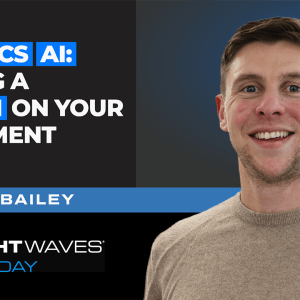
AI is rapidly transforming logistics, but the real challenge isn’t just adoption – it’s getting a tangible return on investment. Dan Bailey, Co-Founder & CEO of Nexcade, discusses how leading companies like C.H. Robinson are leveraging AI for lean operations and growth. He also shares key insights on overcoming implementation challenges, measuring success beyond efficiency, […] The post Logistics AI: Getting a Return on Your Investment appeared first on FreightWaves.
Source Lens
Industry Context
Useful background context, but lower-priority than direct platform, community, or operator intelligence.
Impact Level
medium
Use this briefing to decide whether your team needs an immediate workflow, policy, or reporting change.
Key Stat / Trigger
No single quantitative trigger surfaced in this report.
Focus on the operational implication, not just the headline.
Full Coverage
#fwtv_10Uud8RwmU. fwtv-panel{border:1px solid #d0d0d0;padding:18px;border-radius:6px;line-height:1. 6}#fwtv_10Uud8RwmU. fwtv-panel p{margin:0 0 12px}#fwtv_10Uud8RwmU.
fwtv-note{font-style:italic;color:#666;margin-top:16px;padding-top:12px;border-top:1px solid #e0e0e0}AI is rapidly transforming logistics, but the real challenge isn’t just adoption – it’s getting a tangible return on investment. Dan Bailey, Co-Founder & CEO of Nexcade, discusses how leading companies like C. H.
Robinson are leveraging AI for lean operations and growth. He also shares key insights on overcoming implementation challenges, measuring success beyond efficiency, and why a dual strategy of top-down and grassroots experimentation is crucial for your AI journey. The $300 million in projected synergies from C. H.
Robinson’s acquisition of RXO puts a sharp number on what AI-driven efficiency can mean at scale, but Nexcade co-founder and CEO Dan Bailey says most logistics companies are still struggling with a more fundamental problem: turning embedded operational knowledge into something AI can actually use. “Context is the biggest challenge in our space,” Bailey said.
“Whether you’re talking about international freight or on the brokerage side, there is so much embedded knowledge built up through years of experience and through real market nuance — and so turning that into insight that AI can use is an extremely, extremely tough challenge.”
“If you’re not adopting it, I can guarantee you that your employees are in shadow capacity one way or another — there was a ton of shadow ChatGPT, shadow Claude being used across this industry and many others right now.”
Bailey, speaking from London, said Nexcade tracks 40 to 50 leading freight forwarders and logistics service providers globally, monitoring every public AI announcement they make. He described the volume of those announcements over the last six to nine months as “overwhelming.” On the RXO deal specifically, he noted that while C. H.
Robinson’s lean operating model has already shown bottom-line results, applying it to an entirely new business with limited customer overlap and different operational knowledge introduces real execution risk around that $300 million target.
On the product side, Bailey said roughly 90% of quote requests still arrive over email, and Nextcade’s agents are designed to read customer inboxes, classify freight type, extract shipment details, and automatically execute spot procurement lookups — including checking contracts, spot market rates, and overseas agent portals via API or browser.
The goal, he said, is for operators to arrive each morning with 10 to 15 quotes already staged for a pricing decision, rather than spending time on four to five emails and multiple lookups per quote.
Teams using the platform have doubled files-per-head throughput, he said, and one customer now receives automated responses to overseas agent requests that arrive at 3 a. m. , before competitors are available to respond. About 75% of current customer volume runs on air and ocean, with the remaining 25% on road freight including U. S.
domestic and European lanes. For companies that haven’t yet started piloting AI, Bailey recommended a dual strategy: a top-down effort to identify strategic workflows and build data foundations, paired with a bottom-up empowerment approach that lets willing managers and teams run small pilots without waiting for enterprise rollout.
He said companies often learn as much from those smaller experiments as from large projects, getting “three or four bites at the apple” before the biggest initiatives even reach the rollout phase. On measuring ROI beyond time savings, Bailey pointed to two metrics that tend to get overlooked: risk reduction and revenue impact.
Reconciliation tools and exception handling can reduce demurrage, detention, and unexpected charges, with the aggregate effect becoming significant over 12 to 18 months.
On the revenue side, he said speed-to-quote data — including average win rates by response time and margin by lane — gives companies a way to quantify the commercial impact of AI initiatives, not just the efficiency gains.
He drew on his earlier experience helping scale Sedna from 20 to more than 250 customers, noting that change management remains as critical in the AI era as it was when his previous company was replacing Outlook for large shipping firms.
Nextcade’s Dan Bailey says converting tacit operational knowledge into AI-ready context is the core challenge blocking ROI for most logistics companies. C. H. Robinson’s $300 million RXO synergy target carries execution risk because absorbing a new business’s operational context at pace is difficult, even with a proven lean AI model.
Nextcade’s quoting agents — handling 90% of email-based requests — have helped customers double files-per-head and automate responses to overnight quote requests before competitors wake up. This Summary is generated thanks to a transcription of the interview, for the f
Original Source
This briefing is based on reporting from Freightwaves. Use the original post for full primary-source context.
Style
Audience