

Gap adds new AI-enabled options for personalized fits and checkout
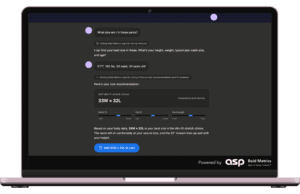
Gap Inc. (ranked #20 in North American ecommerce) is deploying two AI protocols simultaneously: Bold Metrics' Agentic Sizing Protocol for conversational fit guidance and Google's Universal Commerce Protocol (UCP) for in-agent checkout — making Gap purchasable directly inside Google AI Mode and the Gemini app. This positions Gap's four major apparel brands (Old Navy, Gap, Banana Republic, Athleta) as early infrastructure nodes in Google's emerging agentic commerce network, joining Best Buy and Wayfair. The checkout integration means Gap products can convert inside conversational AI interfaces without the shopper ever hitting Gap.com. For apparel sellers not yet integrated with UCP or Bold Metrics equivalents, discovery and conversion in AI-native surfaces is now being captured by Gap — not you.
The non-obvious threat here is not Gap's fit tool — it's Google UCP becoming the new merchant feed standard for AI-era commerce, and early adopters like Gap are training Gemini's product recommendation models with their catalog data right now.
By the time most 7-8 figure apparel sellers on Amazon or Shopify realize Google AI Mode is a meaningful traffic source, Gap will have 12+ months of conversion signal advantage baked into the model.
This is the same dynamic as early Amazon A+ Content adopters who built SERP dominance before competitors noticed — competitive moat erosion via infrastructure adoption lag.
Monday action: If you're on Shopify, check whether your Google Merchant Center feed is flagged for UCP eligibility in the Google Merchant Center Growth tab and escalate to your dev team to prioritize schema compliance before Q3 2026 when UCP adoption likely hits critical mass.
This is a concrete signal that agentic commerce — where AI agents discover, recommend, and complete purchases without browser navigation — is transitioning from concept to infrastructure in 2026.
Gap's dual move reflects a broader platform consolidation trend where Google, Amazon, and TikTok are each building proprietary commerce protocols that reward early merchant integrators with preferential placement in AI-generated responses.
The sellers who treat UCP and similar protocols as optional marketing experiments will face the same fate as brands that ignored Amazon's A9 algorithm changes in 2018 — structurally disadvantaged in a search environment they don't understand until revenue has already shifted.
Audit your Google Merchant Center account THIS WEEK: Navigate to Growth > Manage Programs and check for Universal Commerce Protocol (UCP) enrollment options — if your catalog is UCP-eligible and you haven't opted in, you are invisible in Google AI Mode checkout flows where Gap is now live.
If you sell apparel on any platform (Amazon, Shopify, Walmart), pull your return rate report filtered by 'wrong size' or 'fit' reason codes — if that rate exceeds 15%, the ROI case for Bold Metrics or a competitor (Fit Analytics, True Fit) is now proven by a Top 20 retailer and should be in your Q2 tech budget, not your someday list.
In the next 30-60 days, watch for Amazon's response: Google UCP gaining major brand partners accelerates pressure on Amazon to open its own agentic commerce API or Rufus integration to third-party sellers — position your catalog with clean structured data, complete size charts, and A+ Content now so you're ready when Amazon's equivalent protocol drops.
Bottom Line
Google's UCP just became the checkout rail for AI-native shopping — Gap is on it, you're probably not, and that gap compounds daily.
Source Lens
Analyst Intelligence
Research or editorial analysis that adds market context beyond the official announcement.
Impact Level
medium
Google's UCP just became the checkout rail for AI-native shopping — Gap is on it, you're probably not, and that gap compounds daily.
Key Stat / Trigger
Gap Inc. ranks No. 20 among North America's largest online retailers by annual ecommerce sales
Focus on the operational implication, not just the headline.
Full Coverage
Gap Inc. will introduce artificial intelligence (AI) solutions to two key parts of its online retail experience: finding correct sizes and checking out. The company owns its namesake Gap brand as well as Old Navy, Gap, Banana Republic and Athleta.
Gap detailed its introduction of personalized fit guidance, which uses the technology vendor Bold Metrics’ Agent Sizing Protocol. It also detailed separate support for Google’s Universal Commerce Protocol (UCP).
With its announcement, Gap follows Best Buy, Wayfair and other retailers with its adoption of Google’s protocol for connecting merchants’ checkout flows and transactions within conversational interfaces. Gap Inc. ranks No. 20 in the Top 2000 Database. The database tracks North America’s largest online retailers by their annual ecommerce sales and more.
News Ecommerce earnings recap: What you missed from BJ's Wholesale Club, Gap and more Brian Warmoth | Mar 9, 2026 What are Gap’s new AI use cases? Personalized fit support and support for UCP in online checkout are just two of the ways in which Gap is using AI for its customers and operations.
The company characterized the moves as part of its goal to scale “intelligence across every journey,” making AI part of its operating model. “We are not pursuing AI for novelty,” said Sven Gerjets, chief technology officer at Gap, in a released statement.
“These partnerships are about solving real customer problems — helping shoppers feel confident about fit and making it easier to complete a purchase.” That ambition extends to other parts of the shopper experience as well.
“They also reflect the holistic AI strategy we’ve built to scale intelligence across the enterprise in a disciplined way that drives measurable value over time,” Gerjets said. How Bold Metrics’ Agentic Sizing Protocol works Gap is a launch partner for Bold Metrics’ Agentic Sizing Protocol.
Bold Metrics said it designed the protocol to help customers find their correct size when shopping for apparel in conversational agentic commerce experiences.
Bold Metrics’ Agentic Sizing Protocol in use | Image credit: Bold Metrics press release “AI shopping agents hitting the market right now struggle to answer the most critical question in apparel,” said Morgan Linton, chief technology officer at Bold Metrics. “The moment a shopper asks, ‘What size should I get?’
the AI agent does not have a clear path to accurately determine the right size.” The technology provider designed its protocol to address this issue through a series of questions that ultimately guide the conversation toward identifying correct sizes.
“Agentic Sizing Protocol addresses this gap and enables a much more personalized agentic decision process that goes beyond size and captures a shopper’s unique fit preference,” Linton explained. “In agentic commerce, every second of delay drives abandonment, so performance isn’t optional; it’s critical.”
Gap’s use of Google’s UCP As for Google’s UCP, Gap sees the protocol as a solution for helping its brands to be better represented with AI-powered discovery platforms. With the protocol, shoppers will be able to find and purchase products sold by Gap using AI Mode in Google Search, as well as in the Gemini app. Do you rank in our databases?
Submit your data and we’ll see where you fit in our next ranking update. Sign up Stay on top of the latest developments in the online retail industry. Sign up for a complimentary subscription to Digital Commerce 360 Retail News. Follow us on LinkedIn, TikTok, X (formerly Twitter), Facebook and YouTube.
Be the first to know when Digital Commerce 360 publishes news content. FavoriteThe post Gap adds new AI-enabled options for personalized fits and checkout appeared first on Digital Commerce 360.
Original Source
This briefing is based on reporting from Digital Commerce 360. Use the original post for full primary-source context.
Style
Audience