Diesel still ripping higher than the rest of the barrel; here’s why
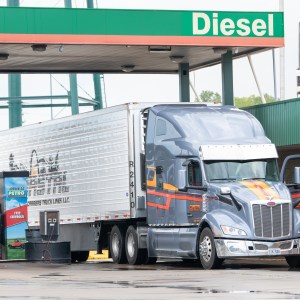
Diesel has been the star of the show in oil markets since the Iran war began. The post Diesel still ripping higher than the rest of the barrel; here’s why appeared first on FreightWaves.
Source Lens
Industry Context
Useful background context, but lower-priority than direct platform, community, or operator intelligence.
Impact Level
medium
Use this briefing to decide whether your team needs an immediate workflow, policy, or reporting change.
Key Stat / Trigger
No single quantitative trigger surfaced in this report.
Focus on the operational implication, not just the headline.
Full Coverage
Beyond looking out the windshield and seeing retail diesel prices that once again are rising, here are some key comparisons that a consumer dealing with those higher numbers should know. On February 27, the last day before military action began between Iran on one side and the U. S.
and Israel on the other, the price of international crude benchmark Brent settled at $72. 48/barrel on the CME commodity exchange. On the same day, ultra low sulfur diesel (ULSD) settled at $2. 596/gallon. On Wednesday, Brent settled at $91. 62/b. ULSD settled at $4. 4523/g. window. googletag = window. googletag || {cmd: []}; googletag. cmd.
push(function() {googletag. defineSlot('/21776187881/FW-Responsive-Main_Content-Slot1', [[300, 100], [320, 50], [728, 90], [468, 60]], 'div-gpt-ad-1709668545404-0'). defineSizeMapping(gptSizeMaps. banner1). addService(googletag. pubads()); googletag. pubads(). enableSingleRequest(); googletag. pubads(). collapseEmptyDivs(); googletag.
enableServices(); }); googletag. cmd. push(function() {googletag. display('div-gpt-ad-1709668545404-0'); }); The math: since the start of the war, Brent is up 26. 4%. ULSD is up 71. 5%. (Thursday’s settlement was $4. 4803/g.) On CME, the contract for RBOB, an intermediate product that serves as a proxy for gasoline, had risen 56. 5% since the Iran war began.
It’s a lot more than Brent, but less than diesel. But it’s that yawning gap between crude and diesel that is bringing broad attention to the price of the fuel, driven in part by fleets frustrated to hear reports of crude rising slowly or even falling while their own fuel costs most definitely are not.
Diesel is even taking the spotlight from gasoline, which as a product consumed by far more people than diesel generally draws the most attention from the media, politicians and general consumers. The shift to the world focusing on diesel prices was encapsulated in the title of a recent article on Axios: “Diesel desperation is mounting.”
There has been no stronger consistent voice on the rising diesel market and what it means for the broader energy picture than Jeffrey Currie, former head of commodities at Goldman Sachs and now involved in several different businesses.
He’s done numerous television interviews, including one this week on CNBC where he noted the disconnect between crude and product prices as being historic. “Nobody consumes crude oil but refineries,” he said. “To everybody else on the planet Earth, what matters are the product prices.”
Historically, Currie said, the spread between product prices and crude prices was “relatively stable.” But on a day when Brent was trading at about $87/b, Currie noted that diesel in European trading was about $170/b. window. googletag = window. googletag || {cmd: []}; googletag. cmd. push(function() {googletag.
defineSlot('/21776187881/fw-responsive-main_content-slot3', [[728, 90], [468, 60], [320, 50], [300, 100]], 'div-gpt-ad-1665767553440-0'). defineSizeMapping(gptSizeMaps. banner1). addService(googletag. pubads()); googletag. pubads(). enableSingleRequest(); googletag. pubads(). collapseEmptyDivs(); googletag. enableServices(); }); googletag. cmd.
push(function() {googletag. display('div-gpt-ad-1665767553440-0'); }); “Crude is nearly half the price of the products,” Currie said. “So those relationships, those econometric models, everybody that’s been making that assumption that the spread between oil and products is a relatively stable constant relationship have missed out.”
A gigantic gap Beyond the percentage increase, there are other ways of measuring the current disconnect. The crack spread is the measure of taking a barrel of crude and turning it into products. There are multiple ways it can be calculated.
But a simple way to emphasize the diesel strength is to take the second month price of ULSD on CME and compare it to the first month Brent price, since the latter can be refined into the former. window. googletag = window. googletag || {cmd: []}; googletag. cmd. push(function() {googletag.
defineSlot('/21776187881/fw-responsive-main_content-slot4', [[300, 100], [320, 50], [728, 90], [468, 60]], 'div-gpt-ad-1709668086344-0'). defineSizeMapping(gptSizeMaps. banner1). addService(googletag. pubads()); googletag. pubads(). enableSingleRequest(); googletag. pubads(). collapseEmptyDivs(); googletag. enableServices(); }); googletag. cmd.
push(function() {googletag. display('div-gpt-ad-1709668086344-0'); }); On February 27, the final day of trading before the Iran war started, the spread was about $36. 55/b. On the first two days of this week, it crossed $90/b for the first time since the war began, and likely for the first time in history.
Crude settled at $91/b that day, driving home what Currie said in his CNBC interview: crude is about half the value of ULSD. (The spread fell slightly below that $90 mark Wednesday.) The end result at the pump is that average U. S. retail diesel prices, as measured daily by the AAA, were at $5. 5477/g Thursday, within 15 cents of the post-war high of $5.
5689/g set April 9 and up mo
Original Source
This briefing is based on reporting from Freightwaves. Use the original post for full primary-source context.
Style
Audience