ShipStation Global Brings Freight Into the Same Lane as Parcel
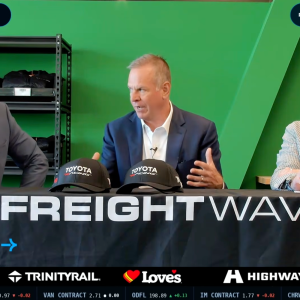
ShipStation Global (formed by Thoma Bravo's $12B merger of WWEX Group and Auctane) launched LTL freight booking inside ShipStation, connecting 50+ carriers with real-time rate comparison. The 78% of ShipStation merchants who already ship freight no longer need separate systems.
This is platform consolidation in logistics tech -- the same compression squeezing 3PLs and freight brokers is now hitting software, as all-in-one tools eliminate point solutions and reduce the negotiating leverage of standalone freight brokers.
Multi-location sellers and brands moving inventory between 3PLs or warehouses can now consolidate freight and parcel workflows in one platform, reducing reconciliation errors and potentially negotiating better rates through volume visibility. If you're currently using a separate TMS or freight broker portal alongside ShipStation, audit your freight spend now before consolidating to benchmark savings.
Operational Impact
This story may require teams to revisit workflows, monitoring, or platform assumptions.
Bottom Line
ShipStation adds freight, so multi-location sellers can ditch their separate TMS.
Source Lens
Industry Context
Useful background context, but lower-priority than direct platform, community, or operator intelligence.
Impact Level
medium
ShipStation adds freight, so multi-location sellers can ditch their separate TMS.
Key Stat / Trigger
78% of ShipStation merchants already ship freight, over half managing it in separate systems
Focus on the operational implication, not just the headline.
Full Coverage
Small and midsize shippers are often forced to stitch together various tools for parcel labels, freight quotes, tracking, and much more.
The fragmentation gets more expensive as a business grows past pure e-commerce, since the moment a merchant needs to move inventory between warehouses or ship a pallet instead of a box, they’re forced out of whatever platform runs their day-to-day shipping and into unfamiliar territory.
ShipStation Global CEO Tom Madine has built the company’s post-merger strategy around closing that gap, knowing that the same merchants who came to the platform for parcel labels are increasingly buying freight, too, and would rather not leave the software to do it.
The LTL rollout is the first major product integration since Thoma Bravo acquired WWEX Group (parent of Worldwide Express, GlobalTranz, Unishippers, JEAR Logistics and BLX Logistics) and merged it with Auctane, the parent company of ShipStation, this past June. The combination created ShipStation Global, a company now valued at roughly $12 billion.
CEO Tom Madine described the logic of putting the two businesses together as less about scale for its own sake and more about closing a gap both companies kept running into with customers.
“If you think about an e-commerce merchant that’s selling through multiple channels, using multiple carriers with inventory in multiple places, it makes that a much more seamless and stress-free process for them, and allows them to manage everything through a single pane of glass,” Madine said of the legacy ShipStation product, before pointing to what it had been missing.
“There’s nothing else like it on the market.” According to Madine, that gap had shown up repeatedly in customer surveys. “One of the most common requests that ShipStation would get in the legacy Auctane world was, ‘When are you going to add other modes to the platform?’” he said.
“Prior to today, if you were a ShipStation user, you were managing your entire workflow in ShipStation, except when you needed to move freight.” Merchants who needed to move inventory between warehouses had to leave the platform entirely, log into a separate freight system, and reconcile the two.
LTL was the logical starting point given how much of it already runs through e-commerce middle-mile moves, and ShipStation Global isn’t treating the launch as a soft rollout.
The platform now connects to a network of more than 75 LTL carriers, with over 50 live at launch, giving merchants real-time rate comparison and order management inside the same interface they use for parcel.
Roughly 78% of ShipStation’s merchants already ship freight in some form, but the company has said more than half of them have been managing it through separate systems until now. Chief Product Officer Travis Rimel called the addition overdue for the customer base: “Freight was the missing piece for ShipStation customers, and now it’s here,” he said.
“This isn’t just a new feature; it’s a foundation.” The point, Madine said, isn’t to help shippers find the cheapest possible rate.
“What enables customers to have the best experience is that they can use data and intelligence to help them make better decisions,” he said, describing how the platform surfaces things like estimated arrival time and damage likelihood alongside price.
“Cheapest is not always best… it’s about making the best decision so that your supply chain works the way it’s supposed to.” Two customers ShipStation Global brought onto the show made the point in very different ways.
Toyota Racing Development ships nine to 12 850-pound race engines a week between its Costa Mesa, California, build shop and NASCAR teams in North Carolina. For that kind of freight, a missed delivery is a public failure, not simply a shrugged-off delay.
“We decided that we were going to consolidate these on a straight truck, expedited from Costa Mesa, California to North Carolina every week,” said Mike Grayson, Chief Relationship Officer and EVP of ShipStation Global, describing the shift away from air freight the two companies worked out together.
TRD’s Kevin Warner said the switch actually improved reliability despite the perception that ground transport is slower: “By going to ground, it allowed us to have much more control, much more reliability on the process and also less handling.” Grayson said that’s the kind of complexity ShipStation Global is used to solving at the top of its customer base.
“We have dozens of Fortune 100 companies that we work with, TRD being one of those,” he said. “We’re able to also take that and bring it downstream to the SMB sector… just because you’re not doing all the complexity that an enterprise customer is doing, it doesn’t mean that we shouldn’t provide to you the same level of service.”
On the other end of that spectrum was Spiceology, a spice brand that started at farmers’ markets and now ships everything from direct-to-consumer parcels to full truckloads for retail and food-service accounts. Director of Logist
Log into ShipStation and check the new LTL rate comparison tool against your current freight broker quotes -- if your weekly pallet moves exceed 5 shipments, consolidated pricing through 50+ carriers likely beats your current spot rates.
Within 30 days, map all warehouse-to-warehouse and replenishment freight flows and route them through ShipStation Global to capture unified tracking and damage-likelihood data before Q4 peak season.
Original Source
This briefing is based on reporting from Freightwaves. Use the original post for full primary-source context.
Style
Audience