Ocean rates highest in a year amid US-China trade truce
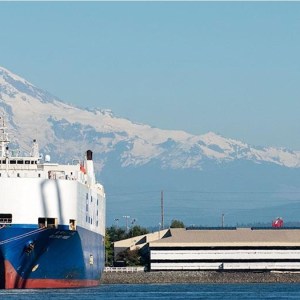
Trans-Pacific spot rates hit $8,400/FEU (West Coast) and $9,600/FEU (East Coast) as of late September 2025, driven by blank sailings, port congestion absorbing 8%+ of global vessel capacity, and the Strait of Hormuz closure raising bunker costs. A two-month US-China trade truce extension postpones potential port fees on Chinese-linked vessels and cuts tariffs on ~$30B in goods including toys.
Persistent freight inflation driven by structural capacity constraints — not just tariff policy — signals a multi-quarter margin headwind for marketplace sellers sourcing from Asia, compounding existing pressure from rising ad costs and platform fee increases.
High ocean rates won't normalize quickly — Sea-Intelligence estimates 10 months to unwind congestion, meaning Q4 and Lunar New Year replenishment costs will stay elevated or climb further. Sellers should model landed cost increases now and adjust minimum order quantities or reorder points before carriers push rates higher on Lunar New Year booking surges.
Operational Impact
This story may require teams to revisit workflows, monitoring, or platform assumptions.
Bottom Line
$8,400/FEU West Coast rates mean Q4 margin compression for import-heavy sellers.
Source Lens
Industry Context
Useful background context, but lower-priority than direct platform, community, or operator intelligence.
Impact Level
medium
$8,400/FEU West Coast rates mean Q4 margin compression for import-heavy sellers.
Key Stat / Trigger
$8,400 per FEU Asia-to-US West Coast spot rate, a new yearly high as of late September 2025
Focus on the operational implication, not just the headline.
Full Coverage
A two-month extension of the U. S. -China trade truce could postpone planned U. S. port fees on China-linked vessels, offering carriers and importers a temporary measure of policy certainty as trans-Pacific spot rates reach new annual highs, says an analyst.
The agreement reached last week at a Washington meeting between President Donald Trump and Chinese President Xi Jinping extends the countries’ existing trade truce, which had been due to expire Nov. 10. The sides agreed to reduce tariffs on selected imports and plan two additional leader-level meetings before year-end. The U. S.
Trade Representative had not formally announced a deferral of port-call fees targeting China-linked ships as of this week. But the broader deescalation makes a delay more likely, according to the market update from SONAR data contributor Freightos (NASDAQ: CRGO).
The fees had emerged as a potentially significant new cost and operational consideration for carriers deploying Chinese-built or Chinese-operated tonnage into U. S. trades. Treasury Secretary Scott Bessent’s comments around the summit suggest the short duration of the extension reflects unresolved Chinese commitments to buy U. S. agricultural products.
China’s progress on those purchases could set the stage for another extension, Freightos said. Targeted tariff relief Washington and Beijing will reduce tariffs on about $30 billion in counterpart imports to most-favored-nation levels, subject to required legal procedures. The changes cover nearly 80 U. S.
product entries, with toys representing the biggest category by value in what some analysts see as an attempt by the Trump administration to shore up cratering polling with holiday-shopping voters ahead of the midterm elections. China’s list includes more than 1,600 entries, concentrated largely in agricultural products and commodities.
The tariff relief is modest against the more than $400 billion in annual China-U. S. trade, but it should provide some benefit for importers, retailers and consumers of the affected products. More broadly, the truce extension removes, at least temporarily, the threat of another sharp trade-policy escalation ahead of the year-end shipping and retail cycle.
Trans-Pacific rates remain elevated Trans-Pacific container prices climbed again this past week despite expectations that demand will ease after China’s Golden Week holiday and the traditional peak-season period. Spot rates from Asia to the U. S. West Coast rose to $8,400 per forty foot equivalent unit, a new high for the year.
East Coast spot rates held at about $9,600 per FEU, roughly $200 below their late-August peak. The persistence of high pricing reflects a capacity market shaped by blank sailings, port delays and carrier allocation controls rather than demand alone, Freightos noted.
Ocean carriers have expanded blanked sailings through the holiday period and into late October, while some have reportedly reduced allocations to contracted forwarders. Far East congestion a major factor Sea-Intelligence estimates port delays are absorbing more than 8% of global vessel capacity and could take as long as 10 months to fully unwind.
That constraint, along with higher bunker costs associated with the closure of the Strait of Hormuz, could establish a firmer floor under container rates even during periods of weaker seasonal demand.
The effect could be especially apparent in the run-up to Lunar New Year, when a higher rate baseline would leave carriers with more room to push prices upward if bookings accelerate. Panama Canal conditions improve Improved rainfall and water levels are providing a partial offset for shippers moving cargo from Asia to the U. S.
East Coast through the Panama Canal. The Panama Canal Authority plans to restore daily Neopanamax transits to the normal level of 10 and raise the maximum authorized draft to 49 feet in mid-October. The action reverses restrictions imposed in late August, when the authority removed one daily transit slot and reduced allowable draft by one foot.
The improvement reduces the immediate risk of additional diversions, delays and higher costs for Asia-East Coast cargo. But it may not be permanent, as an expected El Niño pattern could still weaken rainfall during the wet season, which usually continues into January, potentially requiring new operating restrictions in the coming months.
Europe prices ease, but remain well above 2025 Asia-Europe container spot rates continued to decline as demand softened and carriers gradually restored effective capacity through increased Red Sea transits. Rates from Asia to North Europe fell 9% to about $3,400 per FEU, while Asia-Mediterranean pricing declined 7% to $3,600 per FEU.
Several carriers are nevertheless seeking late-October general rate increases, an indication that lines are trying to slow the market’s downward movement. Read more articles by Stuart Chirls here. Read more: ONE restructures in key ocean region Port Houston container volumes edge higher as steel
Pull your COGS and landed cost reports now — if ocean freight is more than 15% of unit cost, reprice affected ASINs before holiday traffic peaks or margin compression hits invisibly.
Lock in Q1 inventory shipments before Lunar New Year booking windows open (typically November) — spot rates have room to spike further given the elevated baseline and blank sailing controls.
Original Source
This briefing is based on reporting from Freightwaves. Use the original post for full primary-source context.
Style
Audience