

What is FBA prep? Everything Amazon sellers need to know
If you have ever searched for what is FBA prep and ended up more confused than when you started, well, you are not alone. Amazon makes it sound simple. Get your products ready, send them in, and start selling. But what Amazon does not tell you upfront is that getting your products “ready” suggests meeting… The post What is FBA prep? Everything Amazon sellers need to know appeared first on SellerApp Blog. Related posts: How To Effectively Communicate With Amazon Customers Definitive Guide: How To
Source Lens
Industry Context
Useful background context, but lower-priority than direct platform, community, or operator intelligence.
Impact Level
medium
Use this briefing to decide whether your team needs an immediate workflow, policy, or reporting change.
Key Stat / Trigger
No single quantitative trigger surfaced in this report.
Focus on the operational implication, not just the headline.
Full Coverage
If you have ever searched for what is FBA prep and ended up more confused than when you started, well, you are not alone. Amazon makes it sound simple. Get your products ready, send them in, and start selling. But what Amazon does not tell you upfront is that getting your products “ready” suggests meeting a very specific set of requirements.
After months of research, you finally found a winning product, placed a bulk order, and sent it straight to Amazon. You’re already running the numbers in your head when the email arrives that the shipment was rejected. Or worse, Amazon accepted it, shoved it into stranded inventory, and is now charging you storage fees on stock you can’t even sell.
This is what happens when FBA prep goes wrong. Most sellers learn this the hard way. This guide exists so you don’t have to. Let’s break down exactly what is Amazon FBA prep service, where sellers trip up, and how to make sure your inventory lands on Amazon’s shelves, not back on a truck to your garage. Quick guide: What is FBA prep?
What are the FBA prep requirements you should make a note of What are the three ways to handle FBA prep? What DIY sellers consistently underestimate Which Option Is Right for You Pros and Cons of FBA Prep 8 Common FBA Prep Mistakes That Cost Sellers Money Final thoughts What is FBA prep?
FBA prep is everything that needs to happen to your products before Amazon accepts them into its fulfillment center. When you sell through Amazon FBA, you’re not shipping orders yourself. You send your inventory to Amazon’s fulfillment centers, and Amazon handles storage, packing, and shipping to the customer. That’s the deal.
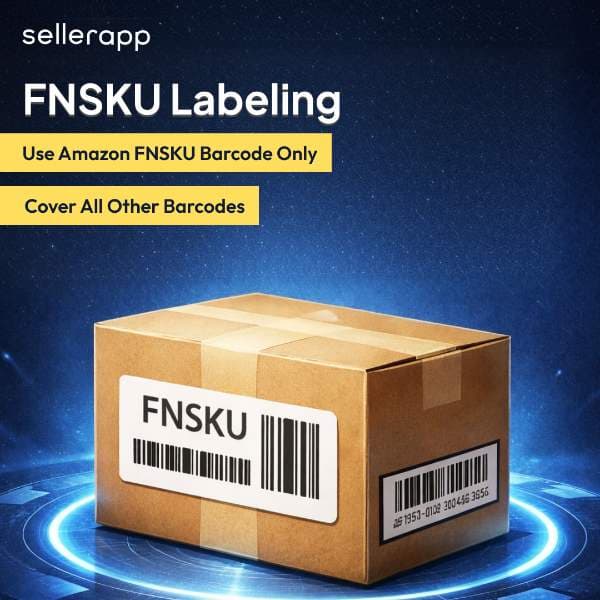
But what happens before sending your products to the FBA center? Let’s figure it out. What are the FBA prep requirements you should make a note of Here is the list of FBA prep requirements you need to know. Requirement 1: FNSKU Labeling Every unit needs a scannable barcode generated specifically for your product and seller account by Amazon.
This is the FNSKU, and it’s not interchangeable with your UPC or manufacturer barcode. The rule is simple: one scannable barcode, on a flat surface, readable without repositioning the unit. Where sellers go wrong: Sending units with the manufacturer barcode still visible alongside the FNSKU. Amazon’s scanner picks up two codes and flags the unit immediately.
When printing labels below 300 DPI, they scan inconsistently, causing receiving delays. Placing labels on curved surfaces, seams, or edges where the scanner can’t get a clean read. Generate your FNSKU in, print on a 1″x2″ or 2″x3″ label, and cover every other barcode on the unit. That’s the standard.
Requirement 2: Poly Bagging Required for soft goods, loose parts, plush items, and anything that could spill, scatter, or collect dust in transit. Amazon’s specs are specific: Transparent bags only Minimum 1.
5 mil thickness Heat-sealed, not tape, not folded over If the opening is 5 inches or wider, a suffocation warning must be printed directly on the bag, not on a sticker, on the bag itself The FNSKU barcode must be scannable through the bag without opening it The mistake most sellers make isn’t skipping the polybag; it’s sourcing bags without checking thickness, skipping the suffocation warning because “the bag is small,” or using bags that are oversized for the product.
An oversized bag means the product shifts, the barcode folds, and the unit fails at receiving. Requirement 3: Bubble Wrap and Dunnage If your product is fragile, it needs protection, but Amazon is specific about what kind. Allowed inside cartons: bubble wrap, full sheets of paper, inflatable air pillows, and foam padding.
Prohibited: packing peanuts, crinkle wrap, shredded paper, and foam strips. They escape from boxes and the jam fulfillment center equipment. Amazon won’t just reject the shipment; they’ll note the violation against your account. A practical test before your first shipment: drop the packaged unit from 3 feet on each side.
If the product breaks or the packaging fails, it won’t survive Amazon’s receiving process either. Requirement 4: Bundling and Kitting Selling two or more items as a single ASIN? Every bundle must be packaged and labeled as a single unit. The requirements: Outer packaging must be clearly labeled “Sold as Set Do Not Separate.”
Individual barcodes on items inside the bundle must not be visible or scannable through the outer packaging cover, or black them out The bundle FNSKU goes on the outside, and that’s the only barcode Amazon should be able to scan Without the “Do Not Separate” label, Amazon’s receiving team will open the bundle and check each item individually.
Your inventory count gets messy, your bundle ASIN goes out of stock, and you’re left trying to sort it out via a support ticket. Requirement 5: Custom Packaging For fragile products, beauty, skincare, glass, and supplements in bottles, standard bubble wrap often isn’t enough. Amazon’s receiving process isn’t gentle. Units get conveyor-belted
Original Source
This briefing is based on reporting from SellerApp Blog. Use the original post for full primary-source context.
Style
Audience