UPDATED: US West Coast container rates edge lower
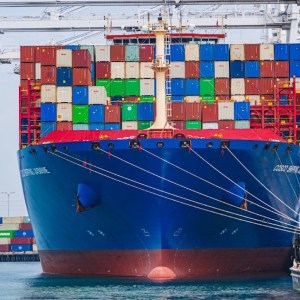
Xeneta: Asia-US West Coast rates showed the first sign of softening since mid-September. The post UPDATED: US West Coast container rates edge lower appeared first on FreightWaves.
Source Lens
Industry Context
Useful background context, but lower-priority than direct platform, community, or operator intelligence.
Impact Level
medium
Use this briefing to decide whether your team needs an immediate workflow, policy, or reporting change.
Key Stat / Trigger
No single quantitative trigger surfaced in this report.
Focus on the operational implication, not just the headline.
Full Coverage
A small decline in Asia-U. S. West Coast pricing offered the first sign of softening trans-Pacific container rates since mid-September, according to Xeneta. Spot rates from Asia to Europe also continued to fall in early October, the analyst said in an update, giving European shippers greater leverage in annual contract negotiations.
Trans-Pacific shows first small dip Far East-U. S. West Coast spot rates fell $2 per FEU on Oct. 7, the first daily decline in weeks. “It is a marginal move, but the first dip since mid-September,” Xeneta Chief Analyst Peter Sand said. Despite that decline, West Coast rates remained 1. 1% above their Sept. 30 level at $8,336 per FEU. Asia-U. S.
East Coast rates averaged $11,512 per FEU, up 0. 5% over the week. On the trans-Atlantic trade, North Europe-U. S. East Coast spot rates declined 1. 1% week over week to $2,854 per FEU. Bank of America Institute’s Oct.
9 Consumer Checkpoint report shows broad-based consumer spending strength in September, with gains across retail and services categories and a narrowing gap among income groups. Total credit and debit card spending per household increased 6. 2% year over year, or 5. 1% excluding gasoline, the third-strongest growth rates in four years.
However, seasonally adjusted spending rose just 0. 2% from August and was little changed excluding gasoline. The Mediterranean has recorded the steepest decline since the post-Hormuz crisis peak in July. Market-average spot rates on the trade have fallen 43% since July 1, compared with a 34% decline from the Far East to North Europe, Sand said.
“The pace of the decline has eased a little, but rates are still elevated and the trend is still downward, so we are not at the floor yet,” Sand said. As of Oct. 7, Asia-Mediterranean spot rates averaged $4,007 per 40-foot container, or FEU, down 5. 9% from Sept. 30. Far East-North Europe rates averaged $3,645 per FEU, down 2. 5% over the same period.
Europe-bound rate gap narrows The sharper Mediterranean decline has compressed the premium over North Europe to roughly $400 per FEU, below the approximately $500 spread recorded on Oct. 1, 2025, and well below the $2,000 gap reached on Jan. 1, 2026, Sand said. The Oct. 7 market averages put the difference at $362.
“The spread between the Mediterranean and North Europe shows that no two trades are alike and that volatility differs depending on where you ship from and to,” he said. Sand said carrier rerouting away from the Suez Canal route around Africa may help explain the pricing relationship.
The diversion has lengthened journeys into the Mediterranean compared with North Europe, although North Europe historically has been the more expensive destination. Falling short-term rates are arriving as European shippers negotiate long-term contracts, which are also benchmarked against the spot market.
“For European shippers, tender season is in full force and falling short-term rates are a welcome development as they negotiate long-term contracts,” Sand said. Demand has remained strong throughout the year, particularly into Europe, but could not continue growing at double-digit rates indefinitely, he said.
As demand eases from a high level, competition for vessel capacity is diminishing, improving negotiating conditions for shippers. “Even freight forwarders are now getting better deals from carriers in long-term contract negotiations,” Sand said. This article was updated Oct. 9 to add analysis on consumer spending from Bank of America.
Read more articles by Stuart Chirls here. Read more: Global container volumes hit record 17.
46 million TEUs Samsung seeks $186M from CMA CGM in container charges dispute Zim lifts profit forecast 72% on strong demand New submarine plant planned at Baltimore multimodal hub The post UPDATED: US West Coast container rates edge lower appeared first on FreightWaves.
Original Source
This briefing is based on reporting from Freightwaves. Use the original post for full primary-source context.
Style
Audience