

Why ‘grossly inefficient’ U.S. ports need automation, and the danger in a new Arctic sea route
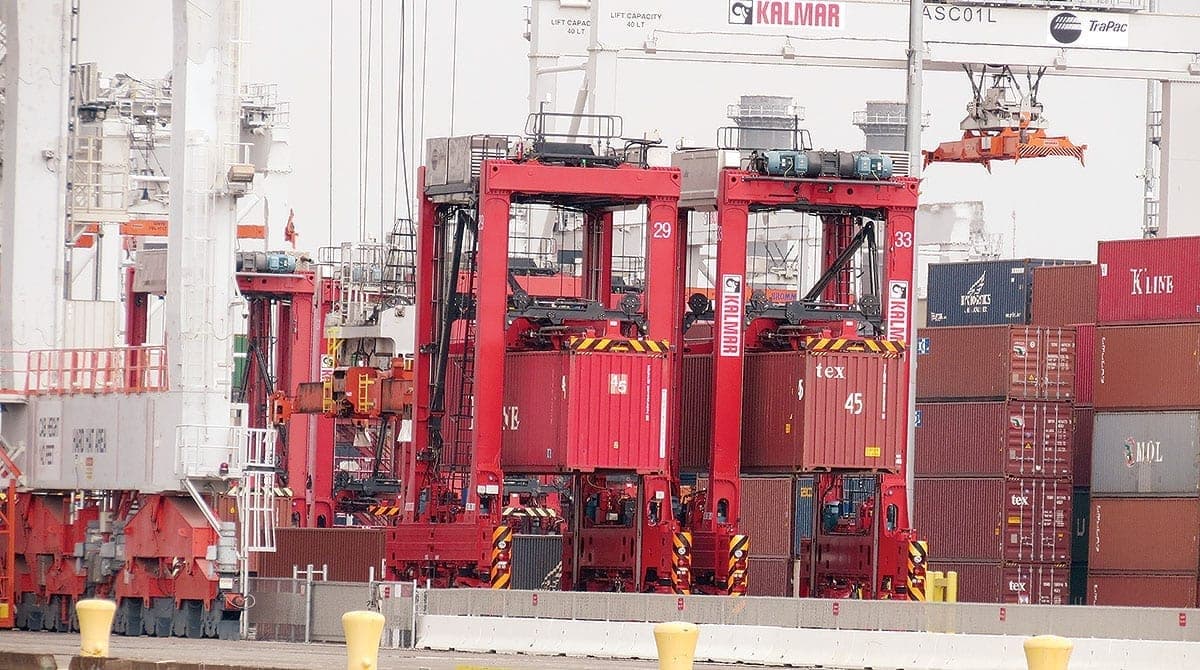
U.S. ports are 'grossly inefficient' and need automation to compete globally, according to Federal Maritime Commission Chair Laura DiBella. Port Everglades has waited 10+ years for dredging permits, highlighting regulatory delays that slow infrastructure improvements.
Port inefficiencies and potential rail mergers create supply chain bottlenecks that increase shipping costs and delivery times for marketplace sellers. Monitor your inbound shipping costs and delivery performance metrics as these infrastructure issues compound during peak seasons.
U.S. supply chain infrastructure lags behind global competitors, creating ongoing cost pressures and delivery challenges that marketplace sellers must navigate through diversified sourcing and improved inventory planning.
Check your Seller Central shipping performance metrics -- if delivery times are increasing, consider diversifying suppliers across different port regions to reduce bottleneck risk.
Review your Q4 inventory planning to account for potential port delays and build in extra lead time for international shipments.
Bottom Line
Port inefficiencies mean higher shipping costs and longer delivery times for sellers.
Source Lens
Industry Context
Useful background context, but lower-priority than direct platform, community, or operator intelligence.
Impact Level
medium
Port inefficiencies mean higher shipping costs and longer delivery times for sellers.
Key Stat / Trigger
10+ years waiting for Port Everglades dredging permit
Focus on the operational implication, not just the headline.
Full Coverage
WASHINGTON — America wants to make its maritime sector globally competitive again. But significant obstacles stand in the way of development and expansion, says the chief U. S. ocean shipping regulator.
“The message that I try to reinforce is that [shipping revitalization is] going to last many administrations past this one,’ Federal Maritime Commission Chair Laura DiBella said. “I hope that the support and the resources will follow it with bipartisan support.
I mean, bringing an industry back — and putting my economic development hat on, because that’s my past life — reshoring industry takes decades. “It’s going to take a very long time and a concerted, long-term effort, economic development does not happen quickly. So I try with that in mind to manage expectations and don’t start to be critical.”
DiBella operated her own real estate business, served as Florida’s Secretary of Commerce and led Enterprise Florida, a public-private development office. As head of the maritime competition regulator, DiBella is chiefly concerned with the strategic implications of the American maritime system.
And, there’s work to be done, she said in an interview at the FMC’s headquarters. “Not throwing the [U. S. ] Army Corps [of Engineers] under the bus here, but permitting is always a problem,” DiBella said. “A big problem that slows down everything. You can have as much money on the planet as you want, but sometimes a better incentive is speed to market.
Port Everglades has been waiting for a [dredging] permit 10-plus years. People just say, you know, if the Corps could only move quicker…” [The USACE this month withdrew its state Water Quality Certification permit application for the Port Everglades dredging project amid environmental concerns. The project to deepen and widen channels was authorized in 2016.
] “I don’t want to say money is the easy part,” DiBella said. “But there’s plenty of private investment out there that can support or assist with these projects, if they had a better idea of timing.” Port efficiency and automation DiBella said that automation needs to be brought into U. S. ports, to improve cargo handling.
“We are grossly inefficient here in the United States, period, end. I’m I’m very sensitive to protecting jobs, it was my [past] job to retain and create jobs. However, I do believe that automation needs to be brought in and can coexist very nicely with current labor arrangements where nobody loses their job.
I understand that opening up to that could be perceived as a slippery slope. But, there’s too much technology out there that could make us produce so much more throughput.”
What looks to be a gradual process of force multipliers to make ports more efficient should “alleviate any concerns and embracing the technological environment that this world is,” she said, “you know, everything is connected these days, and our ports need to be connected, as well.
We shouldn’t be afraid of having the discussion, it should be exactly that — a bigger discussion and collaboration with everyone that is involved and potentially affected by it.” There are jobs to be created within the new era of industrialization, said DiBella, who doesn’t believe that jobs are going to be largely eliminated by automation.
Transcontinental rail merger DiBella said that East Coast ports “are not speaking up enough” about the possible effects on their businesses from the proposed merger of western rail giant Union Pacific (NYSE: UNP) and eastern network Norfolk Southern (NYSE: NSC). She said that the FMC has started to receive feedback on the historic transcontinental tie-up.
If the merger goes through, the “Port of Baltimore stands to lose, [CSX (NASDAQ: CXS)] just invested in doublestack [clearances in the city’s Howard Street Tunnel], which was designed entirely to get [Baltimore container traffic] into Chicago.
I was in Mobile, Alabama, two weeks ago, and they had expressed their concern to me about the merger, saying that Gulf Coast ports and the Gulf Coast in general has been largely ignored as far as impacts are concerned. There’s uncertainty around there. Mobile just dredged to 50 feet, to be globally competitive in shipping.”
The commission likely will collaborate with the Surface Transportation Board, she said, as to the impacts to ports. “We all operate in our own lanes, I say, ‘Not my lane, not my lane,’ but in a way everything kind of bleeds into your lane in this space because we are all impacted by it.
The silo approach that has been an existence for forever, that model cannot cannot exist moving forward. We absolutely positively need to be in better conversation with our partners at the STB, which we have great a relationship with.” The Maritime Focus Problem The problem, said DiBella, is that the U. S. over the past decades has lost its maritime focus.
“Others will not like this answer, that aren’t the maritime space, but maritime should be the beginning of the discussion and shouldn’t be the afterthought,” DiBella said. “Wh
Original Source
This briefing is based on reporting from Freightwaves. Use the original post for full primary-source context.
Style
Audience