Trucking’s New Reality: Why Regulations Benefit the Industry
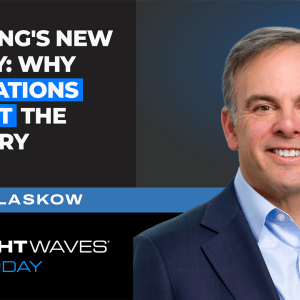
The freight market is entering a potentially transformative “super cycle,” according to industry analyst Lee Klaskow. After years of unsustainably low rates that forced many truckers out of business, structural changes and increased regulatory enforcement are creating a new landscape. We dive deep into the forces driving higher rates, the future of ocean freight, intermodal, […] The post Trucking’s New Reality: Why Regulations Benefit the Industry appeared first on FreightWaves.
Source Lens
Industry Context
Useful background context, but lower-priority than direct platform, community, or operator intelligence.
Impact Level
medium
Use this briefing to decide whether your team needs an immediate workflow, policy, or reporting change.
Key Stat / Trigger
No single quantitative trigger surfaced in this report.
Focus on the operational implication, not just the headline.
Full Coverage
#fwtv_Hk7Ey9o8hfw. fwtv-panel{border:1px solid #d0d0d0;padding:18px;border-radius:6px;line-height:1. 6}#fwtv_Hk7Ey9o8hfw. fwtv-panel p{margin:0 0 12px}#fwtv_Hk7Ey9o8hfw.
fwtv-note{font-style:italic;color:#666;margin-top:16px;padding-top:12px;border-top:1px solid #e0e0e0}The freight market is entering a potentially transformative “super cycle,” according to industry analyst Lee Klaskow.
After years of unsustainably low rates that forced many truckers out of business, structural changes and increased regulatory enforcement are creating a new landscape.
We dive deep into the forces driving higher rates, the future of ocean freight, intermodal, and LTL, and discuss how evolving regulations are reshaping profitability and liability across the supply chain.
The trucking industry is entering a prolonged upcycle driven by structural supply constraints and tightening regulation, according to Lee Klaskow, a senior analyst at Bloomberg Intelligence, who spoke on FreightWaves Today.
Klaskow said he is “extremely bullish” on the less-than-truckload space, followed by truckload, arguing that the conditions underpinning the current cycle are durable rather than temporary — a view with direct implications for carriers pricing contracts and shippers managing transportation budgets.
Klaskow said the rate environment of recent years was simply unsustainable, pointing to widespread financial distress among mid-sized carriers. “A lot of mid-sized truckers that I’ve talked to through my channel checks have indicated that, thank God that it turned when it turned because they were mortgaging their house,” he said.
“They were bootstrapping their own companies because all of the savings that they made during the pandemic — it’s totally run out.” On regulation, Klaskow took a position that may surprise some in the industry, arguing that more oversight actually benefits trucking.
He noted that electronic logging device mandates, intended to level the playing field, were undermined when bad actors hired hackers to roll back hours-of-service records. “Having more regulation is actually a better thing for the trucking industry.
I’m not saying we’re going to go back to the days of being the industry being fully regulated, but having some sort of a floor for a rate isn’t necessarily a bad thing if you’re looking at a lot of these trucking companies.”
In the LTL sector, Klaskow highlighted Old Dominion’s operating ratio falling to 70, XPO reaching an 80 OR, and even unionized carrier ArcBest achieving a 90 OR as evidence of meaningful margin improvement.
He said LTL carriers are securing mid-single-digit rate increases and that pricing leverage over tonnage runs roughly 3-to-1, making pricing gains far more impactful than volume swings. He added that rising weight-per-shipment figures across carriers are a typical precursor to demand growth.
In ocean freight, Klaskow said the liner market has benefited enormously from capacity dislocations caused by vessels rerouting around the Suez Canal and the Strait of Hormuz. Maersk, he noted, raised its EBIT guidance to $4. 5–$6. 5 billion from a prior range of $2–$4 billion, driven by strong demand out of China and elevated spot rates.
He warned, however, that roughly one-third of Maersk’s ships are already returning through the Suez Canal — a risk he said he would find uncomfortable from an insurance standpoint given ongoing Houthi attacks.
He added that without current dislocations, ocean supply would be outpacing demand “almost by a 2-to-1 ratio in terms of growth,” and that a 12-day port backup in China is also artificially supporting rates.
On intermodal, Klaskow cited 34% lower rates versus truckload as the key driver pulling shippers toward rail, compounded by higher diesel prices and improving rail service. He noted domestic intermodal growth is outpacing international volumes, and that 3% intermodal growth has been a bright spot for railroads year-to-date.
He flagged the proposed Union Pacific–Norfolk Southern merger as a major watchpoint, cautioning that the Surface Transportation Board’s tougher merger rules adopted in 2001 require any deal to demonstrate public interest and enhanced competition — a “pretty hard thing to do.”
The STB recently resumed consideration of the merger after Canadian National dropped its protest and UP made additional concessions.
Klaskow and FreightWaves founder Craig Fuller agreed that the next leg up for trucking stocks likely requires tender rejections to break above 17%, with Fuller noting that regulatory momentum and high-frequency freight data — including metrics available on FreightWaves’ SONAR platform — will be key signals to watch as the cycle matures.
Bloomberg Intelligence’s Lee Klaskow is most bullish on LTL, citing mid-single-digit rate increases, 3-to-1 pricing leverage over tonnage, and ORs falling as low as 70 at Old Dominion. Maersk raised its EBIT guidance to $4. 5–$6. 5 billion from $2–$4 billion, but Klaskow warned that without Suez/Hormuz disruption
Original Source
This briefing is based on reporting from Freightwaves. Use the original post for full primary-source context.
Style
Audience