

Estimated 61 Million Items Expected to Be Returned After Prime Day
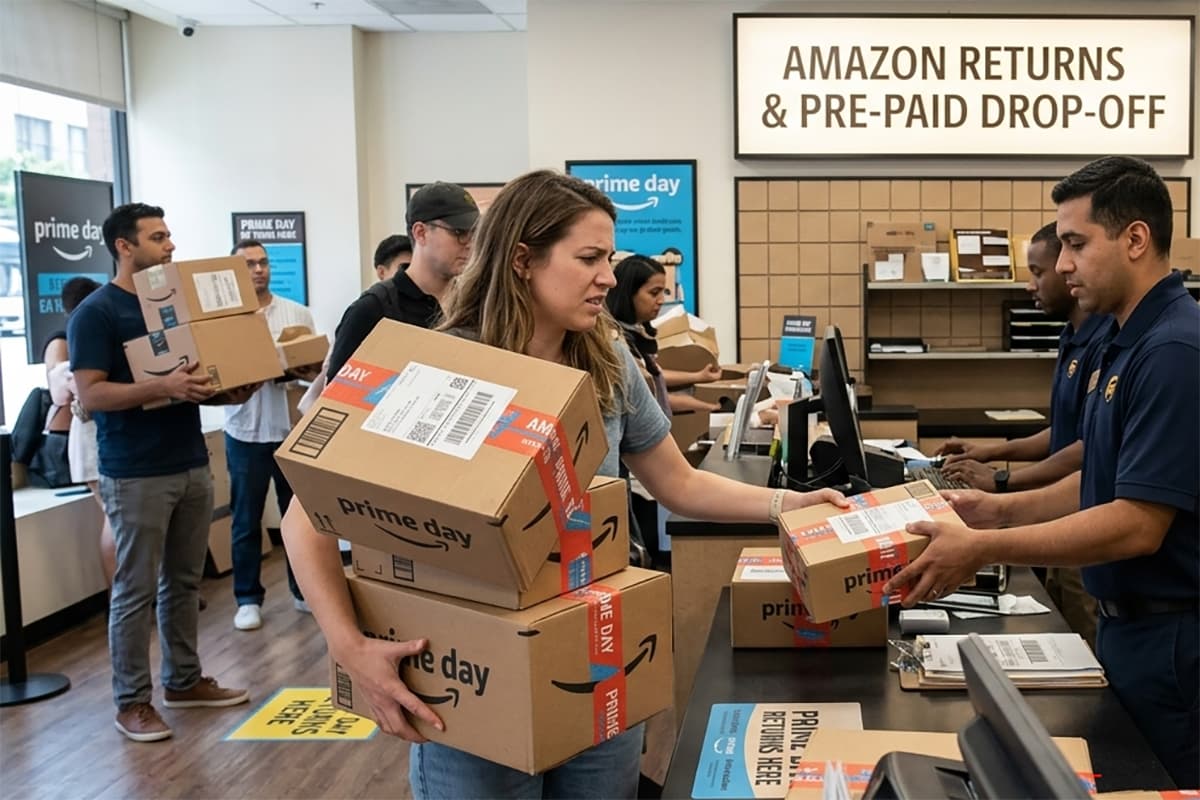
New research from Manhattan Associates reveals that an estimated 61 million items are expected to be returned by UK shoppers following this year’s Prime Day – nearly half (47%) of all purchases made during the event. With 65% of Brits shopping online during major sales events and purchasing an average of 2.39 items each, the […]
Source Lens
Industry Context
Useful background context, but lower-priority than direct platform, community, or operator intelligence.
Impact Level
medium
Use this briefing to decide whether your team needs an immediate workflow, policy, or reporting change.
Key Stat / Trigger
No single quantitative trigger surfaced in this report.
Focus on the operational implication, not just the headline.
Full Coverage
New research from Manhattan Associates reveals that an estimated 61 million items are expected to be returned by UK shoppers following this year’s Prime Day – nearly half (47%) of all purchases made during the event. With 65% of Brits shopping online during major sales events and purchasing an average of 2.
39 items each, the total volume of Prime Day purchases is estimated at 131 million items. But the scale of what comes back is proving just as significant as what goes out. Volume, velocity and value at risk Younger shoppers are driving much of the volume: 25–34-year-olds purchase an average of 3.
69 items, the highest of any age group, and are the most prolific returners. Gen Z shoppers could return up to 73% of what they buy, compared to 44% among those aged 55 and over.
The demographic skew adds a further layer of complexity for retailers to navigate, especially when considering over 1 in 3 (36%) consumers now use AI to inform their purchase decisions – meaning as many as 47 million Prime Day purchases could be AI-influenced this year.
As AI reshapes how shoppers discover and evaluate products, retailers must ensure their commerce operations are equally equipped to handle the downstream consequences in real time. Prime Day is one of the most exciting moments in the retail calendar, but it also puts the entire commerce operation under enormous strain.
The 61 million items expected to be returned don’t all arrive back at the same time or in the same condition. They come in waves, across multiple channels, from different customers with different expectations about refunds, exchanges and delivery.
For retailers without a unified, real-time view of their inventory, orders and fulfilment, that creates a compounding set of problems: refunds that are delayed, exchanges that can’t be fulfilled from the nearest available stock, inventory positions that are unreliable – leading to inaccurate promises for new orders – where customers will be left waiting.
Retailers using unified commerce to see their inventory and orders in real-time are the ones who turn those returns into a commercial opportunity rather than a cost.
– Keith Dipple, EMEA Unified Commerce Sales Director, Manhattan Associates Retailers grapple with the cost of returns For retailers, the post-Prime Day returns window demands strategic attention. On average, retailers report that 37. 29% of Prime Day sales come back as returns, with 1 in 5 (19%) seeing over half of their sales returned.
When the cost of processing each return – including logistics, handling, restocking and resale loss – is factored in, the picture becomes even more concerning, with the mean cost per return standing at £133. 89 and 37% of retailers reporting that post-Prime Day returns cost their business over £25,000 annually.
The financial burden varies considerably by product category, pointing to the need for differentiated, data-driven approaches to reverse logistics. Sports, outdoors and leisure top the table at £466. 91 per return, whilst consumer electronics and tech average £142. 93. Fashion and apparel and health, beauty and personal care sit at the lower end at £25.
71 and £25. 81 respectively. Toys, games and baby products record the highest return rate by category at 40. 68%. For retailers operating across multiple categories, managing this complexity without a unified view of inventory and fulfilment in real-time is an increasingly costly proposition. What strikes me most is the variation in cost by category.
A retailer in sports and leisure processing returns at nearly £467 per item is facing an entirely different operational challenge to one in fashion, yet both are ultimately asking the same question: how do we recover value from this stock as quickly and efficiently as possible? The answer, in both cases, comes back to visibility.
Without a real-time, unified picture of where returned inventory is, what condition it’s in, and where it needs to go next (‘smart returns’), retailers are making expensive decisions based on incomplete information. There simply isn’t time for that.
– Keith Dipple, EMEA Unified Commerce Sales Director, Manhattan Associates Turning returns into resilience With unified commerce at the core of their operations, retailers can connect every touchpoint, from the moment a return is initiated through to final resolution, gaining a single, real-time view of inventory, orders and fulfilment that enables faster decisions, smarter stock redeployment and meaningful margin recovery.
Whether returned stock is routed back to the shelf, reallocated to another fulfilment node or prepared for resale, unified commerce ensures that every item is tracked, every decision is informed, and every opportunity to recover value is acted upon.
With younger, higher-volume shoppers also the most likely to return, and AI increasingly shaping the purchase decisions that precede those returns, the operational complexity retailers face is only set to grow. AI will only be as accurate
Original Source
This briefing is based on reporting from Tamebay. Use the original post for full primary-source context.
Style
Audience