How a New York City bill could shake up Amazon, FedEx delivery operations
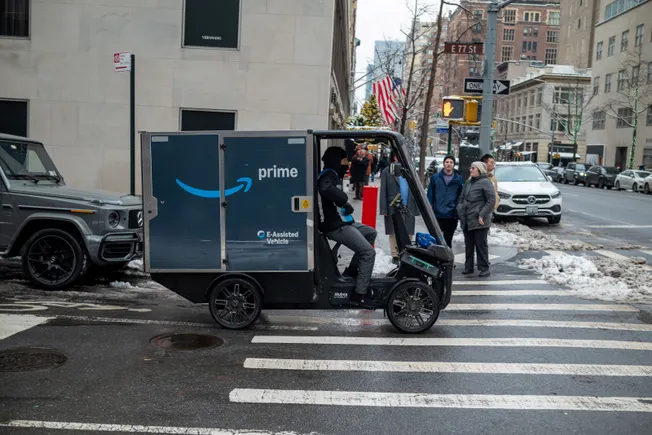
Proponents say the Delivery Protection Act will hold Amazon to account, but a report warns the bill could up shipping costs and slow service in the city.
Source Lens
Industry Context
Useful background context, but lower-priority than direct platform, community, or operator intelligence.
Impact Level
medium
Use this briefing to decide whether your team needs an immediate workflow, policy, or reporting change.
Key Stat / Trigger
No single quantitative trigger surfaced in this report.
Focus on the operational implication, not just the headline.
Full Coverage
An article from Deep Dive How a New York City bill could shake up Amazon, FedEx delivery operations Proponents say the Delivery Protection Act will hold Amazon to account, but a report warns the bill could up shipping costs and slow service in the city. Published Aug.
27, 2026 Max Garland Lead Reporter Share Copy link Email / Print License Add us on Google A driver operates an Amazon delivery vehicle in New York City. Amazon has been outspoken about its opposition to the Delivery Protection Act, a bill proposed in the New York City Council that would impact how the company runs its delivery operations.
Getty Images Listen to the article 8 min This audio is auto-generated. Please let us know if you have feedback. Every day across New York City, drivers in Amazon-branded vehicles deliver packages sorted and fulfilled by the e-commerce giant to consumers.
However, these drivers aren't employed by Amazon, despite the prevalence of the company’s logo on the vehicles they drive and attire they wear. Instead, they work for businesses called " Delivery Service Partners," which operate under contract to make deliveries for Amazon.
Amazon isn't alone in contracting out the final mile of delivery — FedEx leverages contracted service providers for ground-based deliveries. Alternative carriers OnTrac and Gofo also tap independent companies to support their shipping services.
A proposed bill aims to limit that model's use in New York City, which opponents of the legislation said could slow deliveries and ramp up shipping costs if it is signed into law, according to testimonies submitted to the city’s Committee on Consumer and Worker Protection in April.
The Delivery Protection Act, which New York City Mayor Zohran Mamdani voiced his support for earlier this month, would require operators of last-mile warehouse and distribution facilities in the city to directly employ core delivery and warehouse workers instead of contracting with a third party for those services.
The bill, which includes a two-year grace period to comply with the direct employment requirement, would also create a licensing system for storage and distribution facilities and establish new safety, training and labor standards, per a news release from Mamdani's office earlier this month.
Elements of the training program include when and where to make delivery stops along trafficked roads and how to ensure pedestrian safety during frequent stops.
The legislation will help New York City better regulate last-mile operations and ensure companies like Amazon are accountable for delivery drivers' quotas, schedules and routes while also combating "worsening traffic safety" tied to the facilities, per the release. How fast the legislation could progress and become law is unclear.
The bill is currently with the Committee on Consumer and Worker Protection. But if the legislation passes, it could become a model for other major cities to follow — and create added complexity for many last-mile operators in the process — according to Shawn Compton, chief logistics officer at DCL Logistics.
The International Brotherhood of Teamsters union, which supports the Delivery Protection Act, is pushing for a similar bill to be passed in Chicago. "This could have a much farther-reaching impact because nobody's expecting it to stay just in New York City if it passes," Compton said in an interview with Supply Chain Dive.
A person makes an Amazon delivery on Fifth Avenue in Manhattan. Amazon said it could move operations and delivery facilities outside of New York City if the Delivery Protection Act becomes law. Massimo Giachetti via Getty Images Could the bill lead to rising costs and relocations?
Ensuring full compliance with the legislation by converting contracted drivers to employees would increase labor and operating costs for companies like Amazon, per a June report from economic and transportation consultancy AKRF.
Instead of absorbing the costs, companies would likely move a large portion of their distribution activities to facilities outside of New York City and into nearby areas like New Jersey, per the report, which was prepared for the Five Borough Jobs Campaign.
The organization backs New York Delivers, a coalition opposing the bill which includes FedEx, Amazon, Prologis and several smaller logistics companies as members.
"Longer travel time to routes and service areas would reduce network efficiency and eliminate dozens of stops per driver, translating to slower deliveries for NYC customers, especially in the outer boroughs," the report said. "Same-day and next-day services would likely be curtailed, and product availability may be adjusted."
About 36% of current daily parcel volume in New York City is tied to contractor operations that are at risk from the legislation, the report noted. It added that households and small businesses can expect higher per-package delivery costs if the legislation passes, but the magnitude of the increase woul
Original Source
This briefing is based on reporting from Supply Chain Dive. Use the original post for full primary-source context.
Style
Audience