Industrial Demand Is Broadening. So Is Competition for Space
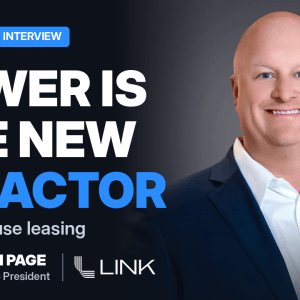
Industrial real estate is tightening. Link Logistics’ Brandon Page explains how data centers, power access and faster decisions are reshaping leasing. The post Industrial Demand Is Broadening. So Is Competition for Space appeared first on FreightWaves.
Source Lens
Industry Context
Useful background context, but lower-priority than direct platform, community, or operator intelligence.
Impact Level
medium
Use this briefing to decide whether your team needs an immediate workflow, policy, or reporting change.
Key Stat / Trigger
No single quantitative trigger surfaced in this report.
Focus on the operational implication, not just the headline.
Full Coverage
For much of the past few years, industrial tenants had the luxury of time. Options were plentiful, negotiations dragged and “let’s see what else is out there” was a viable strategy. That window is narrowing.
In a recent market update conversation with Thomas Wasson, Brandon Page, executive vice president and head of leasing and customer solutions at Link Logistics, described a market where demand is building, competition for space is returning and the criteria that decide a lease are shifting.
Link Logistics is one of the largest owners and operators of last-mile industrial real estate in North America, with nearly 500 million square feet across the U. S. and Canada. Page oversees portfolio leasing strategy and works closely with its largest customers, which gives him a front-row view of what occupiers want.
For carriers, 3PLs, shippers and anyone else whose network depends on where buildings sit and how they perform, his read is worth a close look. Demand Is Broadening Page said demand has built steadily for months.
“I would say demand has consistently accelerated throughout the year,” he said, adding that the momentum began toward the end of last year and has continued. He sorted the drivers into tiers.
The most dominant is the AI data center ecosystem, which generates activity during construction and again during ongoing maintenance, alongside advanced manufacturing and reshoring investments that are starting to come online. “We want to own the buildings that are adjacent to [the data centers] to help support those facilities,”Page said.
The second tier is the bread-and-butter freight demand: e-commerce and omnichannel distribution, which follows the consumer and the push toward same-day and next-day delivery. Third-party logistics providers, historically Link Logistics’ largest occupiers, continue to move steadily.
Page also pointed to cold storage and to defense and aerospace as specialty segments with new momentum, citing a recently announced Anduril investment likely to affect markets such as Baltimore. Fast Movers Win Even as demand builds, Page said tenant decision-making is still deliberate.
Customers and their brokers take time to understand a facility and all of its costs. But the dynamics are changing. “We are starting to see situations where we have multiple customers and prospects going after the same building,” he said, noting it’s something Link Logistics saw regularly during COVID. The implication for occupiers is clear.
“Those that are moving quicker are having better success than those that are sort of paralysis by analysis,” Page said. That message extends to the brokers who represent those tenants. The market remains fairly balanced, he said, but there are more tailwinds than headwinds for landlords heading into year-end than a year ago.
Brokers need to prepare clients for rents that will change as markets tighten. “The days of having five or 10 options in a market are gone, and they may have one or two,” he said. Data Centers Move From Footnote to Force A couple of years ago, data center-related leasing was a very small part of Link Logistics’ activity. Now it’s a meaningful share.
“15% of Link’s new leasing activity over the past year is tied to data centers,” Page said. He offered a rule of thumb for the scale of the spillover. “Each gigawatt of data center capacity generates roughly 2 million feet,” he said. “We actually think in some cases it’s closer to 2. 5 million feet of associated demand.”
Just as important for landlords is how long that demand lasts. Page said 80% of data center-driven demand is long term, with tenants that help stand up facilities and then stay on for ongoing maintenance. The other 20% sign two- to three-year leases focused on setup. “Which is a good tailwind as well for industrial,” he said.
Balancing Scale and Proximity Two trends in building size can look contradictory but reflect the same goal of efficiency. For large users, Page described “a clear trend of consolidating those 200,000 to 400,000 square foot buildings,” sometimes folding two or three of them into a single facility of about 1 million square feet.
Running three buildings means three sets of capital investment and management teams, he said, “just three times the work.” Class A buildings, with their cubic efficiency, tend to lease first. For last-mile and omnichannel users, the equation flips toward proximity.
Link Logistics’ portfolio is largely multi-tenant infill space close to customers, and in those cases, Page said, location can matter more than state-of-the-art specs. “You can’t beat location and access,” he said. Big retail customers are working to get as close to consumers as possible, sometimes delivering in as little as 30 minutes.
Whether an order ships from a store or a warehouse, he said, the answer is increasingly “all the above.” 3PLs play a particular role in this environment. Page called them “the fastest way to stand up or modify your national supply chain network,” with les
Original Source
This briefing is based on reporting from Freightwaves. Use the original post for full primary-source context.
Style
Audience
Get fee and policy changes before they hit your margin
The free Daily Marketplace Brief flags fee and policy changes across Amazon, Walmart, TikTok Shop, eBay and Etsy, with the source document.