

State of Freight: Freight recession ‘over’ as demand builds into summer
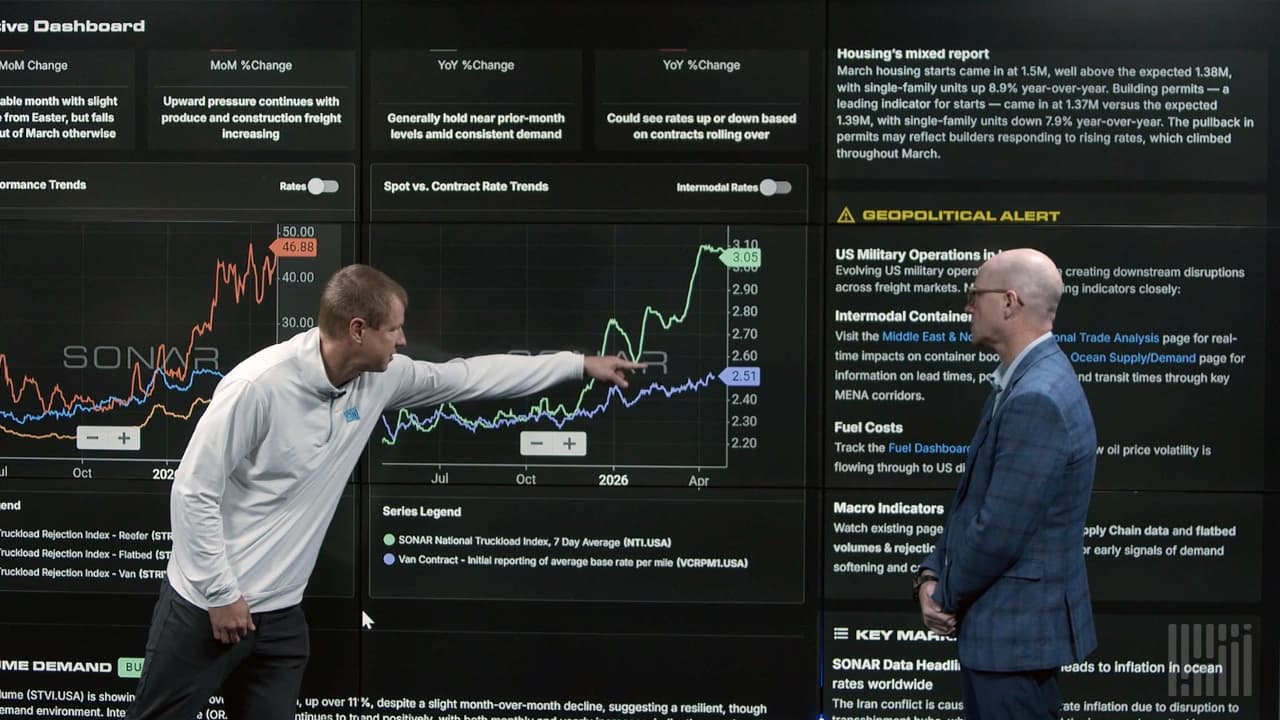
Freight market analysts declare freight recession over as diesel prices rose 41% since March 2 due to Iran conflict, but capacity remains tight with rejection rates at 12.7%. Summer demand expected to accelerate starting in May after typical April seasonal weakness.
Rising freight costs will squeeze margins for sellers using FBM or 3PL services, while FBA sellers gain competitive advantage as Amazon absorbs shipping volatility. Upcoming CVSA Roadcheck enforcement could create delivery delays and higher logistics costs through summer peak season.
This accelerates the shift toward Amazon's fulfillment ecosystem as independent logistics becomes more expensive and less reliable, giving FBA sellers a structural cost advantage during peak season.
Review your shipping cost allocation in Seller Central - if using FBM, expect 10-15% higher inbound costs through summer peak season
Audit 3PL contracts for fuel surcharge clauses and negotiate caps before May demand surge hits logistics providers
Bottom Line
Freight costs rising 41% means FBA advantage grows over FBM sellers.
Source Lens
Industry Context
Useful background context, but lower-priority than direct platform, community, or operator intelligence.
Impact Level
medium
Freight costs rising 41% means FBA advantage grows over FBM sellers.
Key Stat / Trigger
41% diesel price increase since March 2
Focus on the operational implication, not just the headline.
Full Coverage
The April installment of the State of Freight webinar, hosted by FreightWaves CEO Craig Fuller and Head of Freight Market Intelligence Zach Strickland, pointed to a freight market that remains structurally tight—even as seasonal softness and macro uncertainty cloud near-term visibility.
From geopolitical disruptions in the Middle East to upcoming enforcement events and summer demand patterns, the discussion highlighted a market transitioning from recovery into a more durable tightening cycle.
Here are five key takeaways: Iran conflict driving fuel volatility, but not derailing demand Fuller said the ongoing conflict in Iran is having a clear impact on fuel markets, though the broader freight economy remains resilient.
“All of it is tied to Iran… high oil prices are a factor at Iran… but there’s nothing in any of the data that says that higher fuel costs… is sapping the U. S. economy,” Fuller said window. googletag = window. googletag || {cmd: []}; googletag. cmd. push(function() {googletag.
defineSlot('/21776187881/FW-Responsive-Main_Content-Slot1', [[300, 100], [320, 50], [728, 90], [468, 60]], 'div-gpt-ad-1709668545404-0'). defineSizeMapping(gptSizeMaps. banner1). addService(googletag. pubads()); googletag. pubads(). enableSingleRequest(); googletag. pubads(). collapseEmptyDivs(); googletag. enableServices(); }); googletag. cmd.
push(function() {googletag. display('div-gpt-ad-1709668545404-0'); }); Strickland noted that diesel volatility has been reactive to geopolitical developments, especially around the Strait of Hormuz.
“We saw this pretty significant spike in retail diesel… and then as we started to see the end of the military conflict… the price of diesel came down,” Strickland said. The average retail price of diesel (DTS. USA) — the primary fuel source for Class 8 trucks — has risen over 41% since March 2. To learn more about SONAR, click here.
Fuller, emphasizing that fuel costs alone are not dictating freight pricing power, said the “tightness in capacity enables motor carriers to have pricing power… not necessarily diesel.” Strickland added that carriers are still recovering fuel costs through rates in a tightening environment.
“If you look at what the rates are… you’ve been able to recover all of that and potentially more,” he said April: inflection point or seasonal “speed bump”? Both executives pushed back on the idea that April’s softer trends signal a reversal. “April has been… just kind of a sideline,” Strickland said.
“It’s not up and to the right the way we saw it in March.” Fuller countered that the market remains far stronger than year-ago levels. window. googletag = window. googletag || {cmd: []}; googletag. cmd. push(function() {googletag.
defineSlot('/21776187881/fw-responsive-main_content-slot3', [[728, 90], [468, 60], [320, 50], [300, 100]], 'div-gpt-ad-1665767553440-0'). defineSizeMapping(gptSizeMaps. banner1). addService(googletag. pubads()); googletag. pubads(). enableSingleRequest(); googletag. pubads(). collapseEmptyDivs(); googletag. enableServices(); }); googletag. cmd.
push(function() {googletag. display('div-gpt-ad-1665767553440-0'); }); “We’re talking about rejection rates… at 12. 7%… these are levels that we haven’t seen in years,” Fuller said. He also pointed to stronger macro signals underpinning freight. “You’re starting to see broader economic data… indicating much stronger activity than most people expected.”
Strickland framed April as a typical seasonal trough rather than a turning point. “April is historically a weak month… you end up in May with a massive acceleration,” Strickland said. Roadcheck could tighten already constrained capacity Looking ahead, both warned that the upcoming CVSA International Roadcheck could meaningfully disrupt capacity. window.
googletag = window. googletag || {cmd: []}; googletag. cmd. push(function() {googletag. defineSlot('/21776187881/fw-responsive-main_content-slot4', [[300, 100], [320, 50], [728, 90], [468, 60]], 'div-gpt-ad-1709668086344-0'). defineSizeMapping(gptSizeMaps. banner1). addService(googletag. pubads()); googletag. pubads(). enableSingleRequest(); googletag.
pubads(). collapseEmptyDivs(); googletag. enableServices(); }); googletag. cmd. push(function() {googletag. display('div-gpt-ad-1709668086344-0'); }); “We’re going to see capacity come off the roads… more than usual,” Fuller said. He added that stricter enforcement and compliance scrutiny are already influencing driver behavior.
“Drivers know that the DOT is getting directives to really crack down… so I think we’re going to see more capacity taken off the road,” Fuller said. Strickland said the impact could be amplified by an already tight market, adding “there is very little excess capacity… so the market is much more sensitive.”
Fuller expects rejection rates to spike during the enforcement period. “We will get into the 16%–17% range for a week,” he said. window. googletag = window. googletag || {cmd: []}; googletag. cmd. push(function() {googletag. defineSlot('/21776187881/fw-responsive-main_content-slot5', [[
Original Source
This briefing is based on reporting from Freightwaves. Use the original post for full primary-source context.
Style
Audience