

The freight brokerage model broke carrier selection
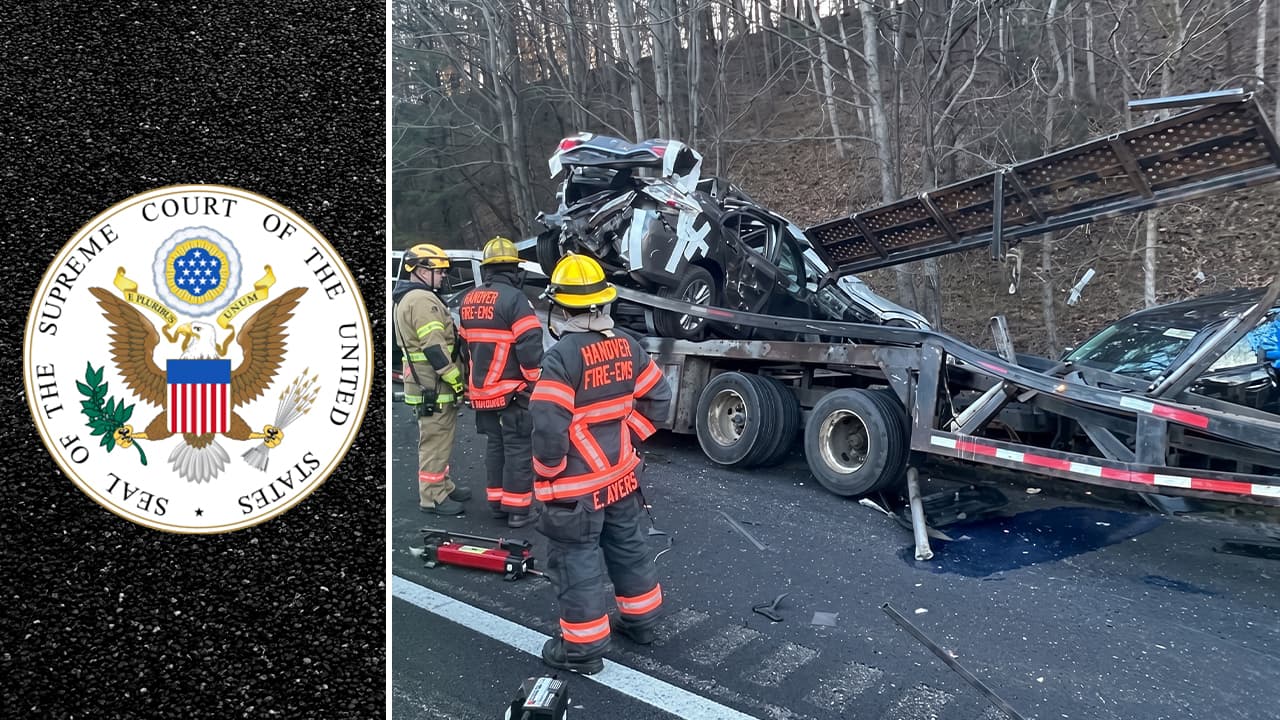
Supreme Court will decide by June 2026 whether freight brokers face liability for negligently selecting carriers, following a case where C.H. Robinson was sued after a carrier they selected caused a highway collision. Currently, 97% of the 750,000 active carriers have no safety rating, making broker vetting largely meaningless.
If brokers become liable for carrier selection, expect stricter vetting requirements that could reduce carrier pool and increase shipping costs for sellers. Monitor your logistics partners' carrier selection criteria and consider diversifying 3PL relationships before potential industry consolidation.
This represents broader supply chain risk consolidation, where regulatory shifts force intermediaries to internalize safety costs previously externalized to the market.
Review your 3PL contracts now -- ensure they specify carrier vetting standards and liability coverage for negligent selection
Audit shipping cost trends in Q2 2026 -- budget for 5-10% increases if broker liability ruling forces stricter carrier requirements
Bottom Line
Freight broker liability ruling could increase shipping costs industry-wide.
Source Lens
Industry Context
Useful background context, but lower-priority than direct platform, community, or operator intelligence.
Impact Level
medium
Freight broker liability ruling could increase shipping costs industry-wide.
Key Stat / Trigger
97% of 750,000 active carriers have no safety rating
Focus on the operational implication, not just the headline.
Full Coverage
On March 4, 2026, the Supreme Court heard oral argument in Montgomery v. Caribe Transport II, LLC, a case that originated from a December 2017 highway collision in which Shawn Montgomery was severely injured after a tractor-trailer veered off the road and struck his stopped vehicle on the shoulder of an Illinois highway.
Montgomery sued not only the carrier and the driver but also C. H. Robinson, the freight broker that arranged the shipment, alleging that Robinson negligently selected Caribe Transport and its driver. The question the Supreme Court is being asked to resolve is whether 49 U. S. C.
Section 14501(c), the federal preemption provision of the Federal Aviation Administration Authorization Act, preempts a state common-law claim against a broker for negligently selecting a motor carrier or driver. The Seventh Circuit said yes, brokers are preempted. Montgomery appealed. A decision is expected by the end of June.
This is a case that the brokerage industry desperately wants to win and that plaintiff attorneys desperately want to lose. Understanding why requires understanding how carrier selection actually works in the current freight market, because the legal argument and the operational reality are running in completely different directions.
There is no uniform standard for how brokers select carriers. There is no federal regulation that specifies what vetting criteria a broker must apply before tendering a load to a motor carrier.
There is no minimum requirement for how a broker evaluates a carrier’s crash history, out-of-service rate, violation patterns, or insurance quality before deciding to move freight. Every broker in America maintains its own procurement criteria, carrier approval standards, and definition of what constitutes adequate vetting. Some are rigorous. Many are not.
The satisfactory safety rating has become the de facto minimum standard for broker carrier selection, even though it is almost meaningless as a current indicator of carrier safety.
According to Jack Van Steenburg, former executive director and chief safety officer of the FMCSA, approximately 19,000 motor carriers hold satisfactory safety ratings among the roughly 750,000 carriers with active operating authority in the United States. That is approximately 3 percent of the carrier population.
The remaining 97 percent of carriers have no safety rating. A safety rating is issued only after a compliance review, an on-site examination of motor carrier operations. The FMCSA lacks the resources to conduct compliance reviews for 750,000 carriers, which is why 97 percent of those carriers have never been rated.
When a broker says their carrier procurement policy requires a satisfactory safety rating, they are effectively saying they will use any of the 750,000 active carriers in America, except for the small number that have undergone a compliance review and received a conditional or unsatisfactory finding. That is not carrier vetting.
That is authority verification with an additional filter that eliminates less than one percent of the carrier population. What brokers and shippers often overlook is data that actually tells you something about a carrier’s operational safety record. Out-of-service rates by vehicle and driver.
Aggregate crash history, including fatal, injury, and property damage counts. Insurance cycling patterns that indicate a carrier is being dropped and repriced repeatedly. Whether the carrier’s principals appear connected to previously revoked or failed operations.
Whether the carrier’s physical address is shared by dozens of other carriers at a virtual mail drop. Whether the carrier was formed six months ago with no operational history.
The argument that holding brokers liable under state negligence law would push them to hire only large, well-capitalized carriers, as broker advocates have argued before the Supreme Court, is, in effect, an admission that brokers currently hire carriers they would not hire if there were actual accountability attached to the selection.
That is not an argument against broker liability. It is an argument for it. What the industry needs to understand before the Supreme Court issues its decision is that the outcome in either direction does not solve the underlying problem. If the Court rules in Montgomery’s favor, brokers face negligent-hiring claims under state law.
If the Court rules in favor of C. H. Robinson, brokers face no state tort liability for their carrier selection decisions. Neither outcome fixes the market failure.
The market failure is that price pressure in spot freight brokerage has made carrier safety a secondary consideration in what should be the most safety-critical procurement decision in American surface transportation.
The answer to all three stakeholder questions, shipper, broker, and carrier, is that the legal framework will not solve a market incentive problem. Accountability only changes behavior when it is attached to the actual decision-maker in real time.
A plaintiff verdict three years after a crash against a broker that has since changed its procurement policies does not change the rate email that went out to carriers last Tuesday afternoon, seeking the cheapest truck from Norfolk to Detroit.
What changes the rate email is requiring brokers to maintain documented carrier selection criteria, apply that criteria consistently, and demonstrate that the criteria encompass more than a safety rating check. The Supreme Court cannot mandate that. FMCSA could. It has chosen not to.
Until it does, the rate is the rating, the motoring public is the last line of defense, and Shawn Montgomery is not going to be the last person standing on the shoulder of a highway when the wrong carrier comes through. The post The freight brokerage model broke carrier selection appeared first on FreightWaves.
Original Source
This briefing is based on reporting from Freightwaves. Use the original post for full primary-source context.
Style
Audience