Amazon CTO Werner Vogels’ 5 tech predictions for 2027 and beyond
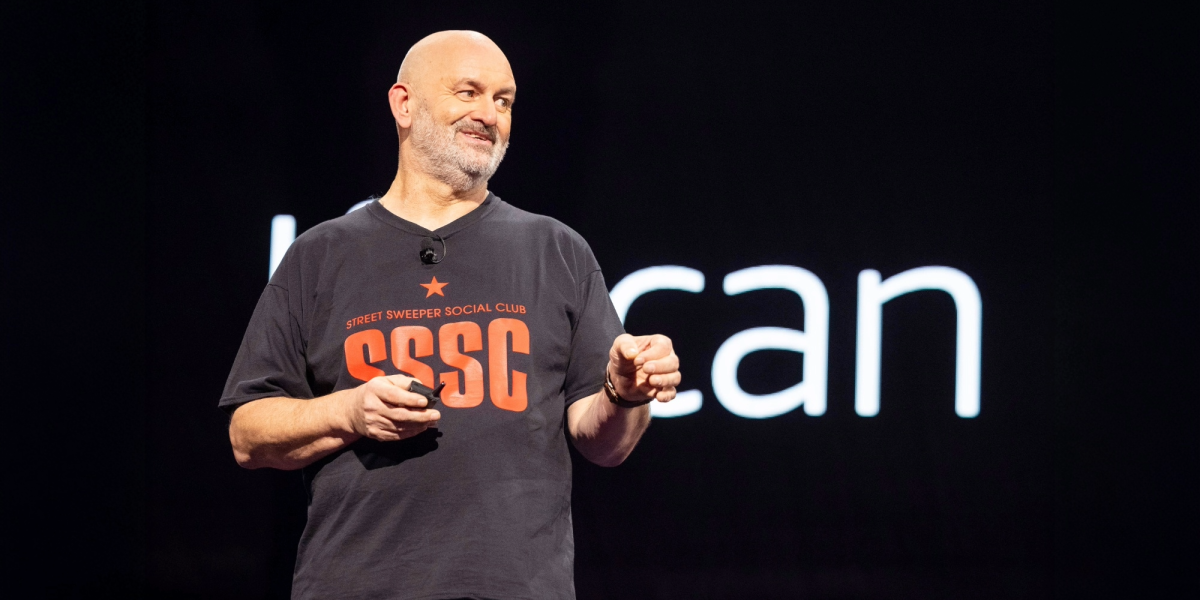
From computers built on living neurons to brain interfaces that need no surgery, Amazon’s CTO shares what’s coming in 2027 and beyond.
Source Lens
Official Platform Update
Direct platform communication. Highest-value for policy, product, and operational changes.
Impact Level
medium
Use this briefing to decide whether your team needs an immediate workflow, policy, or reporting change.
Key Stat / Trigger
No single quantitative trigger surfaced in this report.
Focus on the operational implication, not just the headline.
Full Coverage
Key takeaways Neuroscience will shape the next generation of energy-efficient computing systems. AI agents will attack software before it ships and keep testing it for as long as it runs. Brain interfaces that need no surgery will be part of daily life by the end of the decade.
Robotics, AI, space exploration, and biotech are converging to power what Amazon CTO Dr. Werner Vogels calls a golden era of innovation. Vogels describes himself as a techno-optimist, but he also acknowledges that technology can be used for malicious acts, and that organizations need to prepare for bad actors and an unpredictable geopolitical landscape.
Here are the highlights: Page overview Computing returns to biology 1 Computing returns to biology 2 Every system defends itself 3 Sovereignty becomes a non-functional requirement 4 Collaboration between scientists and agents leads to new cures 5 The mind becomes readable 1.
Computing returns to biology For most of computing’s history, memory and processing have lived in separate places, with data moving between them, consuming energy, and producing heat. The human brain, by contrast, computes in memory, improves with use, and runs with the efficiency of a small lightbulb.
Vogels predicts neuroscience will increasingly influence how systems are designed in the years to come. Biological computing is one example. Cortical Labs in Melbourne, Australia grows living human neurons on silicon chips that learn tasks through trial and error, using significantly less power than a rack of high-end graphics processors.
Chip designers are also building neuromorphic processors that store and process information in the same place, the way the brain does. Energy costs will drive much of this progress.
Systems that compute where they store information and learn from fewer examples can also bring computing to places where power and network access are limited, including rural hospitals, schools, and farms.
AWS commits $100 million of AI and cloud technology to help organizations expand health services worldwide The AWS Health Impact Initiative gives health organizations access to AI and cloud technology to build solutions for underserved communities. 2.
Every system defends itself Finding a software flaw and turning it into an attack once took expertise, weeks of work, and resources few organizations could afford, which gave defenders time to patch. In the past year, that timescale has collapsed.
AI agents now bring the expertise with them, run in swarms, and cost so little that an attacker can run hundreds of them in parallel. In 2027, Vogels predicts adversarial testing will move into every phase of software development.
Before software reaches the outside world, an organization’s own agents will have attacked it hundreds or thousands of times, and those attacks will continue for as long as the system runs. Amazon is already seeing the early stages of this work, including AWS Continuum, a service that looks for risks in customers’ code and proves which ones are exploitable.
Agents will free security experts to concentrate on work that requires human judgment, and systems will get safer as a result. 3. Sovereignty becomes a non-functional requirement For the last few years, a main concern Vogels has heard from chief information officers (CIOs) has been how to control cost.
In the past year, the number 1 question he hears is how to deal with geopolitical tensions that may affect where they store data, where they run workloads, and which services they rely on. In 2027 and beyond, builders will design for sovereignty the way they design for security and cost.
Where data lives, who holds the keys, and which AI model touches it will be requirements a system proves on every deployment, because an AI agent can now add a replica in another region or swap a model in minutes. Vogels also cautions against overcorrecting, noting that isolation is not the same thing as control.
The organizations that get this right will decide, workload by workload, how much sovereignty each one needs, whether that means a dedicated environment such as the AWS European Sovereign Cloud or customer-held keys. AI safety can’t depend on an emergency brake. It needs better engineering.
Most of the practical tools to build trustworthy AI systems already exist, and the industry needs to use them. 4. Collaboration between scientists and agents leads to new cures Every cure starts with understanding a disease well enough to know which treatments to pursue.
It’s also the slowest part of the research process, and it sets the pace for everything that follows, from lab work to clinical trials. AI agents can now help research teams examine evidence at a speed and scale no person or team could match. There are early signs of what’s possible.
In August, a personalized mRNA cancer vaccine, with targets selected by machine learning from the mutations in each patient's tumor, reduced the risk of recurrence in a late-stage melanoma trial when
Original Source
This briefing is based on reporting from About Amazon. Use the original post for full primary-source context.
Style
Audience
Get fee and policy changes before they hit your margin
The free Daily Marketplace Brief flags fee and policy changes across Amazon, Walmart, TikTok Shop, eBay and Etsy, with the source document.