

3 carriers and Kroger blocked hiring of ex-Quickway drivers: lawsuit
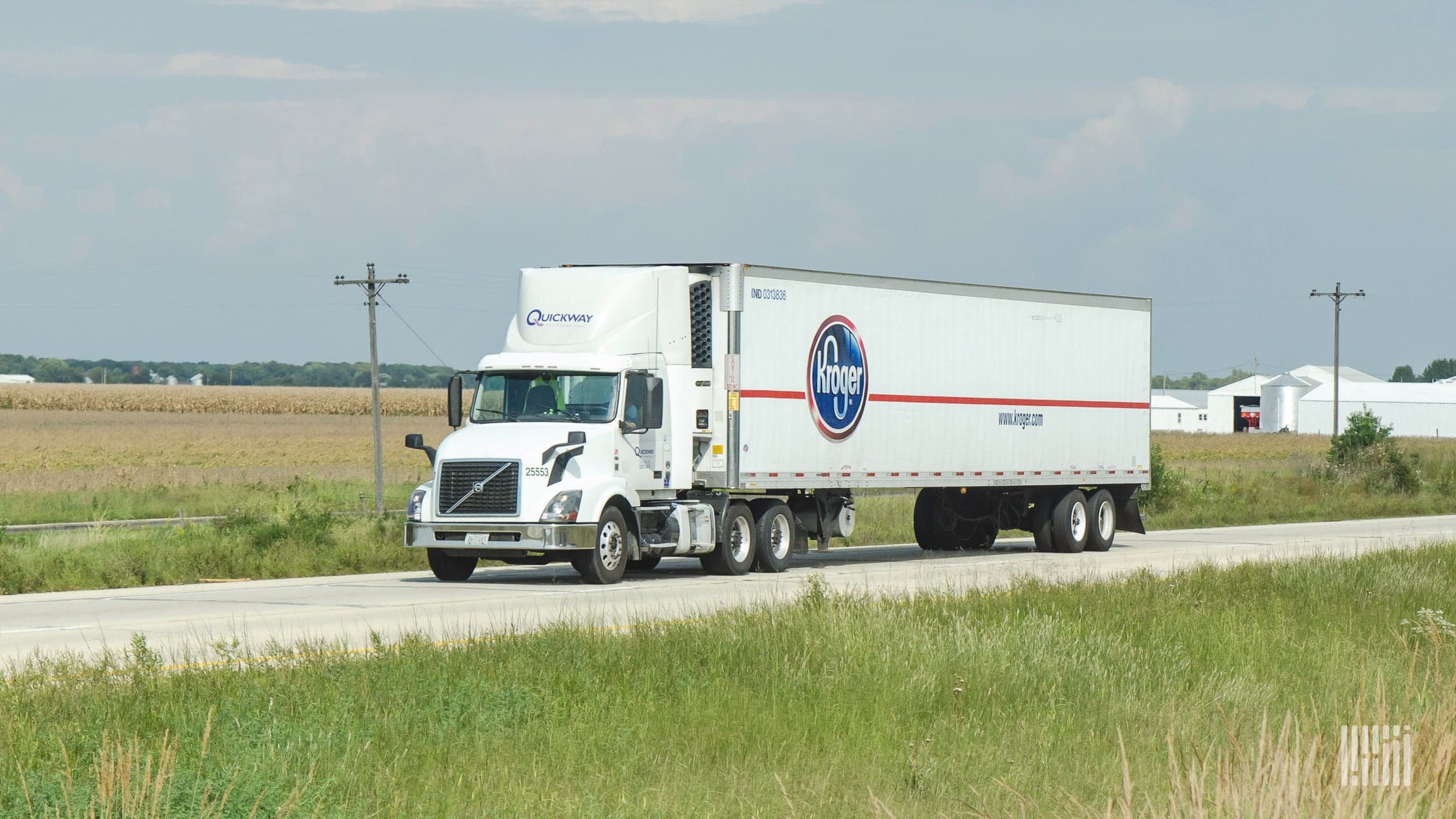
Three former unionized Quickway Transportation drivers filed a class action lawsuit alleging Kroger instructed Swift, U.S. Xpress, and Werner to blacklist ex-Quickway drivers from hiring. Werner denied the claims, stating they hired 62% of former Quickway drivers in Newark, OH.
This highlights potential supply chain disruption risks when key logistics partners face labor disputes or shutdowns. Sellers should diversify their carrier relationships and monitor for service interruptions that could affect inventory flow to fulfillment centers.
Labor disputes in the logistics sector create supply chain vulnerabilities that can cascade to marketplace sellers dependent on specific carrier networks for inventory distribution.
Audit your 3PL and carrier partnerships - ensure you have backup logistics providers beyond primary contracts to avoid shipping delays.
Monitor your inbound shipment performance metrics for any carriers serving your routes to Kroger-supplied retailers.
Bottom Line
Kroger carrier dispute shows logistics fragility for marketplace sellers.
Source Lens
Industry Context
Useful background context, but lower-priority than direct platform, community, or operator intelligence.
Impact Level
low
Kroger carrier dispute shows logistics fragility for marketplace sellers.
Key Stat / Trigger
62% of former Quickway drivers hired by Werner
Focus on the operational implication, not just the headline.
Full Coverage
(Editor’s note: A comment from Werner has been added from the original publication). Three former drivers of the now-shuttered Quickway Transportation have filed suit against three carriers and a major shipper, The Kroger Co. , alleging that the trucking companies, acting on instructions from Kroger, refused to hire former Quickway drivers.
The suit was filed Thursday in the U. S. District Court for the Southern District of Ohio. Kroger (NYSE: KR) is one of the largest grocers in the country, operating under not just the Kroger name but also operating stores such as Ralphs, Harris Teeter, Fred Meyer, and King Soopers. Its headquarters is based in Cincinnati, hence the venue for the lawsuit.
The three carriers in the lawsuit are Swift Transportation Services LLC (NYSE: KNX), U. S. Xpress (both of which are parts of the broader Knight Swift) and Werner Enterprises (NASDAQ: WERN). Seeking class certification The three drivers are seeking to turn the lawsuit into a class action.
More than 100 former Quickway drivers could be in any potential class action, according to the lawsuit filed by Dan Cheatham, Brian Kuhn and Eric Cabler, all former Quickway drivers. According to the lawsuit, the three all applied for employment with some combination of Swift, U. S. Xpress or Werner.
The three plaintiffs and other members of a potential class action “met all necessary qualifications and, in fact, had been performing identical or near identical jobs for Quickway,” the lawsuit said.
The core of the drivers’ argument is that the carriers were told by Kroger not to hire any former Quickway drivers, which they allege in the lawsuit owes to the fact that the drivers of that now-defunct carrier were unionized.
None of the other carriers are unionized, though what looked like a small successful unionization effort at a local division of Werner fell apart in 2024. Did they get the word from higher up? “Representatives of Werner, Swift, and U. S.
Xpress acknowledged to (the drivers) that they had been instructed by Kroger not to hire former Quickway drivers at the time they rejected Plaintiffs’ job applications,” the lawsuit alleges. “(The drivers) were told there was ‘a gentlemen’s agreement’ and that it ‘came from the top.’”
The carriers were described by the drivers’ lawsuit as “reasonable employment options for former Quickway drivers.” They said the evidence suggests that there was an “overarching agreement” among the three companies and Kroger not to hire any former Quickway drivers. Such a pact, the lawsuit says, would be an illegal restraint of trade under the Sherman Act.
“As a direct and proximate result of Defendants‘ unlawful agreements, Plaintiffs and the putative class of former Quickway drivers suffered substantial harm, including loss of employment, suppression of wages and earning potential, restriction of their ability to obtain comparable employment in the commercial transportation industry, and deprivation of the competitive bidding for their labor services to which they were entitled under federal antitrust law,” according to the lawsuit.
While FreightWaves reached out to Kroger and Knight Swift, only Werner issued a comment on the lawsuit. “Werner denies these baseless allegations and our data supports our position,” the company said in its comment.
“In Newark, OH, we successfully onboarded 62% of the former Quickway drivers to a Kroger account and continue to welcome any qualified applicants who meet our qualification standards.” Werner also took aim at the specifics of the sites mentioned in the lawsuit.
“Werner does not currently conduct business with Kroger in Shelbyville, Indiana or Lynchburg, Virginia. However, should Werner expand its operations into those markets, we would apply the same proactive, safety-first hiring approach.
We will defend our reputation and hiring practices to the fullest extent of the law and are exploring options to seek damages from the plaintiffs for bringing these claims against Werner.” Quickway had been a Kroger carrier Quickway had been a Kroger carrier for a “substantial period of time,” according to the lawsuit.
The filing also notes that Kroger has a private fleet. Unions are not a foreign concept to Kroger. In its recent annual 10-K filing with the Securities & Exchange Commission, the company said more than two-thirds of its employees are covered by collective bargaining agreements.
While there is no breakout in the 10-K about what percentage of them are represented by the Teamsters, as the Quickway drivers were, the Teamsters celebrated a victory in 2024 for its first representation of Kroger workers at a fulfillment center. The 10-K also provides data on Kroger contributions to Teamsters pension funds.
After Quickway closed in early March, according to the lawsuit, “Kroger labor representatives engaged in conversations with Teamsters representatives to supposedly find a solution to retain the Teamsters represented Quickway drivers. At around the same time, Kroger sought
Original Source
This briefing is based on reporting from Freightwaves. Use the original post for full primary-source context.
Style
Audience