Port of Los Angeles preps for cargo bump as shippers navigate global risks
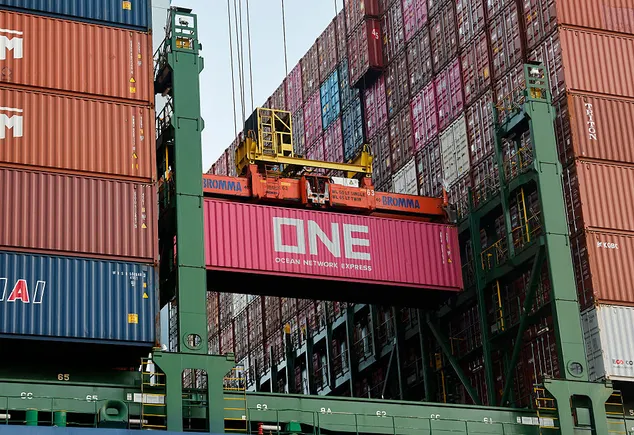
The port may see a 5% volume uptick amid Red Sea and Panama Canal concerns and is readying itself for the scenario in talks with operating partners.
Source Lens
Industry Context
Useful background context, but lower-priority than direct platform, community, or operator intelligence.
Impact Level
medium
Use this briefing to decide whether your team needs an immediate workflow, policy, or reporting change.
Key Stat / Trigger
No single quantitative trigger surfaced in this report.
Focus on the operational implication, not just the headline.
Full Coverage
An article from Dive Brief Port of Los Angeles preps for cargo bump as shippers navigate global risks The port may see a 5% volume uptick amid Red Sea and Panama Canal concerns and is readying itself for the scenario in talks with operating partners. Published Aug.
21, 2026 Alejandra Carranza Reporter Share Copy link Email / Print License Add us on Google A shipping container is loaded onto an HMM container ship at the Port of Los Angeles. The port may see volumes go up from shippers diverting cargo to the West Coast and avoiding potential Red Sea and Panama Canal risks.
Mario Tama via Getty Images Listen to the article 3 min This audio is auto-generated. Please let us know if you have feedback.
Dive Brief: The Port of Los Angeles is planning for a 5% year over year uptick in cargo volumes, in the next six to eight months, as conflict in the Red Sea persists and draft restrictions from the Panama Canal have begun, Executive Director Gene Seroka said during a media briefing on Tuesday.
While Seroka said the uptick in volume is not a promise, he said the port is prepping though conversations with the Harbor Trucking Association, marine terminal operators, shipping lines and the International Longshore and Warehouse Union.
Due to the ongoing concerns at the Suez Canal and the Panama Canal, “more cargo is going to be flowing through the West Coast ports and primarily here to southern California,” Seroka said. He added that "seeing different routes, like ones through the West Coast, can not only cut down on transit time, but also the cost associated with shipping those goods."
Dive Insight: In recent years, major shipping lines have avoided transiting the Suez Canal due to Houthi-led attacks on cargo vessels. But some carriers have slowly begun to resume transiting the waterway. For example, one of Maersk's vessels successfully traversed the Red Sea, per a July advisory from the carrier.
Meanwhile, the Panama Canal has announced a series of draft restrictions through the summer as it seeks to take preventative measures in the event a drought occurs similar to the one it experienced in 2023. Its next draft restriction is set to take effect in early September.
While disruptions could drive more cargo to the West Coast, t he Port of Los Angeles has already been seeing an uptick in volumes driven by shippers frontloading cargo, bringing forth an early peak season.
“What we saw this year was that many importers saw a window of opportunity from May, June and July to speed cargo into market with the temporary tariffs defined by Section 122 of the 1974 Trade Act, they were going to and set to expire on July 24th,” Seroka said.
President Donald Trump imposed a global 10% tariff based on Section 122 earlier this year before it expired last month. The Port of Los Angeles processed 960,464 TEUs last month, the second-busiest July in the port’s history, Seroka said. Volumes were down 6% year over year but up 7. 5% from the port’s five-year average for the month.
Port of Los Angeles: July By the numbers 960,464 Total processed TEUs, down 6% YoY 499,552 Loaded imports in TEUs, down 8% YoY 111,776 Loaded exports in TEUs, down 8% YoY 349,137 Empty container units in TEUs, down 2% YoY “We expect another strong month in August, although some cargo that traditionally arrives later in the season has already moved,” Seroka said in a press release.
Recommended Reading Ocean carriers up fees in response to ongoing Panama Canal draft restrictions By Alejandra Carranza • Aug. 18, 2026 Asia to US East Coast ocean rates rise to new high By Alejandra Carranza • Aug. 12, 2026 Add us on Google Share Copy link Email / Print License Filed Under: Risk and Resilience, Logistics, Freight, Maritime
Original Source
This briefing is based on reporting from Supply Chain Dive. Use the original post for full primary-source context.
Style
Audience