

Fleet liability playbook shifts from defense to proof
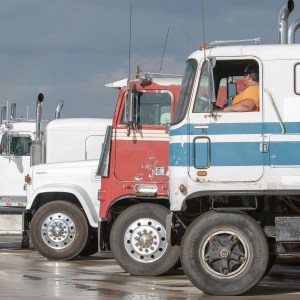
One truck or 10,000, the incident-level exposure is the same. Zonar’s Charles Kriete on the proof fleets must build before the accident, not after. The post Fleet liability playbook shifts from defense to proof appeared first on FreightWaves.
Source Lens
Industry Context
Useful background context, but lower-priority than direct platform, community, or operator intelligence.
Impact Level
medium
Use this briefing to decide whether your team needs an immediate workflow, policy, or reporting change.
Key Stat / Trigger
No single quantitative trigger surfaced in this report.
Focus on the operational implication, not just the headline.
Full Coverage
Carriers have competed on two variables for decades: price and service. A wave of nuclear verdicts is adding a third. Unfortunately for fleets, it’s the only one that gets argued in front of a jury. That third variable is proof. Verdict exposure is rewriting fleet liability from a question of insurance limits into a question of evidence.
Now, legal discovery is where fleets find out whether they have any. Zonar, a telematics provider whose platform spans electronic vehicle inspection, fleet management and video telematics, says plaintiff attorneys now treat driver video as a first step. If fleets don’t have video evidence, their risk catastrophically rises.
“Every day, we see subpoenas for video data in discovery right now,” said Charles Kriete, CEO of Zonar, in an interview with FreightWaves. The practical consequence for operators is that exposure does not scale down with truck count. A 10-vehicle fleet and a 10,000-truck megacarrier face the same math on any single crash.
One may have more resources, but recent nuclear verdicts show size and resources can only go so far when attempting to mitigate damages. “I’m not going to mince words here. This is an industry that is failing to mature and failing to acknowledge the risks it faces,” Kriete said.
“I don’t care if you’ve got thousands of trucks on the road or if you’ve got one truck on the road. Your risk is essentially the same.” An Industry Failing to Mature Every vehicle with a company name on the door is a target, and Kriete says each headline verdict widens the pool of people who see one.
Kriete notes that if you have a commercially branded vehicle, you’re at risk, as there now is a positive feedback loop where the more nuclear verdicts against commercial motor vehicles, the more the general public is aware of the opportunity for themselves to get more damages if they’re in an accident involving commercial motor vehicles.
The staged rear-ending scam is the clearest case of this legal incentives cascade. “You wouldn’t believe the number of times we’ve had accident exoneration on forward-facing cams. A customer of ours is sitting at a stoplight in a commercially branded vehicle, and what happens?
The reverse lights come on in front of them and someone rams back into them,” Kriete said. “When the police show up, the other driver’s account to the officer: ‘What? Guy rear-ended me.’” Footage ends that argument at the curb. “I love it when our drivers are able to walk upto the officer and go, ‘Let’s go to the tape, shall we?’” he said.
The Fleet Liability Question and Reptile Theory Damages turn less on the crash than on the paper trail preceding it. Two awards exist, and the gap between them is documentation. “A lot of it comes down to what you can prove you did to prevent this in the first place in court. ,” Kriete said.
“There’s a big award that happens for willful or knowing negligence. And then there’s the other award that happens when you can say, ‘Oh well, this company was ahead of it and they were doing this, and this, and this to try and avoid those things.’” Without that record, the defense is a shrug.
“Essentially, ‘I gave this guy a truck, and I don’t know what happened from there.’ If that’s your story in court, that’s not a very good story.” Kriete adds that plaintiff attorneys use what’s called reptile theory to attack the company for negligence.
A hallmark of reptile theory is to claim fleets don’t adequately train their drivers or maintain their trucks. While telematics and cameras record crashes, they also are creating the documented court-admissable paper trail to help with proactive mitigation.
Fleets must now show a jury how they continuously coach drivers and rigorously track vehicle inspections. With a companywide safety program behind it, the story changes. “You’re standing up in court with a track record of: We’re aware that we live in a high-risk world. We’re aware that we have a social responsibility to other motorists on the road.
We’re aware of these things and these are the things we do in day-to-day operations to prevent this from being an issue.” When Safety Data Runs the HR Workflow One Zonar customer, a private utility provider running tens of thousands of vehicles, has automated the entire escalation chain through standard APIs.
Zonar’s AI-powered driver safety system handles coaching on the bulk of incidents. The fleet’s own policy sets the threshold at three. “If a driver commits three minor infractions, it automatically triggers a write-up for them in their HR platform,” Kriete said. It can even lead to cases where drivers may be terminated, depending on the company’s policy.
What that buys the fleet is a defense built years in advance. “Here’s the number of drivers that we let go for not adhering to our safety practices over the course of the year,” Kriete said. “This was a freak accident. This was a safe driver. We got the whole record here every infraction they’ve ever done, all the coaching we’ve done on even the mino
Original Source
This briefing is based on reporting from Freightwaves. Use the original post for full primary-source context.
Style
Audience