

The case for continuous license monitoring
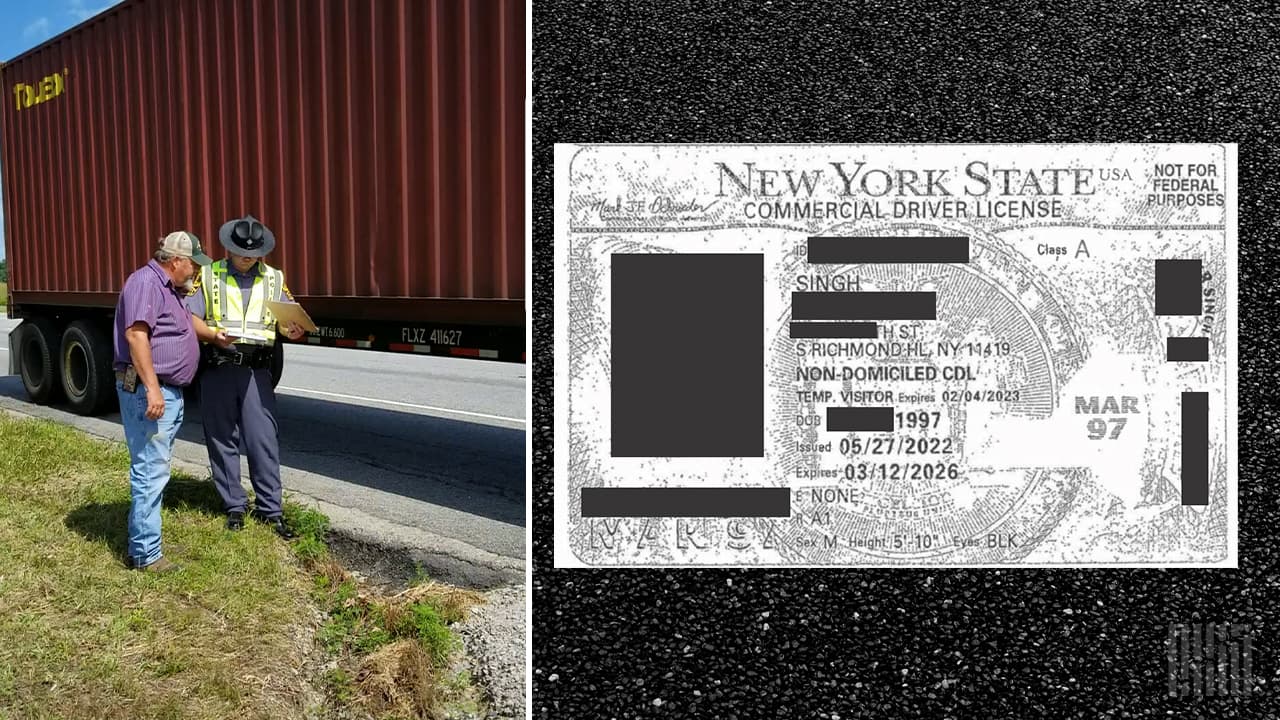
Federal trucking regulations require annual license checks, but drivers can lose licenses anytime, creating 11-month gaps where suspended drivers operate legally under current compliance rules. Nearly 25% of fatal truck crash drivers in 2021 had invalid or no commercial licenses.
Marketplace sellers using trucking partners face potential shipment delays and liability exposure from carriers with inadequate driver monitoring. Sellers should audit their 3PL and carrier partners' continuous monitoring practices to avoid service disruptions from safety violations.
As logistics costs rise and capacity tightens, carriers with poor safety monitoring face increased insurance costs and regulatory scrutiny, potentially reducing available shipping options and driving up fulfillment costs for sellers.
Ask your 3PL and carrier partners if they use continuous license monitoring services like SambaSafety - carriers without real-time monitoring face higher crash liability and potential service interruptions.
Review carrier insurance certificates and safety ratings quarterly rather than annually to identify partners with deteriorating safety profiles before they impact your shipments.
Bottom Line
Trucking license monitoring gaps mean higher carrier liability and shipment risks.
Source Lens
Industry Context
Useful background context, but lower-priority than direct platform, community, or operator intelligence.
Impact Level
medium
Trucking license monitoring gaps mean higher carrier liability and shipment risks.
Key Stat / Trigger
25% of fatal truck crash drivers had invalid licenses in 2021
Focus on the operational implication, not just the headline.
Full Coverage
Under 49 CFR 391. 25, every motor carrier is required to make an inquiry to obtain the motor vehicle record of each driver it employs at least once every 12 months, covering at least the preceding 12 months, from each licensing authority where the driver held a commercial motor vehicle operator’s license or permit.
At the time of hiring, the carrier must obtain an MVR for every state where the driver held a license in the past 3 years, and a copy must be placed in the driver qualification file within 30 days of the driver’s employment start date. That is the law. Pull it at hire. Pull it every 12 months after that.
Review it, document that you reviewed it, and keep it in the file. Those are your obligations under federal regulation. The problem is that a driver can be hired in January with a clean MVR. In February, they fail to pay child support and their license gets suspended.
In March, April, May, June, July, August, September, October, November, and December, that driver is on your payroll operating a commercial motor vehicle on a suspended license. The following January, you pull the MVR as required and discover what happened.
You have had an unqualified, unlicensed driver on the road for 11 months and you were fully compliant with federal regulations the entire time. That is the designed outcome of a regulatory standard that treats license status as something you check once a year. In fatal large truck crashes in 2021, 22.
5 percent of the large truck drivers involved had no CDL at all, and another 1. 6 percent had a CDL that was expired, suspended, revoked, canceled, or disqualified. Nearly one in four drivers involved in fatal large truck crashes that year had no valid commercial license or had one that was not in good standing. That is not a small rounding error.
That is a systemic failure in how the industry monitors who is operating under its authority. The regulation that governs this is not designed to prevent that failure. It is designed to create a compliance record. There is a difference between the two, and the trucking industry has been living in that gap for decades. The exposure here is not just safety.
It is a liability. When a carrier’s driver is involved in a crash and plaintiff counsel subsequently discovers through discovery that the driver’s license had been suspended for nine months before the crash, the carrier faces a negligent entrustment claim that does not rest on what happened in the crash.
It rests on the threshold question of whether that driver should have been behind the wheel at all. If the answer is no and the carrier had no mechanism to know the driver’s license was suspended, the argument that the carrier dispatched an unqualified driver onto public roads becomes a straightforward exhibit in a nuclear verdict case.
Continuous license monitoring is the answer to that question. Not because it is legally required but because it is the only mechanism that closes the gap between what the regulation requires and what common sense demands. What continuous monitoring actually means in practice is this.
A carrier enrolls its drivers in a third-party monitoring service such as SambaSafety, Embark Safety, or similar providers. Those services connect to state licensing databases and receive notifications when a driver’s record changes. The notification cadence varies by state. Some states report updates daily. Some report weekly.
Some report every 14 or 30 days. No system is instantaneous because state DMV reporting pipelines are not instantaneous. But knowing that your driver’s license was suspended 14 days ago is meaningfully different from knowing it was suspended 11 months ago. This is the distinction that matters.
The federal annual MVR requirement tells you what a driver’s record looked like on the day you pulled it. Continuous monitoring tells you what changes have occurred in between. Those are fundamentally different levels of protection for the carrier, for the driver, and for everyone sharing the road with that truck.
The strongest example of what a continuous monitoring program looks like when built correctly at the state level is California’s Employer Pull Notice program. The EPN program was established to provide employers and regulatory agencies with a means to promote driver safety through ongoing review of driver records.
Employers enrolling drivers in the program are notified when a change occurs to an employed driver’s motor vehicle record. Enrollment is mandatory for employers of commercially licensed drivers in California.
The critical difference between an MVR and a Pull Notice is that an MVR provides employers with only a snapshot of an employee’s driving record at a given moment in time. The EPN program has been specifically designed to provide employers with a tool for continuous monitoring of an employee’s official DMV record.
Employers receive an updated Pull Notice whenever any qualifying event occurs on the employee’s official DMV record. California requires it. The rest of the country has not followed. This is not a complicated regulation to write. FMCSA already has the regulatory infrastructure through CDLIS, the Commercial Driver’s License Information System.
The system exists. The data exists. The pipeline exists. There is no federal requirement that carriers enroll in a continuous monitoring program that uses the pipeline to notify them when a driver’s status changes. The argument against a continuous monitoring mandate generally centers on cost and administrative burden.
That argument is harder to make with a straight face when the alternative is a plaintiff attorney standing in front of a jury explaining that your company dispatched a driver whose license was suspended for nine months and whose crash killed someone’s family member.
The cost of a driver-monitoring subscription is a rounding error compared to the cost of a nuclear verdict. There is also a written policy component that continuous monitoring cannot replace and that carriers frequently neglect. Continuous monitoring tells you that your driver’s license has changed.
What it does not tell you is what your company is supposed to do about it. That requires a written driver hiring criteria policy that establishes in advance, in writing, what driving history is acceptable, what is disqualifying, and what constitutes grounds for immediate removal from service pending investigation.
The question is not whether continuous license monitoring should be required. The question is: why is it not already? The post The case for continuous license monitoring appeared first on FreightWaves.
Original Source
This briefing is based on reporting from Freightwaves. Use the original post for full primary-source context.
Style
Audience