

Outpost launches second-generation gate kiosk that deploys in one day
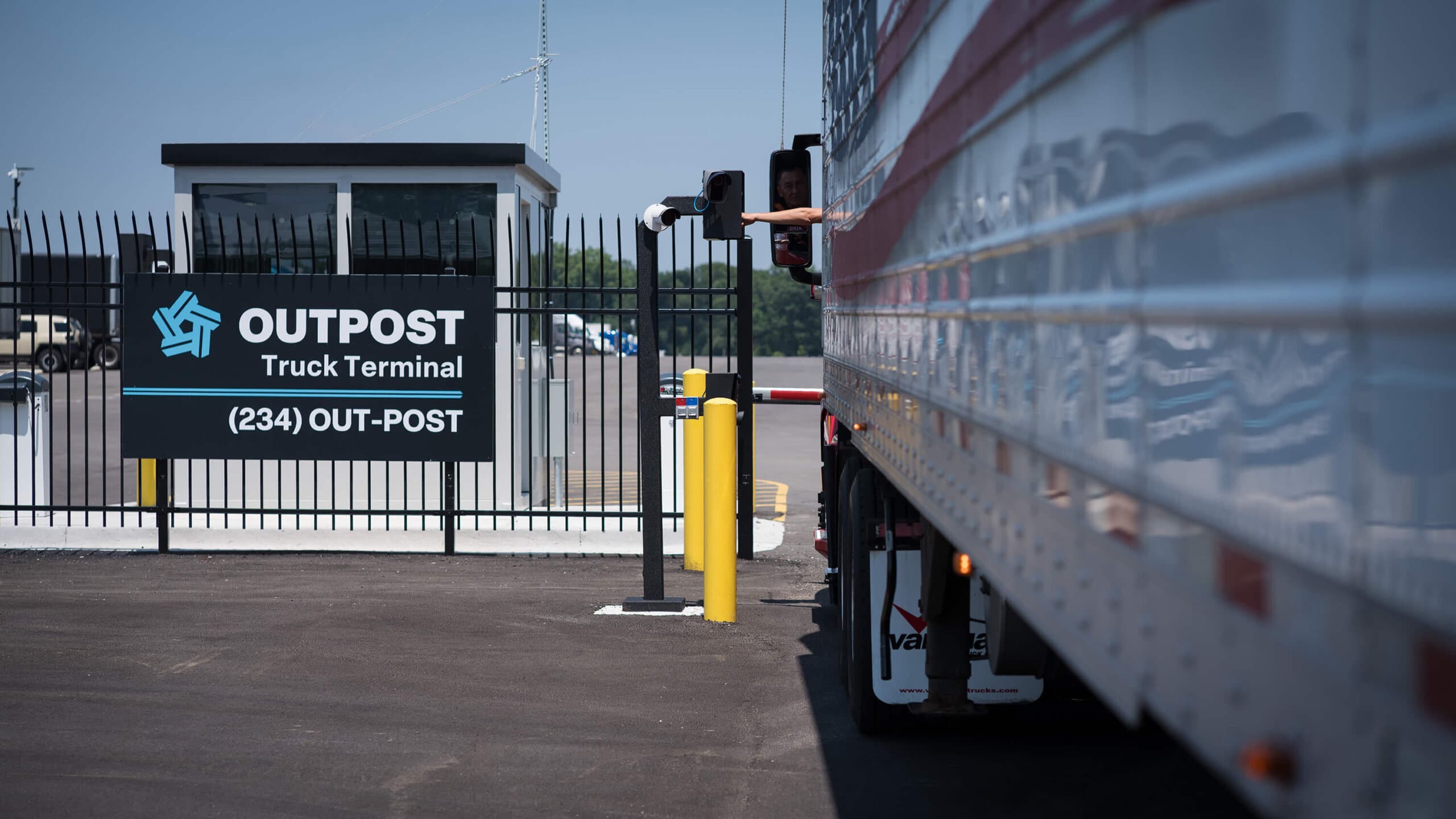
Outpost launched its second-generation gate automation platform on Wednesday, introducing a ruggedized kiosk that deploys in as little as one day and slashes gate operating costs by up to 70 percent. The Austin, Texas-based truck terminal owner and automation company now processes more than 3 million gate events annually across its network of more than […] The post Outpost launches second-generation gate kiosk that deploys in one day appeared first on FreightWaves.
Source Lens
Industry Context
Useful background context, but lower-priority than direct platform, community, or operator intelligence.
Impact Level
medium
Use this briefing to decide whether your team needs an immediate workflow, policy, or reporting change.
Key Stat / Trigger
No single quantitative trigger surfaced in this report.
Focus on the operational implication, not just the headline.
Full Coverage
Outpost launched its second-generation gate automation platform on Wednesday, introducing a ruggedized kiosk that deploys in as little as one day and slashes gate operating costs by up to 70 percent.
The Austin, Texas-based truck terminal owner and automation company now processes more than 3 million gate events annually across its network of more than 30 terminals and customer sites. The rapid deployment timeline marks a seismic shift from traditional automated gate systems that require months of installation work.
Even Outpost’s first-generation kiosk took roughly a week to assemble and install. “This is the first system of its kind that deploys in one day and eliminates costly gate labor while improving facility efficiency and security,” said Greg Akselrod, Outpost chief technology officer.
“Every upgrade in this release is based on learnings across millions of production gate events.” Hardware Built for Industrial Realities The hardware reflects lessons learned in harsh industrial environments. One of those challenges is truck mirrors smashing into and damaging the expensive kiosks. Now the kiosk has a fighting chance.
Akselrod pointed to what engineers colloquially call the “mirror smasher” — a guard designed to deflect truck mirrors that come within inches of equipment. “The mirrors come within an inch of your equipment and sometimes hit the equipment,” Akselrod said.
“It’s basically a guard so that if they come a little too close, it knocks the mirror out of the way and protects the equipment.” The kiosks contain an array of cameras, touchscreens, driver’s license and QR code scanners, HID pin and badge readers, lighting and built-in edge AI compute.
The platform replaces manual staffing that typically runs $25,000 or more per gate monthly. (Image: Outpost) Engine-Canceling Microphone Technology A major update to the platform is an industry-first engine-canceling microphone system.
Standard noise-canceling technology fails against diesel engines because it trains on quieter environments like coffee shops and office acoustics.
“Competing with not just an engine, but a diesel truck engine, and doing it from outside the vehicle rather than from within the vehicle where the driver is speaking into their own microphone — it’s a very unique challenge,” Akselrod said. “It’s something that AI can do today; it’s just nobody’s built it.”
The custom digital signal processor pairs with 50-watt speakers, allowing drivers to hear operators or AI voice agents without shutting down engines or exiting cabs.
Advanced Fraud Prevention and Inspection Capabilities Fraud prevention capabilities expand significantly with a full-color driver’s license scanner that checks for holograms and microprint rather than simply reading barcodes.
The system cross-references USDOT numbers, motor carrier numbers and vehicle decals against an AI memory that stores every sighting of every piece of equipment. “It’s not just scanning the barcode on the back, which can be easily photocopied,” Akselrod said.
“It’s actually doing a full color scan and checking for things like the holograms, the microprint — looking for forged documents.” One framing for the innovative technology is with an airport analogy: “This is the runway. It’s every takeoff, every landing.
And if you don’t keep track of everything that’s coming through that gate with 100 percent accuracy, you miss things. Even if you’re missing half a percent, that means every day you’re losing an entire trailer, an entire truck,” Akselrod said.
The platform captures full recordings of equipment condition for damage inspection, establishing chain of custody documentation. “Was that mud flap there when it left? Or did it get torn off while it was on the road or somewhere else? Was that dent there, was that hole there?” Akselrod said.
“All of that comes together to give a ton more operational control.” Customer Adoption and Remote Operations Tools Customer reception has accelerated since the initial August 2025 release. Outpost signed contracts for 50 new locations in the first four months of 2026.
“Visibility at the gate is critical to controlling facility costs, maintaining security, and providing food safety protection across the supply chain, yet staffing reliable gate operations has remained a persistent challenge,” said Mitch Harper, area general manager at United States Cold Storage.
“Outpost is uniquely closing that gap without adding headcount or complexity to our operations.” New remote operations tools include a pooled operator model allowing multiple employees to coordinate across yards and a detailed gate event timeline providing audit trails for every transaction.
The post Outpost launches second-generation gate kiosk that deploys in one day appeared first on FreightWaves.
Original Source
This briefing is based on reporting from Freightwaves. Use the original post for full primary-source context.
Style
Audience