
TruckSmarter Shutting Down
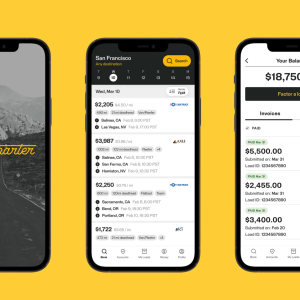
TruckSmarter and its AI chat-based driver app, Dispatch, have been sold and will be shut down on Friday. The post TruckSmarter Shutting Down appeared first on FreightWaves.
Source Lens
Industry Context
Useful background context, but lower-priority than direct platform, community, or operator intelligence.
Impact Level
medium
Use this briefing to decide whether your team needs an immediate workflow, policy, or reporting change.
Key Stat / Trigger
No single quantitative trigger surfaced in this report.
Focus on the operational implication, not just the headline.
Full Coverage
TruckSmarter announced on Tuesday that it has been acquired and that its driver app, Dispatch, shuts down on Friday, September 4. The scale is what makes this more than a routine startup wind-down. More than 500,000 carriers have used the TruckSmarter platform, which included a free load board alongside the paid Dispatch product.
Dispatch was an AI chat interface that let a driver ask for freight in plain language and had software agents handle the bidding and booking, rather than making the driver work a traditional load board.
Automated replies from the company indicated that active Dispatch subscriptions are canceled Friday, and that invoices paid within the previous 30 days will be refunded within seven business days of cancellation.
Co-founder and chief executive Dan Kao posted a message inside the app thanking users for five years of trust, and drivers and trucking groups spread screenshots of it across social media. One thing has been ruled out.
OTR Solutions, which bought TruckSmarter’s factoring and banking division in November 2025, told FreightWaves it did not acquire the remaining business. So a company that raised money twelve months ago is gone by Friday, and nobody will say who bought it. That combination has a name in technology, even if no one involved here has used it.
TruckSmarter has been acquired and is shutting down the TruckSmarter app. Email just in:"All,TruckSmarter is being acquired. As part of this transition, we will be shutting down the TruckSmarter app this Friday, September 4. Over 5 years ago, we saw an opportunity to bring… pic. twitter.
com/Ci1MiGUbbZ— Adam Battenfield (@adambattenfield) September 1, 2026 What an Acquihire Actually Is An acquihire is an acquisition where the buyer’s real objective is the team rather than the business.
The purchase price is justified by the engineers, product people and founders who come along with it, not by the revenue, the customers or the product they built. The word is a compression of acquisition and hire, and the mechanics are closer to hiring than to buying.
A company that wants twenty experienced AI engineers can spend eighteen months recruiting them one at a time, competing against every other firm in the market, or it can buy the company those engineers already work at and get the whole team on day one, already functional, already used to working together. The second path is faster and often cheaper per head.
What happens next is the part that matters to users. In a conventional acquisition, the buyer wants the product and keeps it running, because the customers are the asset. In an acquihire, the product is frequently shut down within weeks, because the product was never the point.
Maintaining software the buyer does not want costs money, invites support obligations and distracts the team the buyer just paid for. Killing it is the rational move. Structurally, these deals take a few forms. Sometimes the buyer purchases the whole company and immediately winds down operations.
Sometimes it buys the intellectual property and separately extends offers to the staff, leaving an empty corporate shell behind for the investors to dissolve. Sometimes it licenses the technology and hires the team, a structure that has become more common in the last two years partly because it draws less regulatory attention than an outright acquisition.
Why Companies on Both Sides Say Yes The buyer’s logic is straightforward. Talent in a hot technical field is scarce and slow to assemble. Buying an intact team removes recruiting risk, cultural assembly time and the chance that a competitor gets there first.
If that team has spent years building in a specific industry, the buyer also acquires domain knowledge that does not come from a resume. Engineers who have spent five years learning how freight brokerage actually works are not interchangeable with engineers who have not. The seller’s logic is less obvious and more instructive.
Venture-backed companies raise money against a promise of large outcomes. When growth stalls, when the market shifts, or when the capital required to reach the next milestone exceeds what investors will commit, the realistic options narrow fast. A company can shut down and return whatever cash remains, which pays nobody and ends careers.
It can sell at a price below what it raised, which often wipes out common shareholders and employees. Or it can find a buyer who values the team enough to make the transaction worth doing. Acquihires frequently pay investors a fraction of what they put in, sometimes just their money back, occasionally less.
But they get the employees hired, often with retention packages attached, and they let the founders land somewhere rather than nowhere. For a board looking at a company that is running out of room, that outcome beats the alternatives. None of this involves anyone behaving badly. It is a rational resolution to a situation with no good options.
It is simply a resolution built around the interests of i
Original Source
This briefing is based on reporting from Freightwaves. Use the original post for full primary-source context.
Style
Audience