Some judicial skepticism of non-domiciled rule in Lujan arguments
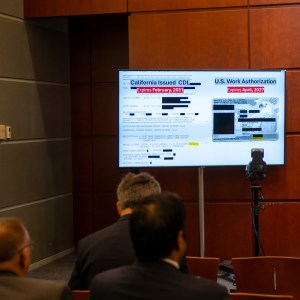
There appeared to be judges’ resistance to the government’s argument from a court in the case of Lujan vs. FMCSA. The post Some judicial skepticism of non-domiciled rule in Lujan arguments appeared first on FreightWaves.
Source Lens
Industry Context
Useful background context, but lower-priority than direct platform, community, or operator intelligence.
Impact Level
medium
Use this briefing to decide whether your team needs an immediate workflow, policy, or reporting change.
Key Stat / Trigger
No single quantitative trigger surfaced in this report.
Focus on the operational implication, not just the headline.
Full Coverage
The normal level of judicial skepticism and questioning of attorneys last week in the oral arguments in Lujan vs. FMCSA. seemed to show more of that probing toward the counsel for the Department of Transportation than the other side. In oral arguments before the U. S.
Court of Appeals for the District of Columbia, it was Simon Jerome arguing for DOT who appeared to face more pushback than his counterpart for the Lujan side of the divide, Wendy Liu.
Liu was representing a coalition of groups opposed to recent Federal Motor Carrier Safety Administration changes regulating the issuance of CDLs and commercial learner’s permits (CLPs) to non-domiciled drivers. King County, Washington is a plaintiff in the action and made arguments before the justices. window. googletag = window.
googletag || {cmd: []}; googletag. cmd. push(function() {var gptSlot = googletag. defineSlot('/21776187881/FW-Responsive-Main_Content-Slot1', [[300, 100], [320, 50], [728, 90], [468, 60]], 'div-gpt-ad-1709668545404-0'). defineSizeMapping(gptSizeMaps. banner1). addService(googletag. pubads()); googletag. pubads(). enableSingleRequest(); googletag. pubads().
collapseEmptyDivs(); googletag. enableServices(); setInterval(function() {if (! document. hidden) {googletag. pubads(). refresh([gptSlot]); } }, 30000); }); googletag. cmd. push(function() {googletag. display('div-gpt-ad-1709668545404-0'); }); Lead plaintiff Jorge Rivera Lujan is a DACA immigrant, defined as a child brought to the U. S.
by his or her parents and still in the U. S. DACA recipients have no special waiver under the non-domiciled CDL rule. Second time around for lawyer It was the second time in September that Jerome gave oral arguments before the court over an issue involving CDLs. The other was in the case of California vs.
DOT, where the issue is the federal government’s ability to strip funding from states over their adherence to federal rules on CDL issuance. Jerome summed up the heart of the two key parts of the new rule, which went into effect in the spring.
“One is a change in the substantive eligibility to apply for and obtain a non-domiciled CDL,” Jerome said in the oral arguments, a reference to the sharp narrowing of the acceptable immigration standards needed to qualify. “The other is the change in the acceptable documentation by which an immigrant may show that eligibility.”
Jerome said those steps were taken by FMCSA to close a “safety gap that stemmed from the inaccessibility of foreign driving records. That is the problem that the agency was responding to.” Federal rules on obtaining a CDL require a driving history that spans 10 years.
In its briefs on the case, the federal argument has been that obtaining that 10-year lookback is too challenging for states when they choose to issue a non-domiciled CDL. The acceptable documentation in the new rule for a non-domiciled person to obtain a CDL has been narrowed to an unexpired passport and a form I-94.
Employment Authorization Documents (EADs) are no longer accepted as proof of eligibility. window. googletag = window. googletag || {cmd: []}; googletag. cmd. push(function() {var gptSlot = googletag. defineSlot('/21776187881/fw-responsive-main_content-slot3', [[728, 90], [468, 60], [320, 50], [300, 100]], 'div-gpt-ad-1665767553440-0').
defineSizeMapping(gptSizeMaps. banner1). addService(googletag. pubads()); googletag. pubads(). enableSingleRequest(); googletag. pubads(). collapseEmptyDivs(); googletag. enableServices(); setInterval(function() {if (! document. hidden) {googletag. pubads(). refresh([gptSlot]); } }, 30000); }); googletag. cmd. push(function() {googletag.
display('div-gpt-ad-1665767553440-0'); }); Was a change needed? Almost right off the bat after Jerome’s opening arguments, he was asked by a member of the three-judge panel why previous requirements for a non-domiciled driver to obtain a CDL were insufficient and required an overhaul.
The I-94 is a record “that shows you entered the United States legally in a specific visa status and how long you are allowed to stay,” according to a definition of the document. “Most travelers receive an electronic I-94 that can be viewed online using their passport information.” The passport/I-94 combo brought pushback from the three-judge panel.
One judge said if a non-domiciled applicant could provide 10 years of driving history, “what’s the problem?” (Note: transcripts and audio recordings of the oral arguments FreightWaves used in its reporting do not specify the identity of the individual judges who are questioning the attorneys.) window. googletag = window. googletag || {cmd: []}; googletag.
cmd. push(function() {var gptSlot = googletag. defineSlot('/21776187881/fw-responsive-main_content-slot4', [[300, 100], [320, 50], [728, 90], [468, 60]], 'div-gpt-ad-1709668086344-0'). defineSizeMapping(gptSizeMaps. banner1). addService(googletag. pubads()); googletag. pubads(). enableSingleRequest(); googletag. pubads(). collapseEmptyDivs(); googletag.
enableServices(); setInterval(function() {if (! document. hidden) {go
Original Source
This briefing is based on reporting from Freightwaves. Use the original post for full primary-source context.
Style
Audience