

Rising intermodal volume slows big four U.S. rail systems
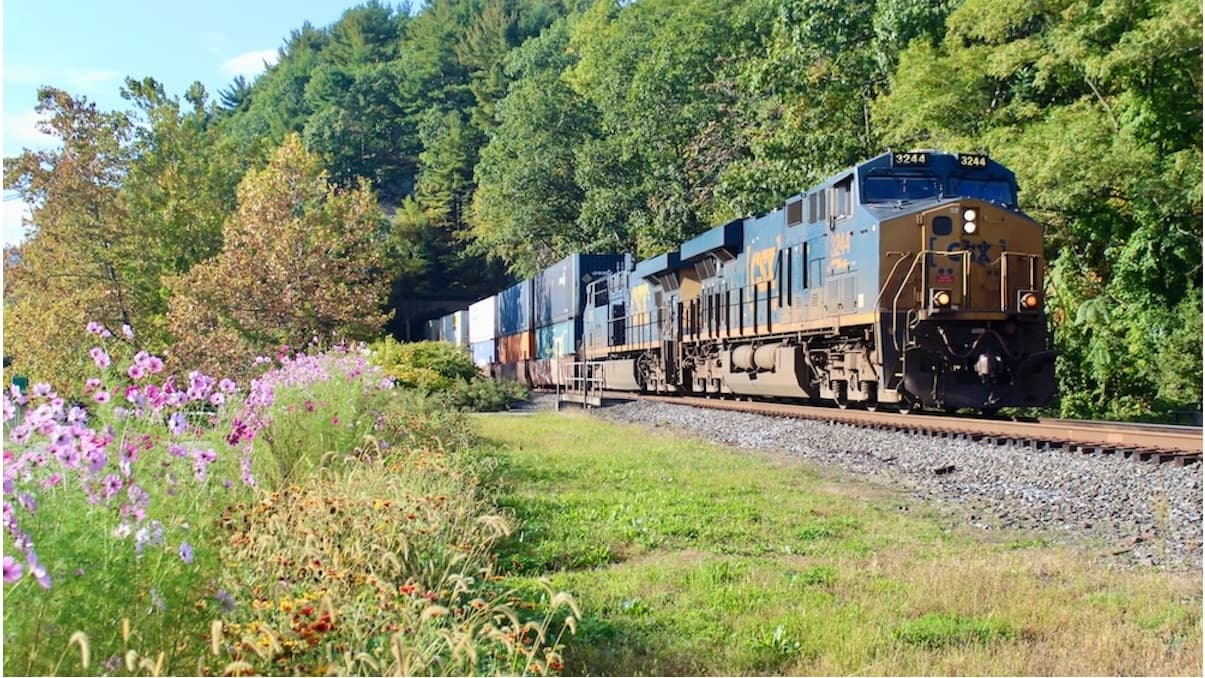
Rising fuel and trucking costs have caused a rail volume surge, slowing down major U.S. railroads. The post Rising intermodal volume slows big four U.S. rail systems appeared first on FreightWaves.
Source Lens
Industry Context
Useful background context, but lower-priority than direct platform, community, or operator intelligence.
Impact Level
medium
Use this briefing to decide whether your team needs an immediate workflow, policy, or reporting change.
Key Stat / Trigger
No single quantitative trigger surfaced in this report.
Focus on the operational implication, not just the headline.
Full Coverage
The big four U. S. Class I railroad intermodal networks are slowing down amid a volume surge that’s been driven by shippers turning to rail amid high fuel prices and spikes in trucking rates. “The renewed surge in intermodal loads at the four U. S.
Class I’s since Memorial Day is having the predictable effect on network fluidity, with average intermodal train speed falling to multi-year lows in some cases,” independent analyst Rick Paterson wrote in his June 26 State of the Rails report. “The rails can handle anticipated increases in volumes, which this isn’t.”
Intermodal volume growth, based off last week’s traffic reports, looks like this for the second quarter and the week ending June 21: • BNSF up 9. 5%, including up 15% in the week ending June 21. • CSX up 8. 3% and 14%, respectively. • Norfolk Southern, up 5. 1% and 12%. • Union Pacific, up 3. 3% and 13%.
Paterson’s analysis shows that average intermodal train speeds on BNSF (NYSE: BRK-B) and UP (NYSE: UNP) are now at a 10-month low. Norfolk Southern (NYSE: NSC) is within 2% of a 20-month low. And CSX (NASDAQ: CSX) is at a seven-year low. “None of this should be surprising as volumes are the enemy of speed.
We obviously want the volumes, and the trick is to limit the damage to speed and on-time performance so that the customer experience is least impaired. The biggest volume surge in years is obviously going to be a challenge in the first few months before adjustments can be made and the right resources find their way to the right places,” Paterson wrote.
BNSF had a bend-but-don’t-break strategy when its domestic intermodal volume surged in October and November 2023. “BNSF pulled off a quick and successful rebound back then and the broader industry is now required to do the same.
The degree to which it is successful will determine how much of this volume windfall is kept by the rails, as opposed to flowing back to truck once truck versus rail rates ultimately stabilize,” Paterson said. “It’s premature celebrating 10% volume growth now, for example, if we give back 9% of it next year.”
NS has said it’s short of crews in some areas of its system and is hiring to boost train and engine ranks at about half of its terminals. CSX is currently hiring conductors at 40 locations, according to notices on its website.
Paterson says the intermodal slowdown is unlikely to lead to broader degradation in train speeds unless higher unplanned intermodal recrews siphon off crew capacity needed by the railroads’ more complex merchandise networks. Quarterly intermodal volume is down 4% at Canadian National (NYSE: CNI) and 0. 6% at CPKC (NYSE: CP).
Train speeds are up on both railways. Subscribe to FreightWaves’ Rail e-newsletter and get the latest insights on rail freight right in your inbox.
No June swoon for surging rail traffic CSX marks unique status with DC 250 rail event UPDATED: Maersk shifts SoCal import containers to UP from BNSF New rail park aims to make Laredo more than a trucking gateway California: First ILWU strike against sugar giant in decades The post Rising intermodal volume slows big four U. S.
rail systems appeared first on FreightWaves.
Original Source
This briefing is based on reporting from Freightwaves. Use the original post for full primary-source context.
Style
Audience