New UN data: China widens lead in liner-shipping connectivity
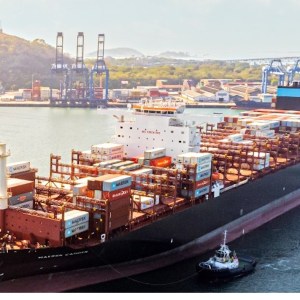
China's Liner Shipping Connectivity Index hit 1,347.6 in September 2026, more than double second-ranked South Korea at 633.0, cementing Asia's dominance in container shipping networks. Persian Gulf disruptions cut Qatar's connectivity 65.3% and Bahrain's 60.6%, while overall losses outnumbered gains globally in Q3 2026.
China's widening connectivity dominance reinforces that Asia-centric supply chains remain the most resilient, while Gulf instability adds another layer of geographic risk concentration sellers must hedge against.
Persian Gulf connectivity collapses signal continued sourcing and freight volatility for sellers relying on Middle East transit routes or suppliers in that region. Sellers should pressure-test their freight lanes now — carriers will reprice or drop Gulf-adjacent routes, which ripples into lead times and landed costs.
Operational Impact
This story may require teams to revisit workflows, monitoring, or platform assumptions.
Bottom Line
Gulf shipping collapse means longer lead times and higher costs for sellers using Middle East routes.
Source Lens
Industry Context
Useful background context, but lower-priority than direct platform, community, or operator intelligence.
Impact Level
medium
Gulf shipping collapse means longer lead times and higher costs for sellers using Middle East routes.
Key Stat / Trigger
Qatar liner-shipping connectivity fell 65.3% year-over-year in Q3 2026
Focus on the operational implication, not just the headline.
Full Coverage
China’s Liner Shipping Connectivity Index reached 1,347. 6 in September 2026, more than double the scores of second-ranked South Korea, at 633. 0, and Singapore, at 626. 7.
The United Nations Conference on Trade and Development (UNCTAD) index gauges a country’s integration into container-shipping networks using factors including vessel calls, port capacity, carrier and service availability, largest ship size and the number of countries reached through direct services.
The latest figures underline Asia’s continuing central role in liner shipping. China led the region, while eight Asian economies — South Korea, Singapore, Malaysia, Vietnam, Japan, India, Hong Kong and Taiwan — were among the world’s 15 best-connected economies in the third quarter, UNCTAD said. China’s gap persists window. googletag = window.
googletag || {cmd: []}; googletag. cmd. push(function() {var gptSlot = googletag. defineSlot('/21776187881/FW-Responsive-Main_Content-Slot1', [[300, 100], [320, 50], [728, 90], [468, 60]], 'div-gpt-ad-1709668545404-0'). defineSizeMapping(gptSizeMaps. banner1). addService(googletag. pubads()); googletag. pubads(). enableSingleRequest(); googletag. pubads().
collapseEmptyDivs(); googletag. enableServices(); setInterval(function() {if (! document. hidden) {googletag. pubads(). refresh([gptSlot]); } }, 30000); }); googletag. cmd. push(function() {googletag. display('div-gpt-ad-1709668545404-0'); }); China’s connectivity advantage has remained durable since 2023 and increased further through September, UNCTAD said.
South Korea and Singapore retained high scores despite modest month-to-month declines, and both remained above their levels a year earlier. The United States and Malaysia held fourth and fifth place, respectively.
Their September index readings increased from August but remained below September 2025 levels, indicating an improvement in the immediate period without a full recovery in year-over-year connectivity.
At the regional level, the United States was the leading performer in North America, Spain led Europe, Egypt led Africa, and Panama ranked first in Latin America and the Caribbean. China and Panama improved their connectivity from a year earlier, while the United States, Spain and Egypt remained regional leaders despite declines in their index values.
Smaller markets drive volatility While major hub economies generally recorded limited year-over-year changes, smaller and less-connected economies showed the sharpest percentage swings in the third quarter, according to UNCTAD. Venezuela posted the largest increase in liner-shipping connectivity from the third quarter of 2025, rising 91. 4%.
Saint Pierre and Miquelon increased 89. 3%, followed by Syria at 79. 7%. Persian Gulf hostilities saw Qatar record the steepest decline, falling 65. 3%, followed by Bahrain, down 60. 6%, and Iraq, down 56%. UNCTAD said connectivity losses outnumbered gains in the third quarter, a sign of uneven changes across national shipping networks.
The data do not necessarily imply comparable absolute changes across markets, since percentage movements can be more pronounced for countries starting from relatively low connectivity levels. window. googletag = window. googletag || {cmd: []}; googletag. cmd. push(function() {var gptSlot = googletag.
defineSlot('/21776187881/fw-responsive-main_content-slot3', [[728, 90], [468, 60], [320, 50], [300, 100]], 'div-gpt-ad-1665767553440-0'). defineSizeMapping(gptSizeMaps. banner1). addService(googletag. pubads()); googletag. pubads(). enableSingleRequest(); googletag. pubads(). collapseEmptyDivs(); googletag. enableServices(); setInterval(function() {if (!
document. hidden) {googletag. pubads(). refresh([gptSlot]); } }, 30000); }); googletag. cmd. push(function() {googletag. display('div-gpt-ad-1665767553440-0'); }); China-centered Asian links dominate The strongest bilateral liner-shipping relationships in the first quarter of 2026 were concentrated among nearby trading economies, particularly in Asia.
China’s links with South Korea, Singapore and Malaysia were among the five strongest bilateral connections globally, UNCTAD said. The agency noted that China-related connections in Asia have strengthened during the past two decades and now exceed many other bilateral corridors.
Two European short-sea links —United Kingdom-Belgium and United Kingdom-Netherlands — also remained in the global top five. Those routes were once the world’s strongest bilateral liner-shipping connections, according to UNCTAD. window. googletag = window. googletag || {cmd: []}; googletag. cmd. push(function() {var gptSlot = googletag.
defineSlot('/21776187881/fw-responsive-main_content-slot4', [[300, 100], [320, 50], [728, 90], [468, 60]], 'div-gpt-ad-1709668086344-0'). defineSizeMapping(gptSizeMaps. banner1). addService(googletag. pubads()); googletag. pubads(). enableSingleRequest(); googletag. pubads(). collapseEmptyDivs(); googletag. enableServices(); setInterval(function() {if (!
document. hidden) {googletag. pubads(). refresh([gptSlot]); } }, 30000); }); go
Audit your freight lanes in Flexport, FreightOS, or your 3PL dashboard — if any routes touch Qatar, Bahrain, or Iraq, get alternate routing quotes within 30 days before carriers reprice.
Increase inventory buffers 15-20% for any SKUs sourced or transshipped through the Persian Gulf region to absorb lead time volatility heading into Q1 2027.
Original Source
This briefing is based on reporting from Freightwaves. Use the original post for full primary-source context.
Style
Audience