

Postal Service moves half of long-distance mail by air just to satisfy UPS contract
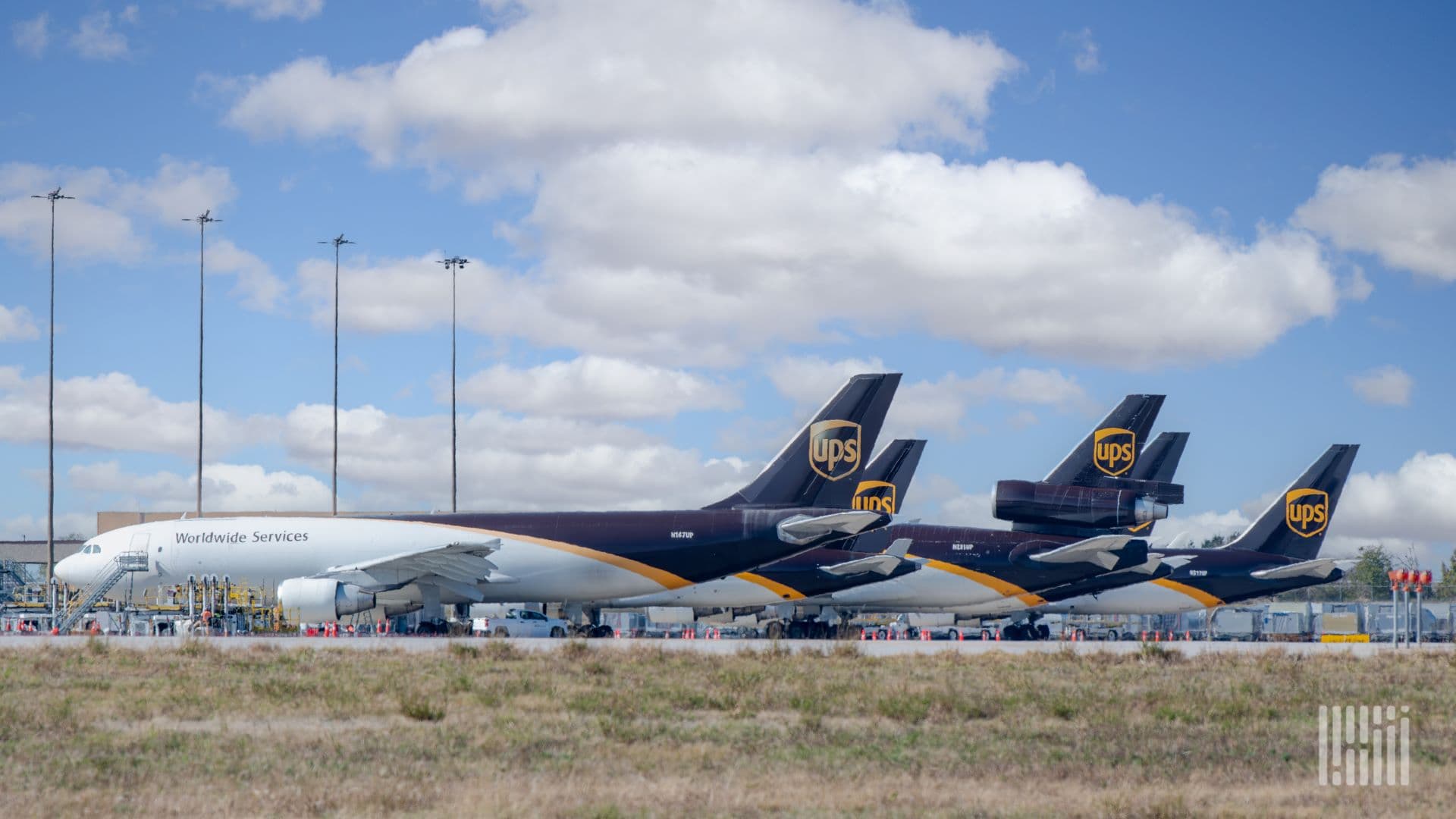
The Postal Service is moving more mail by air to compensate for lower parcel volumes and avoid premiums for missing UPS volume guarantees when the stated policy is to rely more on surface transportation, according to a new audit. The post Postal Service moves half of long-distance mail by air just to satisfy UPS contract appeared first on FreightWaves.
Source Lens
Industry Context
Useful background context, but lower-priority than direct platform, community, or operator intelligence.
Impact Level
medium
Use this briefing to decide whether your team needs an immediate workflow, policy, or reporting change.
Key Stat / Trigger
No single quantitative trigger surfaced in this report.
Focus on the operational implication, not just the headline.
Full Coverage
The U. S. Postal Service is spending more than intended to fly mail around the country because minimum volume commitments under its new air cargo contract with United Parcel Service prevent the agency from following a policy to shift more pieces to cheaper surface transportation to save money, the agency’s watchdog organization said.
Postal officials failed to align the UPS (NYSE: UPS) contract with projections for declining parcel volumes and a new strategy that prioritizes use of motor carriers over more expensive air shipping, the Office of Inspector General said in a report publicly released on Tuesday.
To make up for fewer packages, the national post handed UPS more First-Class mail and marketing mail to avoid significant penalties for failing to meet minimum volume thresholds. If the USPS didn’t supplement package volumes with mail, it would have paid an extra $127 million for unused air capacity.
The Inspector General urged logistics officers to consider early termination of the UPS air contract and pursue a deal with better conditions. window. googletag = window. googletag || {cmd: []}; googletag. cmd. push(function() {googletag.
defineSlot('/21776187881/FW-Responsive-Main_Content-Slot1', [[300, 100], [320, 50], [728, 90], [468, 60]], 'div-gpt-ad-1709668545404-0'). defineSizeMapping(gptSizeMaps. banner1). addService(googletag. pubads()); googletag. pubads(). enableSingleRequest(); googletag. pubads(). collapseEmptyDivs(); googletag. enableServices(); }); googletag. cmd.
push(function() {googletag. display('div-gpt-ad-1709668545404-0'); }); Part of the rationale for picking UPS, according to analysts, was that UPS could provide cheaper linehaul transportation by leaning more on its extensive intercity road network instead of its air fleet.
While the contract is more favorable to the Postal Service than the previous one with FedEx, according to the Inspector General’s audit, the pressure to meet contractual minimums and avoid paying premiums has resulted in greater reliance on the air network to haul First-Class and marketing mail.
“The Postal Service did not properly forecast declining package volumes or impacts of subsequent network changes when establishing the volume requirements of its new air cargo contract” resulting in a decision to put more mail on planes “even though this contradicts previous decisions to extend delivery standards to allow more mail to move by surface — simply to meet contractual minimums and avoid even higher expenses,” the audit stated.
Cost initiative poorly implemented As part of its Delivering for America transformation plan six years ago, the Postal Service moved to shift a large portion of mail and parcels to trucking contractors as a way of significantly decreasing the use of costly air transport and improving transportation efficiency at an organization losing billions of dollars annually.
In October, 2021 it extended First-Class mail delivery standards by one-to-two days to allow more volume to travel by road and in 2024 replaced FedEx as its domestic air cargo provider, awarding UPS a contract with a base term of 5. 5 years at an estimated annual value of $1. 5 billion.
The Inspector General now lists the contract’s total value at more than $10 billion.
Last year, the Postal Service further adjusted mail service standards to improve productivity, adding an extra day to First-Class delivery times by reducing truck trips to post offices located 50 miles or more from regional processing centers, while also shortening delivery times for bulk mail. The agency estimated annual savings of $1.
1 billion from surface transportation and $701 million from air transportation because of the transportation optimization initiatives. The UPS contract uses a per-cubic foot pricing structure tied to average daily volume.
The Postal Service guarantees a minimum average volume of cubic feet per day, with higher rates applying if volumes are a certain percent above or below the negotiated average. Specific volumes and percentages are blacked out in the report.
To help meet optimal contracted volume requirements and improve service, the percentage of First-Class mail with a three-to-five day delivery window traveling by air went from 2% in October 2024, when the UPS contract took full effect, to 50% by March 2025.
In addition, the Postal Service began moving Marketing Mail — flyers, brochures, fundraising letters — by air beginning in March 2025, a product historically transported by truck, the Inspector General said. window. googletag = window. googletag || {cmd: []}; googletag. cmd. push(function() {googletag.
defineSlot('/21776187881/fw-responsive-main_content-slot3', [[728, 90], [468, 60], [320, 50], [300, 100]], 'div-gpt-ad-1665767553440-0'). defineSizeMapping(gptSizeMaps. banner1). addService(googletag. pubads()); googletag. pubads(). enableSingleRequest(); googletag. pubads(). collapseEmptyDivs(); googletag. enableServices(); }); googletag. cmd.
push(function() {googletag. display('div-gpt-ad-1665767553440-0');
Original Source
This briefing is based on reporting from Freightwaves. Use the original post for full primary-source context.
Style
Audience