

Trucking costs outpaced consumer inflation in ’25: ATRI
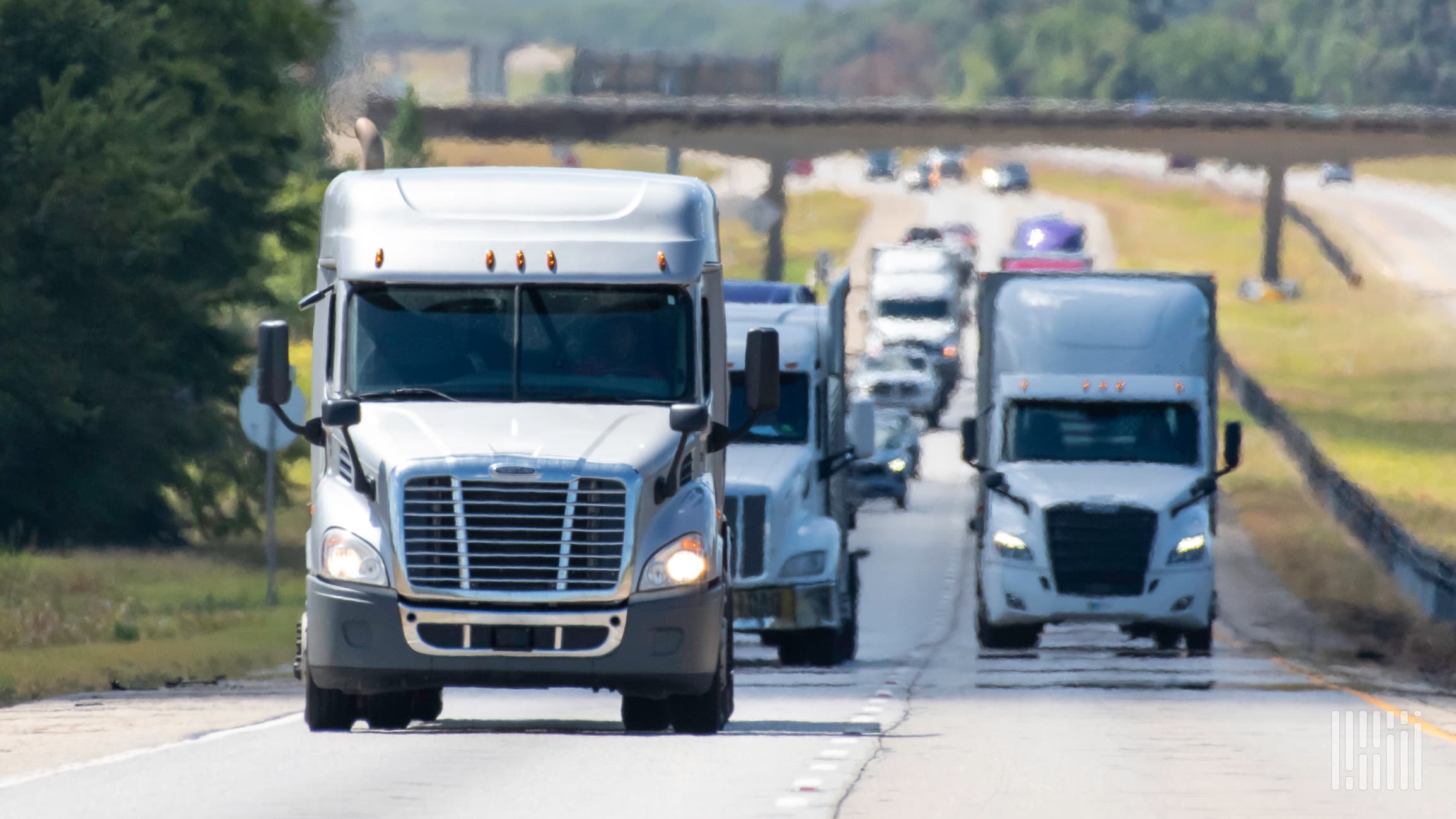
ATRI’s annual cost study showed numbers that rose at a faster pace than consumer inflation. The post Trucking costs outpaced consumer inflation in ’25: ATRI appeared first on FreightWaves.
Source Lens
Industry Context
Useful background context, but lower-priority than direct platform, community, or operator intelligence.
Impact Level
medium
Use this briefing to decide whether your team needs an immediate workflow, policy, or reporting change.
Key Stat / Trigger
No single quantitative trigger surfaced in this report.
Focus on the operational implication, not just the headline.
Full Coverage
The annual operating cost survey and analysis posted by the American Transportation Research Institute (ATRI) for 2025 and the first months of 2026 show an industry that last year dealt with rising costs that outstripped consumer inflation.
In a 65-page report full of numbers, the report produced by the research arm of the American Trucking Associations said the average operational costs of trucking companies of all shapes and sizes rose to $2. 336/mile in 2025 from $2. 260 per mile in 2024. That is a 3. 4% increase.
But that number includes fuel, and many carriers can pass on rising fuel costs through a surcharge. The operational costs excluding fuel went to $1. 854/g from $1. 779/g, a 4. 2% increase, according to ATRI. “This rate of increase was still 1. 5 percentage points above inflation during the same period and 0.
6 percentage points above last year’s increase, indicating an uptick in inflationary pressure in trucking,” ATRI said. ATRI provided a hefty amount of data about the companies that provided data. Maybe the most important one is that while LTL companies make up 28% of the trucking industry, according to ATRI data, they were 47. 8% of respondents.
Truckload was 33. 3% of the truckload respondents and is 57. 3% of the industry. A category ATRI calls other/specialized had a ratio of 18. 9% of respondents and is 14. 7% of the industry, Among some of the key statistical findings in the ATRI report: What was the revenue?
The ATRI study does not go into the freight rates that trucking companies encountered in the market except to say that “trucking rates and tonnage remained flat compared to 2024.” Vehicle costs: A table of cost categories going back to 2016 did not reveal any particular area that surged far above the others.
For example, truck/trailer lease or purchase payments went to 40. 4 cts/mile in 2025 from 39 cents/mile a year earlier. Repair and maintenance rose to 21. 5 cts/mile from 19. 8 cts/mile. Insurance–which is frequently cited as a cost center that has been soaring–rose 10. 6 cts/mile from 10. 2 cents/mile a year earlier. Tires went to 5 cts/mile from 4.
7 cts/mile, a gain that outpaced the broader trend of consumer inflation, which ATRI put at 2. 7%. Driver costs: The costs of compensating drivers rose at what ATRI called “a sub-inflationary rate.” Industry-wide driver wages rose 2.
5% last year, ATRI said, adding that the ratio between driver wages and consumer inflation was similar to 2024 when the split was 2. 4% for driver wages and 2. 9% for inflation. Differences in size: ATRI’s research on driver wages found that wages for 26-truck fleets were just 4. 5 cts/mile less than those of 1,000-truck fleets.
The study also said average wages were the lowest in fleets that had less than 26 trucks, and were the highest for fleets that exceeded 1,000 trucks. Specialized is the place to be: The ATRI report found that specialized fleets had higher average wages in every size category except those of more than 1,000 trucks.
The biggest gap came in fleets of 101 to 250 trucks, where the specialized carriers had average wages of 95. 3 cents/mile and truckload carriers were at 72. 5 cents/mile. Benefits rise more: The cost of driver benefits were up 6. 6% between 2024 and 2025, according to ATRI. That is well above the national inflation rate the organization assumes.
“This was the second year in a row in which the rate of growth in driver benefits costs outpaced driver wages as one of the fastest-rising line-items, following an increase of 4. 8 percent from 2023 to 2024,” ATRI said.
The rate of growth did not vary much among fleet sizes, ATRI said, except for smaller fleets that as the agency notes, often do not offer significant benefits to begin with. Could be lagging information: The ATRI report does have data on the early part of 2026.
Its forecast for driver wages appears to be somewhat out of date, given other indications of what is happening to driver pay.
“Driver wages are currently on track for a third year of sub-inflationary increase, giving back some of the gains in real income experienced during the three years of aggressive wage increases in the pandemic freight boom (2021-2023),” the report said. “In the first two months of 2026, carriers reported that driver wage costs were up 1. 6% on average.”
Here’s a little extra: The ATRI report has data on bonuses paid out. Most notable: the average starting bonus fell to $1,733 from $2,122 in 2024. It reached a recent peak of $2,373 in 2022, right in the middle of the post-pandemic freight bull market. Retention bonuses also fell, declining to $1,474 from $1,832.
Bonuses that increased between 2024 and 2025: safety, to $1,846 from $1,680; and fuel economy, up to $1,548 from $1,235. Safer but higher: The ATRI report highlighted that FMCSA data on injury crash rates were 15. 3% less in 2024 than the high level of 2019, and fatal crashes were down by 13. 9%. But the cost of insurance rose by 3.
9% between 2024 and 2025 to 10. 6 cts mile, 1. 2 percentage points more tha
Original Source
This briefing is based on reporting from Freightwaves. Use the original post for full primary-source context.
Style
Audience