

US to lift Mexico cattle ban to combat high beef prices
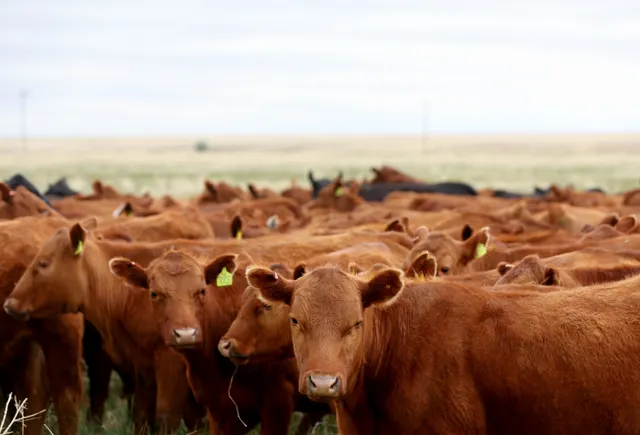
The USDA will remove restrictions placed to contain the spread of a deadly livestock parasite as the White House looks to tamp down grocery inflation.
Source Lens
Industry Context
Useful background context, but lower-priority than direct platform, community, or operator intelligence.
Impact Level
medium
Use this briefing to decide whether your team needs an immediate workflow, policy, or reporting change.
Key Stat / Trigger
No single quantitative trigger surfaced in this report.
Focus on the operational implication, not just the headline.
Full Coverage
An article from Dive Brief US to lift Mexico cattle ban to combat high beef prices The USDA will remove restrictions placed to contain the spread of a deadly livestock parasite as the White House looks to tamp down grocery inflation.
Published July 29, 2026 Sarah Zimmerman Editor Share Copy link Email / Print License Add us on Google Cattle stand while grazing in freshly opened pasture using adaptive grazing at CS Ranch in Cimarron, New Mexico. U. S. cattle herds have shrunk rapidly after ranchers faced deadly droughts and higher operating costs.
Mario Tama via Getty Images First published on Listen to the article 3 min This audio is auto-generated. Please let us know if you have feedback. Dive Brief: The U. S.
will lift a more than yearlong ban on cattle imports from Mexico that was enacted to contain the spread of a deadly livestock parasite as the Trump administration looks to tackle record high beef prices. The USDA said Friday it would begin a phased reopening of three trade ports of entry along the southern border starting on Aug. 24.
Imports from Mexico have remained restricted since November 2024 after the detection of New World screwworm, a flesh-eating fly that can kill cattle. President Donald Trump has made lowering beef prices a priority as consumer inflation becomes a political flashpoint ahead of the elections this fall.
Since May, the administration has asked grocers to lower costs and opened an antitrust investigation into top producers. Dive Insight: Reopening trade with Mexico could help the U. S. rebuild cattle supply as it faces a severe shortage that has significantly raised consumer prices. In 2023, imports of cattle from Mexico represented about 3. 7% of the U. S.
calf crop. U. S. cattle herds have shrunk rapidly after ranchers faced deadly droughts and higher operating costs. Trade restrictions have helped push prices higher, with average retail beef prices reaching an all-time high of $9. 64 in April.
The USDA will begin reopening trade at the port of entry in Douglas, Arizona, before opening up two more New Mexico crossings in Santa Teresa and Columbus. All animals will undergo a full inspection to ensure there are no signs of New World screwworm.
Those ports were chosen due to their proximity to Sonora and Chihuahua, which the USDA said are the lowest-risk Mexican states for presence of screwworm. The closest active case to the Douglas, Arizona, port was approximately 325 miles away as of July 22, 2026.
"The closure of the Southern ports of entry for the last year has been a tough but necessary action to control the spread of NWS in Mexico and protect the American livestock industry," U. S. Secretary of Agriculture Brooke Rollins said in a statement.
There are close to 1,700 active New World screwworm cases, according to a tracker from Mexico's secretary of agriculture. Many cases are clustered along the Texas border, and at least two detections were confirmed in the Lone Star State as of last month.
Trade groups representing the meat industries praised the move to reopen trade with Mexico, saying it will help normalize operations for farmers in border states and boost supply for processors, who have seen profits erode. Shares in JBS jumped 10% following the news.
“Importing cattle from Mexico allows beef packers to better meet consumer demand given the tight supply of US cattle," Meat Institute President and CEO Julie Anna Potts said in a statement. "We will continue to support efforts to retain heifers and expand the herd as the best way to address the high price of beef for consumers.”
Recommended Reading DOJ confirms antitrust investigation into top beef producers Food Dive Add us on Google Share Copy link Email / Print License Filed Under: Procurement
Original Source
This briefing is based on reporting from Supply Chain Dive. Use the original post for full primary-source context.
Style
Audience