

Activewear isn’t over. Everything’s just apparel now.
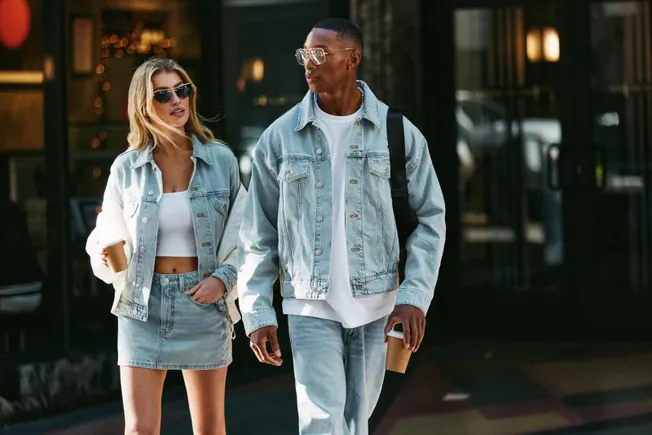
The activewear/apparel category distinction is dissolving as consumers treat athletic and casual wear interchangeably. Sellers in either category now compete with a broader product set across lifestyle and performance lines.
Category blurring means your keyword strategy is too narrow if it only targets 'activewear' or only 'casual apparel' — cross-category search terms are capturing more demand. Pull the Search Term Report in Seller Central and identify if lifestyle or hybrid terms (e.g., 'everyday leggings,' 'casual athletic') are converting better than performance-specific ones.
This is a competitive dynamics shift — apparel and activewear brands are now in the same consideration set, compressing differentiation and increasing the pool of competitors for any single listing.
Audit your backend search terms and PPC campaigns — if you're only bidding on category-specific terms like 'workout pants,' add lifestyle crossover terms to capture blended-intent shoppers now.
In the next 30 days, test a listing variant that leads with versatility/lifestyle positioning rather than sport-specific use case to see if CTR and conversion improve.
Bottom Line
Apparel-activewear blur means siloed category targeting is leaving revenue on the table.
Source Lens
Industry Context
Useful background context, but lower-priority than direct platform, community, or operator intelligence.
Impact Level
medium
Apparel-activewear blur means siloed category targeting is leaving revenue on the table.
Key Stat / Trigger
No single quantitative trigger surfaced in this report.
Focus on the operational implication, not just the headline.
Full Coverage
An article from Deep Dive Activewear isn’t over. Everything’s just apparel now. The lines between apparel, activewear and everything in between have only continued to blur. That isn’t a problem, except if the customer says it is.
Published March 30, 2026 Cara Salpini Senior Editor Share Copy link Email / Print License Add us on Google Fabletics is among a group of activewear brands that are broadening their offerings to include categories like denim as apparel meets in the middle. Courtesy of Fabletics Listen to the article 12 min This audio is auto-generated.
Please let us know if you have feedback. Apparel is changing. Vuori and Fabletics provided a microcosm of the shifts in the space with the simultaneous release of new denim collections earlier this year. It’s a trend that’s been on the rise: athleisure brands are expanding further beyond their core offerings.
At the same time, traditional apparel companies are staking a claim in activewear. Brands want to go where the money is, and sometimes that means broadening the scope of what they sell. “All these brands, especially the public ones, need to show growth,” Suzy Davidkhanian, who heads up Emarketer’s retail practice, said.
“At some point, there's only so much more explosive growth that they can show if they don't start to do something new.” Innovation can happen within a category — new styles or colors of a core product, for example — but after that’s become saturated, “the next way to show growth is by introducing new categories,” she said.
This movement toward the middle, though, risks creating a world in which every apparel company sells everything. Sometimes, that’s even the point. Aerie started off as intimates but now sells a vast array of products, including a robust activewear assortment.
“We dove into every category — and every category is really working for us,” Jennifer Foyle, president and executive creative director of American Eagle and Aerie, said at the ICR Conference in January. That’s not necessarily a problem.
But as the lines keep blurring between activewear and the rest of apparel, retailers must toe the line to prevent overextending their brand. ‘The trends have changed’ Lululemon’s recent stagnation has raised a slew of questions for activewear operators and apparel brands alike. Foremost among them: Is activewear slowing down?
In a post-Black Friday note last year, Needham analyst Tom Nikic highlighted the strength of “non-athletic brands” — including Levi’s, Ralph Lauren and Steven Madden — over the holiday shopping period. “Essentially, we think that consumers spent 5 years purchasing clothes from a small group of brands and sub-categories (e. g.
athleisure) and they're now looking for new brands and new categories to add to their wardrobes (e. g. denim, dress shoes, etc.) ,” Nikic wrote in emailed comments. There are some signals to back this up. Kristen Classi-Zummo, an apparel analyst at Circana, said there’s been “a clear shift” away from leggings, sports bras and other performance products.
But activewear still outpaces the overall apparel market, according to Circana’s Consumer Tracking Service. “What we're really seeing is a meeting in the middle." Kristen Classi-Zummo Apparel analyst at Circana As of January this year, activewear apparel sales in the U. S. were up 2% year over year, while nonactive apparel was down 2%.
Jeans, a subset of nonactive apparel and a growth target for some activewear brands, grew 4% in the same period. “What we're really seeing is a meeting in the middle. Consumers aren't gravitating toward overly performance-driven or tailored clothing,” Classi-Zummo said via email.
“They're landing on casual, everyday categories like denim, sweaters, and sweats. It's less about choosing a side and more about comfort with versatility.” Shifting trends may be part of the story, but to others the challenges at athletic retailers like Lululemon and Nike come down to product and innovation missteps.
Not everyone in activewear is suffering; Adidas reported record revenues in its latest fiscal year. Fabletics CEO Adam Goldenberg doesn't see a possible slowdown in consumer spending on athleisure happening. “I think that's the excuse of some of the big public players that have missed the mark on where the fashion's gone," he told Retail Dive in January.
Growth at Fabletics is actually accelerating, Goldenberg said. The activewear category is expanding, but now Fabletics, Alo Yoga and Vuori are taking “a lot of market share from incumbents.” “In activewear, the trends have changed,” Goldenberg said.
“So if you didn't have the right straight-leg and wide-leg in your fashion — if you weren't broadening your silhouettes in men's to also have some more baggy fit — there's just certain trends that I feel like, if you miss those, I think people are switching to other brands.”
Indeed, there are other indications that activewear is positioned to thrive for years to come. The number of inactive peop
Original Source
This briefing is based on reporting from Retail Dive. Use the original post for full primary-source context.
Style
Audience