

Babylist’s newest arrival is a New York showroom
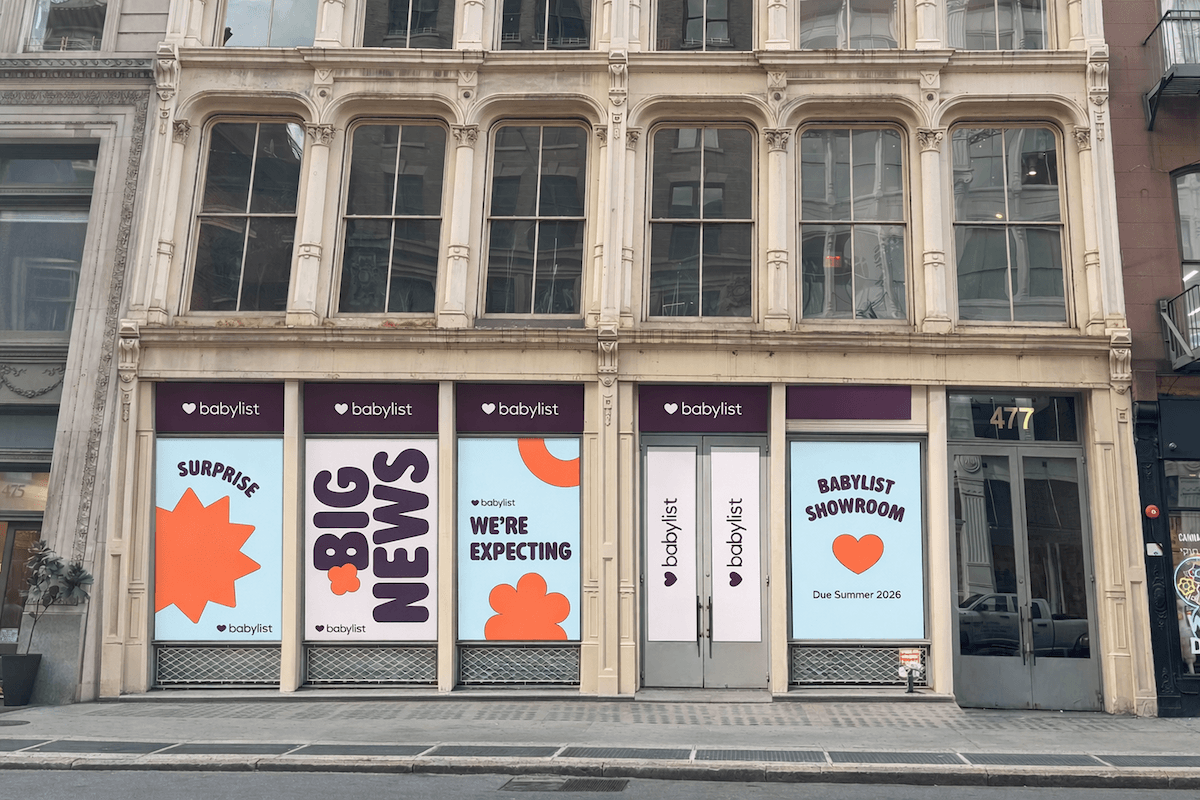
Babylist, a $500M annual revenue universal registry platform, is opening a 20,000 sq ft physical showroom in NYC's SoHo this summer — its second location after a successful Beverly Hills debut in August 2023. The space is purpose-built for product education, influencer content creation, and community events, and integrates directly with its registry platform that pulls from Amazon, Walmart, and Target. This isn't a retail experiment — Babylist is profitable and doubling down as the only scaled physical presence in baby retail after BuyBuy Baby's 2023 bankruptcy and Babies 'R' Us's 2018 closure. The showroom functions as a content engine and high-consideration category conversion machine, not just a store.
The non-obvious play here is that Babylist is becoming a de facto product discovery gatekeeper for first-time parents — the highest-LTV segment in the baby category — and they're building a content moat that will compress organic search and Amazon advertising ROI for baby brands not in their ecosystem.
Brands that aren't actively partnering with Babylist for showroom placement, influencer shoots, or registry integration will see rising CPCs on Amazon baby keywords as Babylist-affiliated products capture registry-driven purchase intent before shoppers ever hit the marketplace.
For $10M/year baby category sellers, Monday's action is to audit whether your ASINs appear on Babylist's registry platform and whether you have a formal brand partnership — if not, you're paying full Amazon ad rates to compete against a channel you're not in.
The 'always-on' education space and quarterly registry weekends mean Babylist is now producing evergreen content that will outrank brand PDPs on Google and influence Alexa/search-driven purchases.
This move signals a broader 2026 trend of platform-native companies using physical retail as a content and data acquisition layer rather than a traditional revenue channel — similar to how Warby Parker and Glossier used stores to feed their digital flywheels.
In the baby category specifically, the collapse of BuyBuy Baby created a vacuum that Babylist is methodically filling with a media-retail hybrid model that controls the discovery, education, and purchase decision in a single ecosystem.
For marketplace operators, the strategic risk is that Babylist's registry data — which product categories parents add, remove, and ultimately buy — becomes a proprietary demand signal that informs their own private label or preferred brand programs, eroding marketplace sellers' visibility into organic demand patterns.
Pull your Brand Analytics Search Query Performance report for your top 20 baby category keywords and filter for queries containing 'registry,' 'best baby,' or 'stroller review' — if Babylist-affiliated content appears in the top 3 organic positions on Google for those terms, increase your Amazon Sponsored Brand video bids by 20% to capture bottom-funnel demand those parents bring back to Amazon.
This week, go to Babylist.com and search your brand name and top SKUs — if you're not listed or your product pages are thin, submit for registry inclusion and contact their brand partnerships team directly. Brands with showroom placement get organic registry adds worth an estimated 3-5x the conversion rate of a standard Amazon PDP visit.
In the next 30-60 days, prepare for Babylist to launch a SoHo-anchored influencer content wave targeting NYC parent demographics — brief your influencer partners now to create 'seen at Babylist' content before the summer opening saturates the feed, and negotiate exclusivity windows with any creators in the NYC parenting niche before Babylist locks them into brand deals.
Bottom Line
Babylist just became the offline gatekeeper for $B in baby registry spend — if your brand isn't in their showroom, you're paying Amazon ad tax on demand they created.
Source Lens
Industry Context
Useful background context, but lower-priority than direct platform, community, or operator intelligence.
Impact Level
medium
Babylist just became the offline gatekeeper for $B in baby registry spend — if your brand isn't in their showroom, you're paying Amazon ad tax on demand they created.
Key Stat / Trigger
$500M in annual revenue reported by Babylist in 2024
Focus on the operational implication, not just the headline.
Full Coverage
Store of the Future // March 23, 2026 Babylist’s newest arrival is a New York showroom By Julia Waldow Babylist Nearly three years after opening its first showroom in Beverly Hills, Babylist is making its debut in the Big Apple. The universal baby registry platform is opening a new location in New York City’s Soho neighborhood sometime this summer.
At 20,000 square feet, the New York location will be bigger than its 18,000-square-foot California counterpart. The Soho showroom will focus on product education, content creation and community building, all while catering to New York parents’ unique needs, like living in smaller apartments and navigating the subway.
Babylist, which was founded in 2011, operates an online registry that pulls products from retailers like Target, Walmart and Amazon. It opened its Beverly Hills showroom in August 2023, at a time of flux for the baby industry. Just four months earlier, BuyBuy Baby became swept up in Bed Bath & Beyond’s bankruptcy.
Meanwhile, in 2018, Babies “R” Us closed all of its stores. Yet, Babylist wanted to invest in physical retail, knowing its users are looking to browse products in person, ask for advice and meet like-minded parents, said Molly Goodson, vp of brand and media at Babylist.
Now, Babylist is looking to “go big” in its showroom in New York City as it courts more East Coast parents, Goodson said. “[In 2023] there was a real sense that in-person baby retail was dying, but we said, ‘Oh no, we’re ready to go all in,'” Goodson told Modern Retail.
“What we’ve seen is that there’s a huge appetite for families to get hands-on with these products. They’re making thousands of product decisions on categories, and there’s nothing like getting your hands on something.
… We had a ton of conviction that there was a real space for making [something] experiential — something joyful and celebratory, and somewhere you want to bring your parents and your best friend.”
Babylist, which is profitable and marked $500 million in annual revenue in 2024, is using learnings from its Beverly Hills location to power its New York City location.
Its new showroom will sell products — parents can scan barcodes to add items to their registries — but it will also have an “always-on” education space for product demos and consultations on everything from choosing a high chair to picking a baby monitor with or without WiFi.
The New York City showroom will also offer regular programming, like quarterly registry weekends, in which Babylist staffers walk shoppers through high-consideration categories like cribs, offer advice and host giveaways.
Babylist’s Beverly Hills showroom is also a big hub for content; influencers and brands come in every day to shoot videos, and Babylist staffers regularly create content for TikTok and Instagram. So, for its New York space, Babylist is building a bigger area for creating content, including recording podcasts.
The New York showroom will have two entrances, as well — one in the front and one in the back — to host more private events without interfering with customers’ shopping journeys.
“We know that a very small percentage of people are ever going to make it to the showrooms, which is why it’s important for us to bring that experience to life for everybody through content and how-to videos,” Goodson said.
“[Our] registry weekends are always sold out [in Beverly Hills], and what we’ve heard from people, time and time again, is, ‘I want more of this.’ So, we’re going to record all our education sessions to make them available. … It’s all about opening [the experience] up.”
That type of content is key for new parents, said Lily Walla, founder and CEO of the online parenting community Auggie. Auggie has an on-demand parenting library for videos about topics like starting solid foods. “People really want expert support,” Walla said.
“[With] the mental load and overstimulation and influencers pushing products at us constantly, you just want to hear from someone you can trust.” Babylist, for its part, has a large trove of customer data and insights to draw from, as nearly half of all first-time parents choose Babylist for their registry needs.
Babylist’s New York City location will differ from its Beverly Hills location in other ways. The showroom will tailor products and consultations to the realities of New York City parenting, like not owning a car, having limited storage or bringing a stroller on public transit.
Babylist will also create various nursery “vignettes” to show people where to put cribs and changing tables, in case “you only have the corner of an apartment for the time being,” Goodson said. “
Original Source
This briefing is based on reporting from Modern Retail. Use the original post for full primary-source context.
Style
Audience