

Marketplace Briefing: Temu wants to sell you a steak now
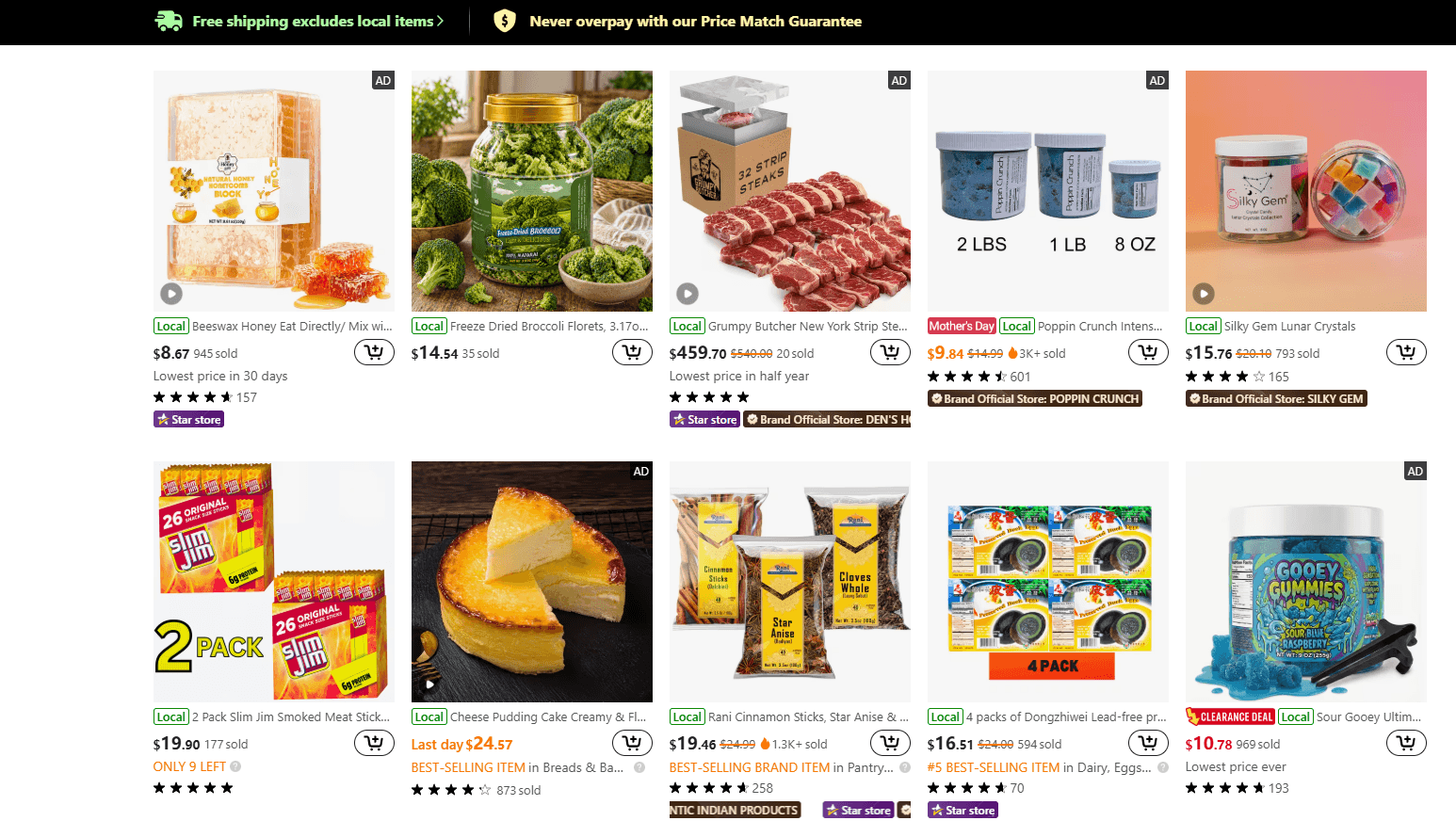
Temu is expanding beyond cheap Chinese imports to sell food including steaks from US-based sellers after the de minimis exemption was closed for China in 2025. The platform now offers 700+ categories through domestic warehousing and local merchants.
Temu's shift to US fulfillment and broader categories signals it's directly competing with Amazon/Walmart's marketplace model rather than just discount imports. Sellers should monitor if Temu's aggressive pricing on food categories pressures margins in adjacent categories where they compete.
This represents platform consolidation as discount marketplaces evolve into full-service competitors, forcing established platforms to defend market share through pricing and seller incentives.
Monitor competitor pricing on Temu in your categories - check if their US seller recruitment is undercutting your pricing strategy.
Evaluate if Temu's Shopify integration could be a low-cost channel to test demand for your products at lower price points.
Bottom Line
Temu's US seller push means direct competition with Amazon/Walmart marketplaces.
Source Lens
Industry Context
Useful background context, but lower-priority than direct platform, community, or operator intelligence.
Impact Level
medium
Temu's US seller push means direct competition with Amazon/Walmart marketplaces.
Key Stat / Trigger
700+ categories now available on Temu
Focus on the operational implication, not just the headline.
Full Coverage
Marketplace Briefing // May 7, 2026 Marketplace Briefing: Temu wants to sell you a steak now By Allison Smith Screenshot via Temu's website This is the latest installment of the Marketplace Briefing, a weekly Modern Retail+ column about the ever-changing e-commerce marketplace landscape. More from the series → Wagyu beef skirt steaks.
Jumbo chicken wings. Filet mignon steaks. These are just some of the food items now available for purchase from bargain-shopping site Temu. The app best known for cheap knick-knacks shipped directly from China is now trying to convince shoppers to toss frozen ribeyes into the same cart as $3 phone cases and $5 dresses.
The move has sparked plenty of dismay online. Influencers have gone viral filming themselves cooking Temu steaks. One creator, who goes by @lifewithrekina, reviewed ribeye steaks from Temu as part of a paid sponsorship with the e-commerce company. The post has racked up more than 1. 7 million views since she praised the steaks in February.
Commenters were more skeptical. “I don’t even buy clothes from Temu and y’all buy MEAT from there?!?!” one user wrote. “i really hope they paid u millions cuz no amount of money would make me eat a steak from temu,” another user said. “do yall know ur healthcare ain’t free?” another wrote.
But behind the jokes is a bigger story about where Temu is headed next. Since 2024, Temu has focused on expanding its business beyond the “direct from China” model of shipping small packages via air cargo by building out domestic warehousing in the U. S. and recruiting more domestic sellers.
Temu is increasingly trying to remake itself into more of an everything marketplace stocked by local merchants, U. S. inventory and recognizable brands. Food, including steaks, is part of that strategy. “It’s not like they’re shipping steaks from China,” said Juozas Kaziukėnas, an independent e-commerce analyst. “They’re getting it from local sellers.”
“With the addition of local sellers, Temu’s marketplace now offers more than 700 categories, from footwear to furniture to food,” a Temu spokesperson said in a statement. “Food is one of the newer additions, and food sellers on the program are U. S. -based businesses fulfilling from U. S. inventory.
We don’t break out category-level data publicly, but food has grown quickly since launch and includes everything from pantry staples to specialty and regional brands.” Temu, a subsidiary of its Chinese parent PDD Holdings, launched in the U. S.
in late 2022 and quickly became one of the country’s most downloaded shopping apps by offering ultra-cheap goods shipped directly from Chinese factories and merchants. The e-tailer expanded quickly, fueled in part by an expensive marketing blitz that included a splashy Super Bowl ad urging U. S. consumers to “shop like a billionaire.”
That strategy helped push Temu to the top of Apple’s list of most-downloaded free apps in the U. S. Temu’s early success also depended heavily on the de minimis exemption, which allowed packages valued under $800 to enter the U. S. duty-free with minimal customs scrutiny.
But after the loophole was closed last year for all goods originating from China and Hong Kong, cross-border retailers like Temu and Shein faced a major challenge. Suddenly, the economics that made it possible to ship cheap products individually from China to American consumers became far less attractive. The company has ramped up recruitment of U. S.
-based sellers, pushed merchants to store inventory in domestic warehouses and broadened its assortment across hundreds of categories. Earlier this year, Temu also introduced a Shopify integration, allowing merchants to list products directly on the marketplace.
Search Temu’s “Food & Grocery” section, and shoppers will find a weirdly eclectic mix of pantry staples, beverages, imported snacks, sweets and frozen foods, including seafood and cuts of meat from U. S. -based sellers. Some listings appear to come from resellers offering Costco and Walmart products at marked-up prices.
Others come from smaller specialty merchants. Among the most prominent is The Grumpy Butcher, a New York-based frozen food company selling steaks, chicken wings and prepared meals through Temu. And despite the internet’s collective skepticism, the reviews on Temu are largely positive, with an average rating of 4.
6 stars across The Grumpy Butcher’s 61-item selection. Its items are reasonably popular. The Grumpy Butcher has sold more than 13,000 items on Temu since it joined the platform, according to Temu listings. (The earliest review Modern Retail could find was left in early June of last year.)
The company’s 6-pack of sirloin steaks alone has sold over 2,200 units to date. Temu drove more than 12% of The Grumpy Butcher’s online sales within five weeks of launching on the platform, according to a blog post on Temu’s website. Today,
Original Source
This briefing is based on reporting from Modern Retail. Use the original post for full primary-source context.
Style
Audience