

Amazon URL structure explained: Understand url structure to target keywords Amazon
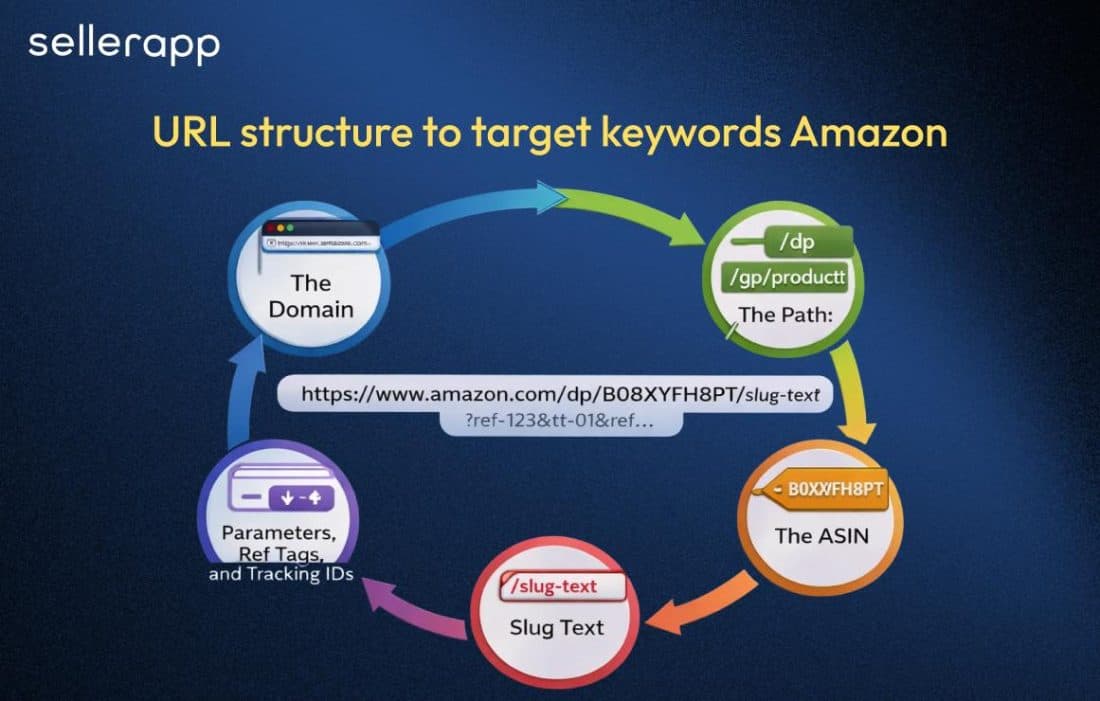
Amazon URL structure determines how sales are attributed across Ads Console, Amazon Attribution, and Brand Analytics — inconsistent URL formats across influencer, paid social, and off-Amazon campaigns silently misallocate budget and corrupt performance data. No policy change; this is an operational best practice explainer published March 2026.
The non-obvious risk: duplicate affiliate payouts and ghost ROAS numbers can persist for months because sales keep coming in — the data just stops reflecting reality. Audit every active campaign URL format now, standardize to tagged Attribution links, and cross-reference your Brand Referral Bonus report against Ads Console to surface attribution gaps.
As off-Amazon traffic strategies grow more critical for ranking and the Brand Referral Bonus, URL hygiene becomes a core operational competency — brands without standardized link governance will make scaling decisions on fabricated performance data.
Pull your Amazon Attribution report alongside the Brand Referral Bonus report -- if totals don't reconcile with Ads Console ROAS, your URL formats across influencer or paid social channels are likely mismatched and need standardization.
Within 30 days, create a URL governance doc mapping every traffic source (influencer, paid social, email) to its required Amazon Attribution link format to prevent silent misattribution at scale.
Bottom Line
Wrong URL formats silently corrupt attribution data across every channel.
Source Lens
Industry Context
Useful background context, but lower-priority than direct platform, community, or operator intelligence.
Impact Level
medium
Wrong URL formats silently corrupt attribution data across every channel.
Key Stat / Trigger
No single quantitative trigger surfaced in this report.
Focus on the operational implication, not just the headline.
Full Coverage
Amazon URL structure is one of those things that doesn’t make it onto the agenda until something breaks. And when it does, it usually breaks quietly. You’re sitting in a post-campaign review watching three different reports tell three different stories about the same sales period. The ads console shows one ROAS. Amazon Attribution shows another.
The brand referral bonus report doesn’t match either. And everyone in the room has a different explanation. Nine times out of ten, the answer traces back to how your Amazon URL structure was built.
For sellers managing influencer programs, paid social, and off-Amazon traffic at the same time, the link format isn’t a minor technical detail someone in campaign ops handles quietly.
It determines whether a sale gets attributed to sponsored ads, logged as external demand, credited toward your brand referral bonus, or swallowed into untrackable direct traffic in Brand Analytics.
Use the wrong format across channels without any governance in place, and you end up with misallocated budgets, duplicate affiliate payouts, and optimization calls based on numbers that were never measuring what you thought they were, and the worst part is, nothing tells you it’s happening. Sales keep coming in. Ads keep spending. Influencers keep posting.
The attribution just slowly stops reflecting reality. Quick Guide: Why does the Amazon URL structure still matter in 2026? URL structure to target keywords Amazon Does each marketplace domain behave differently?
Understanding different types of Amazon URL structure for sellers Common myths about Amazon URL structure How smart sellers benefit from Amazon URL structure Final thoughts Why does the Amazon URL structure still matter in 2026?
If you are one of the sellers juggling multiple campaigns, influencer partnerships, and cross-channel ads, understanding the Amazon URL structure is important. They determine how every click is tracked and reported across your teams. However, URLs don’t affect A10 ranking, which is more customer-centric and engagement-focused.
The Amazon URL structure, however, influences which internal reports register a purchase and how conversions flow through Ads Console, Amazon Attribution, and Amazon Brand Analytics. Every URL behaves differently. For example, a canonical /dp/ASIN link behaves differently from an ad-console URL, an a.
co short link, or an influencer storefront link, and inconsistent usage across channels can create subtle but costly misalignments. When URL formats aren’t standardized, the same sale can appear in Ads Console as paid traffic, in Amazon Attribution as external demand, and in Brand Analytics as “Direct / Other.”
This disconnection can lead to real operational challenges for your team; for instance, marketing teams may misinterpret campaign performance, finance may misattribute revenue, and operations may spend hours chasing fake inefficiencies. This means that beyond Amazon’s internal reporting, URLs also influence shopper behavior.
Clean, consistent Amazon URL structure ensures that every channel, campaign, and influencer touchpoint is traceable and auditable, giving teams a shared view of reality and allowing sellers to scale. URL structure to target keywords Amazon What is Flutter about the Amazon URL structure? Amazon product URLs look very simple.
These were the exact words from a seven-figure seller who recently partnered with us. But when you start crawling Amazon URL structure across campaigns, agencies, and influencer programs, you quickly realize there’s a lot more happening behind a single link than it looks. When you break a real U. S.
Amazon URL apart, you can see which pieces Amazon treats as permanent identifiers and which ones exist only to guide traffic, credit, or analytics. For sellers operating at scale, this distinction matters. Not because URLs change rankings but because they determine how Amazon classifies demand after the click. Does each marketplace domain behave differently?
Whether a product loads on amazon. com, smile. amazon. com, or m. amazon. com, Amazon resolves all of them back to the same underlying product entity. The domain does not affect ranking, product relevance, or catalog identity. Where it does matter is session behavior. Mobile domains, Smile links, and regional hosts exist as UX layers.
Amazon normalizes them early in the request lifecycle, but the entry point still influences how a session is stitched together, especially when traffic crosses devices or entry surfaces. From an algorithmic standpoint, the domain is ignored.
From a tracking point of view, it can affect continuity, attribution windows, and how Amazon interprets the source of a visit before normalization. The Path: /dp/ vs /gp/product/: Which one should you be using The first meaningful structural fork in an Amazon URL appears in the path: /dp/ASIN /gp/product/ASIN Both resolve to the same product page.
Both load the same content. But they are not treated identically under the hood. /dp/ is A
Original Source
This briefing is based on reporting from SellerApp Blog. Use the original post for full primary-source context.
Style
Audience