

Gord Magill wrote the book trucking needed
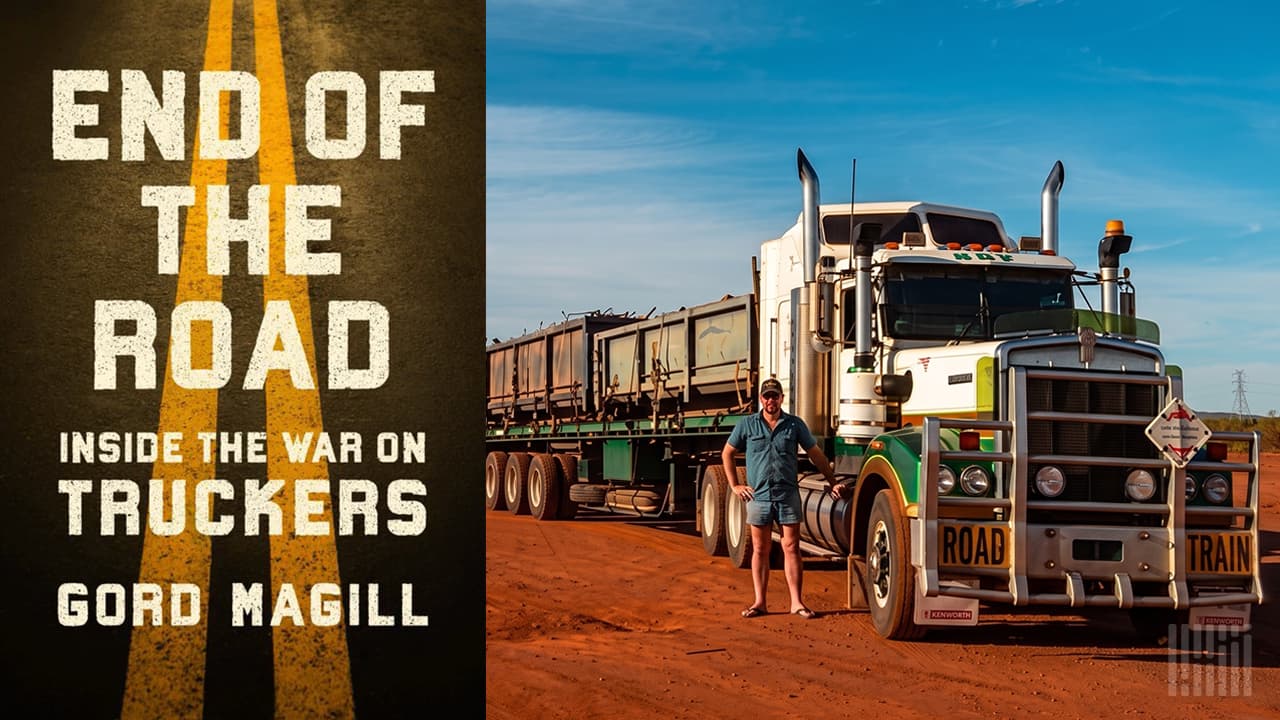
A third-generation trucker published 'End of the Road: Inside the War on Truckers' detailing how deregulation since 1980 has cut driver wages in half and created systematic labor suppression. The book argues there is no driver shortage, only a wage shortage affecting freight costs.
Rising freight costs from driver wage pressures will hit FBA and fulfillment fees harder than expected in 2024-2025. Sellers should diversify logistics partners now and negotiate longer-term shipping contracts before trucking costs spike further.
This fits the broader logistics cost inflation hitting ecommerce fulfillment, forcing sellers to optimize shipping strategies as Amazon and Walmart pass through rising freight costs.
Review your FBA fee reports in Seller Central - if freight-sensitive products show margin compression, consider switching to merchant fulfillment for bulky items.
Lock in shipping rates with 3PL partners for 12+ months before trucking wage inflation forces rate increases across the logistics chain.
Bottom Line
Trucking wage crisis means higher FBA fees coming.
Source Lens
Industry Context
Useful background context, but lower-priority than direct platform, community, or operator intelligence.
Impact Level
medium
Trucking wage crisis means higher FBA fees coming.
Key Stat / Trigger
driver wages today are roughly half what they were 40 years ago in inflation-adjusted terms
Focus on the operational implication, not just the headline.
Full Coverage
First, Gord Magill is a friend and a fellow driver with decades of tenure behind the wheel. I bought this the day it came out. I actually bought a second, so Gord could sign the second while at the Mid-America Trucking Show.
That means you should apply whatever weight you think appropriate to the fact that I’m about to tell you it is one of the best books written about the trucking industry in a very long time, and that every carrier owner, fleet manager, compliance professional, broker, shipper, policy maker, and working driver in this country should read it.
I am telling you that because I believe it, not because Gord asked me to say it. Gord didn’t pay Freightwaves or me for this article/review. This is just professionals telling you that this is real trucking professionals highlighting the real issues of our industry and why the State of our highways is an outrage.
“End of the Road: Inside the War on Truckers” is written by Magill, a third-generation trucker who has driven the ice roads of northern Canada, the deserts of the Australian Outback, and the highways of the continental United States.
The third-generation part is important to me, as someone raised by blue-collar farmers and workers born in the 1930s and 1910s. If you meet his father, you immediately know you’re dealing with real, very genuine, passionate people. These are the types of people I try to keep in my very small circle for very good reasons.
Gord is Canadian by birth, an American citizen now living in upstate New York, and he has been in a truck cab in some form or another for more than 30 years. That biography is the book’s entire argument for its own credibility. This is not a consulting firm’s white paper.
It is not a policy analysis from someone who has spent their career in a Washington office building, wondering why carriers struggle to find drivers.
This is a man who knows what it costs to get a CDL, what it costs to lease a truck, what it feels like to be surveilled for 11 hours at a stretch, and what it means to watch your profession get systematically dismantled by people who have never sat in a truck seat.
The book opens with the Freedom Convoy, the trucker-led 2022 protest in Canada that drew global attention and, in Magill’s telling, drew the most aggressive government response to peaceful political dissent in Canadian history. He participated in it. Why were truckers the ones who led it? His answer sets the thesis of everything that follows.
Truckers did not emerge from nowhere in 2022. They emerged from decades of accumulated grievance, from a profession that had been methodically squeezed, surveilled, undermined, and lied to, until the Canadian government’s vaccine mandate was simply the last straw that broke what had already been badly bent.
From there, Magill takes you back to the Motor Carrier Act of 1980, which deregulated trucking rates and removed many of the controls that had kept the industry structured, predictable, and capable of sustaining a middle-class livelihood. He is fair about it. He acknowledges that the pre-1980 system had cartel-like qualities that were not entirely healthy.
He traces what deregulation actually produced over the decades that followed: a relentless race to the bottom on rates, wages, and standards, driven by corporate interests that understood that flooding the driver supply was the most reliable way to keep labor costs suppressed.
In inflation-adjusted terms, driver wages today are roughly half what they were 40 years ago. That is the intended result of a sustained policy campaign, and Magill names the players, the mechanisms, and the money behind it with the kind of specificity that makes the book genuinely uncomfortable reading.
The big lie at the center of all of it, the one Magill returns to throughout the book and dismantles thoroughly, is the driver shortage. I have been saying versions of this for years in this column and to anyone in the industry who will listen. There is no driver shortage. There has never been a driver shortage.
There is a shortage of people willing to drive a truck, with wages artificially suppressed by a combination of corporate lobbying, government-funded CDL school proliferation, and the systematic importation of foreign labor explicitly intended to keep the supply of bodies behind the wheel high enough to hold rates low.
Gord describes the American Trucking Associations, with characteristic bluntness as a corporate group that masquerades as a truckers’ organization while consistently working against the interests of actual truckers, as the loudest voice pushing the shortage narrative for decades. OOIDA has been saying the same thing Magill says.
Lewie Pugh, OOIDA’s executive vice president, endorsed the book specifically because Magill’s argument aligns with what drivers and owner-operators have known from the inside for years. The sections on CDL mill fraud and the systematic debasement of training standards read like a companion piece to my own inv
Original Source
This briefing is based on reporting from Freightwaves. Use the original post for full primary-source context.
Style
Audience