
From service platform to marketplace: keeping the promise behind the sale
A homeowner arranging a bathroom refit has more to solve than finding an installer. Products need choosing, specifications need checking and deliveries need to arrive when the work requires them. For a service platform, like for example Checkatrade who already help the customer find someone they trust, there is a clear opportunity to make more […]
Source Lens
Industry Context
Useful background context, but lower-priority than direct platform, community, or operator intelligence.
Impact Level
medium
Use this briefing to decide whether your team needs an immediate workflow, policy, or reporting change.
Key Stat / Trigger
No single quantitative trigger surfaced in this report.
Focus on the operational implication, not just the headline.
Full Coverage
A homeowner arranging a bathroom refit has more to solve than finding an installer. Products need choosing, specifications need checking and deliveries need to arrive when the work requires them.
For a service platform, like for example Checkatrade who already help the customer find someone they trust, there is a clear opportunity to make more of that journey easier.
For Anooj Sridhar, Enterprise Account Director at Esetrix, the opportunity comes with a responsibility: the care that earned the customer’s trust must extend into every part of the purchase. A familiar name can encourage someone to try a marketplace. The experience that follows determines whether that relationship grows stronger.
An established service relationship can give a business permission to introduce relevant products at a useful moment. But the purchase creates a new set of expectations. The customer now needs to trust the platform’s recommendations, suppliers and ability to resolve a problem. A marketplace should therefore begin with the customer need it can serve.
A home improvement platform might focus on products connected to a particular job. A professional community might offer equipment its members regularly need. In either case, the assortment should have a clear reason to belong. Adding unrelated categories risks turning a useful service into a crowded shopfront.
This also changes how operators should think about supplier recruitment. A supplier’s catalogue is only part of the decision. Can it provide clear product information, dependable stock updates and realistic delivery promises? What happens when an item arrives damaged or an order needs cancelling?
Those questions determine whether a new commercial relationship strengthens the platform’s existing reputation. Consider a customer who buys three items for one project and receives them from three suppliers. Internally, that may mean separate stock feeds, despatch processes and settlement arrangements.
The customer needs a coherent account of what is arriving, when it will arrive and who will help if something changes. Every unexplained delay creates uncertainty around the platform that introduced the purchase. Trust earns you the opportunity to sell. What happens after checkout determines whether you deserve the next purchase.
-Anooj Sridhar, Enterprise Director, Esetrix Delivering on that expectation takes clear responsibilities. Before launch, operators need to agree who handles enquiries, how returns are managed and when a supplier issue is escalated. Customers should be able to find those answers easily.
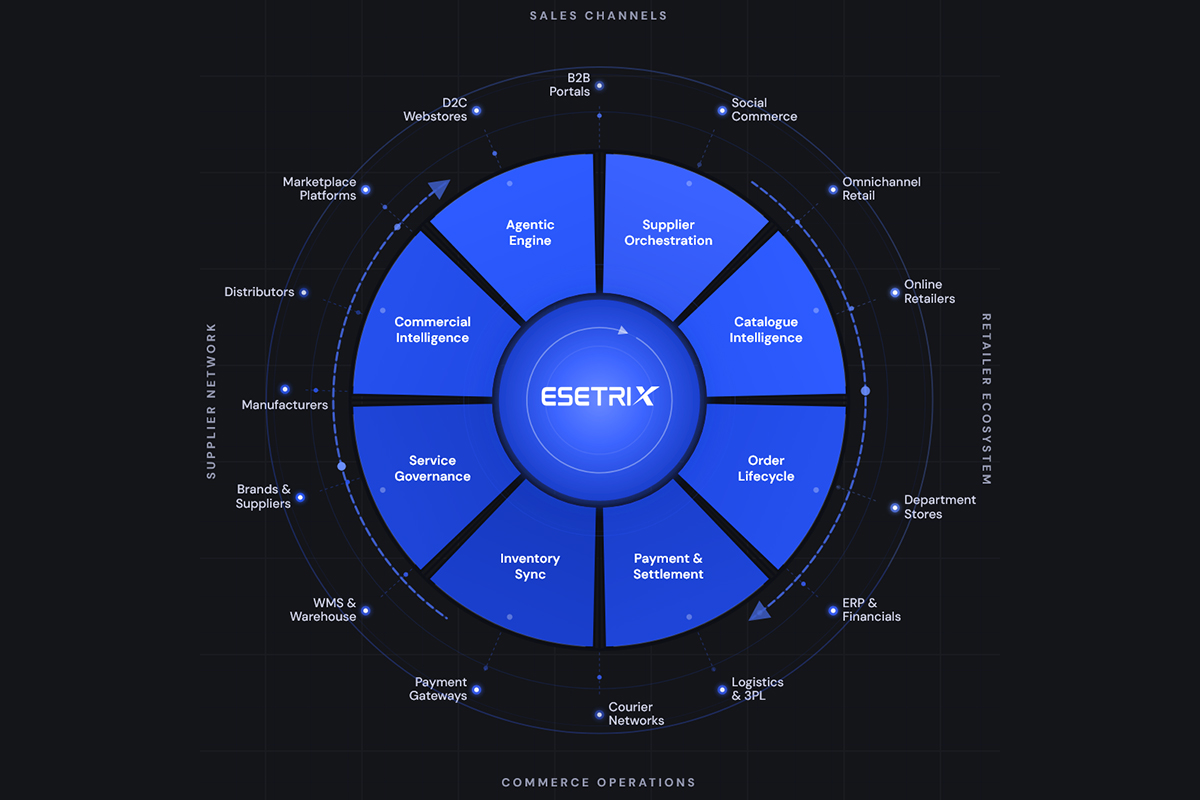
Teams should be able to act on them without spending hours reconstructing an order across inboxes and spreadsheets. The supporting systems need to make those responsibilities workable as the marketplace grows. Product information, inventory, orders, payments and supplier performance all have to connect.
Automation can handle repeatable tasks such as routing orders and updating their status, while making exceptions visible to the people responsible for resolving them. His recommendation is to prove one useful customer journey before widening the proposition. Start with a clear need, a manageable assortment and suppliers whose service can be assessed.
Review the whole transaction, including support and returns, before adding more complexity. Early operational problems are valuable signals about what needs fixing before expansion. That approach also requires a broader view of success.
Alongside sales and conversion, operators should examine delivery reliability, cancellations, returns, complaints and repeat purchases. A growing order book tells only part of the story if customers are becoming less willing to buy again or recommend the service. Scaling a marketplace is not about adding more suppliers or products as quickly as possible.
Operators need clear ownership across catalogue, stock, fulfilment, payments and customer support. Without that discipline, growth becomes expensive noise rather than a sustainable commerce model. – Tejas Dave, Founder, Esetrix Service platforms have an opportunity to connect the trust they have earned with more of the decisions their customers need to make.
Sustainable marketplace growth depends on earning that trust again through each transaction. The discussion continues at eCommerce Expo, ExCeL London, on the 24th September 2026, from 13:50 to 14:15 on the Connected Commerce Stage.
Emma Grant, Director of Retail at Checkatrade, and Tejas Dave, Founder of Esetrix, will join moderator Chris Dawson, Editor of ChannelX, to explore how service platforms can turn trust into scalable commerce.
Original Source
This briefing is based on reporting from Tamebay. Use the original post for full primary-source context.
Style
Audience