

Red flags as busiest Asia-US trade lane hits OOCL results
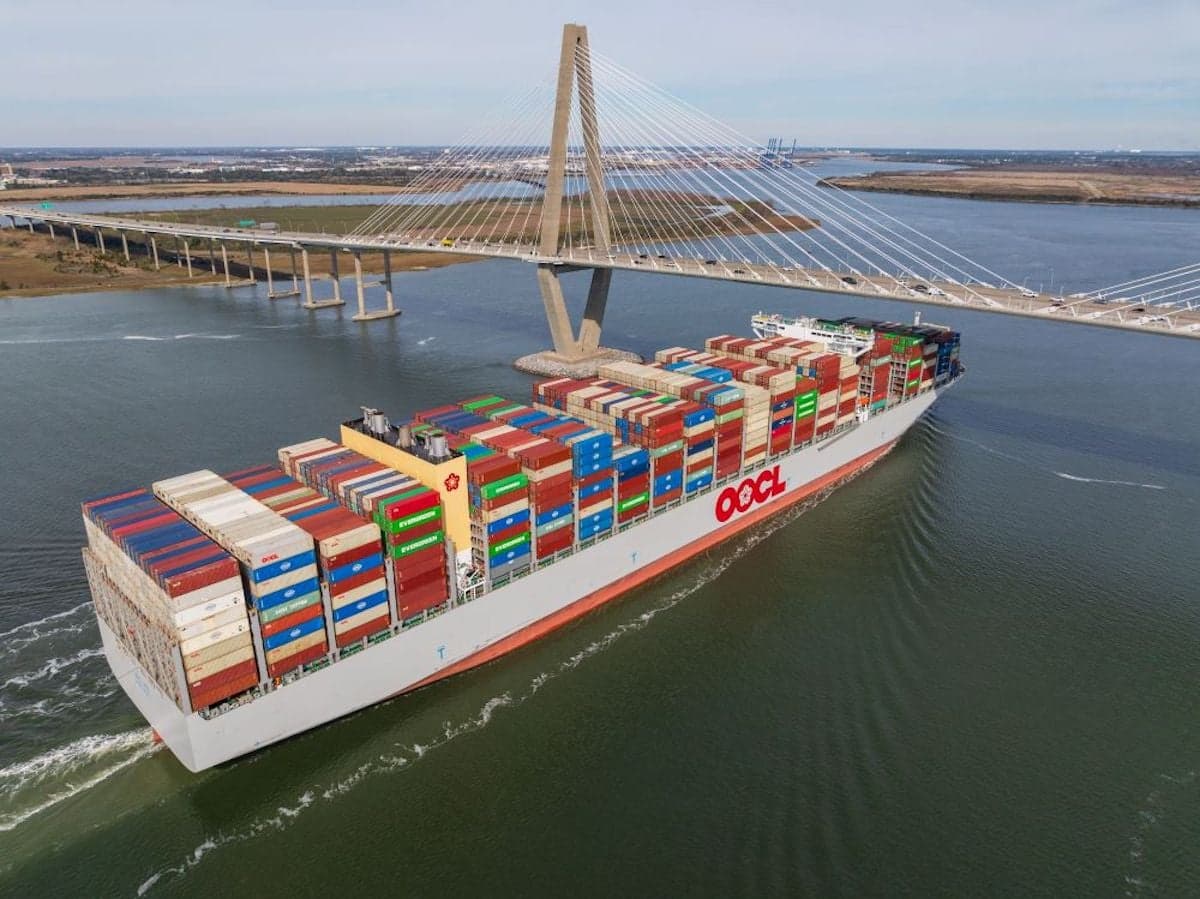
OOCL shipping profits fell in Q1 2026 as freight rates dropped 9.1% despite 1.7% volume growth, with trans-Pacific revenue down 16.8%. The Asia-US trade lane weakness signals broader shipping cost normalization after recent rate spikes.
Lower shipping rates should reduce landed costs for inventory, but the volume-price disconnect suggests capacity oversupply that could destabilize delivery schedules. Monitor your freight forwarder's carrier mix and lock rates now before potential service disruptions hit peak season.
This reflects the post-pandemic shipping market normalization, where excess capacity is driving down rates but creating financial pressure on carriers that could affect service reliability during peak seasons.
Check your Q3/Q4 shipping contracts -- if rates aren't locked, negotiate now while carriers are competing on price to avoid peak season volatility.
Review your supplier payment terms to capture lower freight costs in landed cost calculations for inventory planning.
Bottom Line
Shipping rate drops mean lower inventory costs but potential service instability.
Source Lens
Industry Context
Useful background context, but lower-priority than direct platform, community, or operator intelligence.
Impact Level
medium
Shipping rate drops mean lower inventory costs but potential service instability.
Key Stat / Trigger
9.1% drop in average revenue per container
Focus on the operational implication, not just the headline.
Full Coverage
The parent of Orient Overseas Container Line saw profits fall in the first quarter of 2026 as freight rates normalized amid higher box volumes. Parent OOIL said unaudited results for the quarter ended March 31 showed volume growth but further pressure on prices. Liner revenue at OOCL was $2. 14 billion, down 7. 6% year‑on‑year, while liftings totaled 1.
997 million twenty foot equivalent units, up 1. 7% year-on-year. This compared to global volume growth of 7. 5% in January-February, according to data from Container Trade Statistics. Loadable capacity increased by 4. 3% from a year ago, ahead of the volume increase and pushing average revenue per TEU down by 9. 1% y/y, reflecting softer market pricing.
window. googletag = window. googletag || {cmd: []}; googletag. cmd. push(function() {googletag. defineSlot('/21776187881/FW-Responsive-Main_Content-Slot1', [[300, 100], [320, 50], [728, 90], [468, 60]], 'div-gpt-ad-1709668545404-0'). defineSizeMapping(gptSizeMaps. banner1). addService(googletag. pubads()); googletag. pubads().
enableSingleRequest(); googletag. pubads(). collapseEmptyDivs(); googletag. enableServices(); }); googletag. cmd. push(function() {googletag. display('div-gpt-ad-1709668545404-0'); }); Among major trade lanes, the trans‑Pacific took the biggest hit as liftings fell 5. 9% to 523,385 TEU and revenue declined 16. 8% to $744. 8 million.
Asia‑Europe liftings were higher by 11. 8% to 384,893 TEUs, though revenue was down 4. 5% to $481. 9 million. For full-year 2025, revenue was $8. 78 billion, down 10. 6% y/y; liftings were 7. 874 million TEUs, up 3. 7%. OOIL also noted delivery of nine new 16,828 TEU vessels in 2025, completing that series. Read more articles by Stuart Chirls here.
Original Source
This briefing is based on reporting from Freightwaves. Use the original post for full primary-source context.
Style
Audience