

Average March volume was actually good news for the Port of Los Angeles
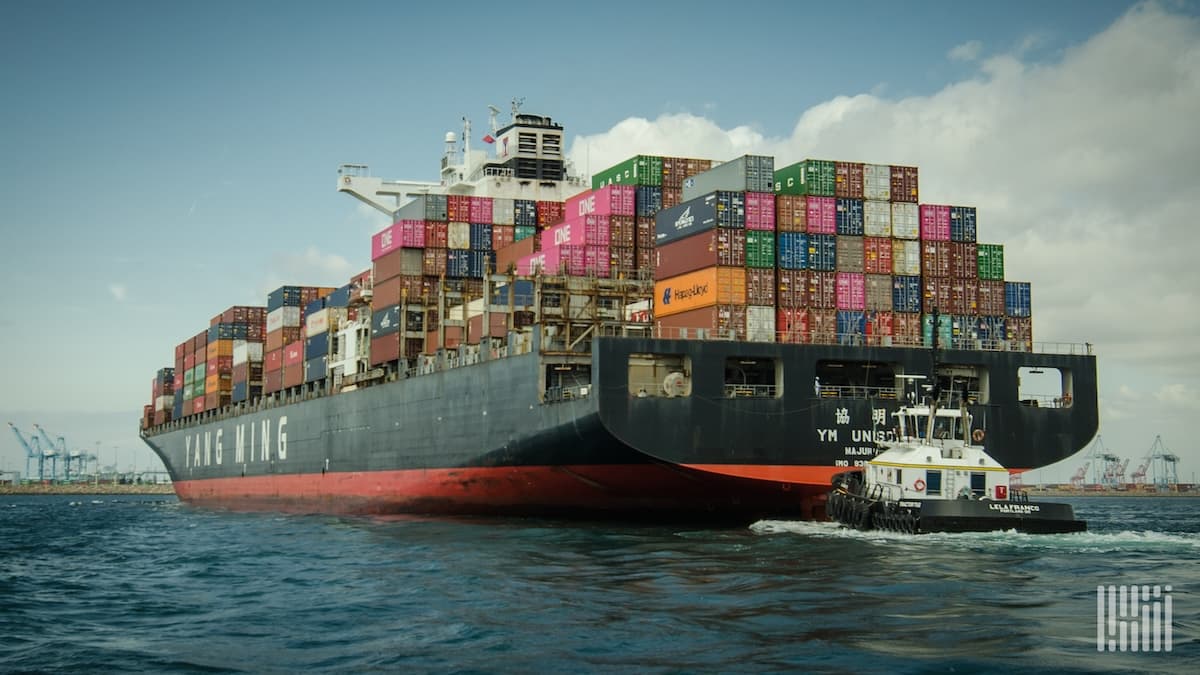
Port of Los Angeles processed 752,520 TEUs in March 2026, down 3% year-over-year but maintaining consistent volume despite tariff uncertainty and Middle East conflict impacts. Loaded imports dropped only 1% while exports grew 7% to highest level since May 2024.
Stable port volumes amid economic uncertainty signal predictable shipping capacity for Q2 inventory planning. The 7% export growth suggests less competition for inbound container space as retailers maintain conservative inventory levels.
Port stability provides predictable logistics foundation as sellers navigate ongoing tariff policy uncertainty and prepare for peak season inventory positioning.
Review Q2 shipping schedules in Seller Central or supplier portals -- stable LA port capacity means fewer delays but monitor fuel surcharges from Middle East impacts.
Adjust inventory forecasting models to account for continued tariff uncertainty affecting competitor restocking patterns through summer peak season.
Bottom Line
Steady LA port volumes mean reliable shipping capacity for Q2 inventory builds.
Source Lens
Industry Context
Useful background context, but lower-priority than direct platform, community, or operator intelligence.
Impact Level
medium
Steady LA port volumes mean reliable shipping capacity for Q2 inventory builds.
Key Stat / Trigger
752,520 TEUs processed in March, down 3% year-over-year
Focus on the operational implication, not just the headline.
Full Coverage
March imports were weaker year-on-year but the busiest U. S. container port still managed to play up to the back of its baseball card.
The Port of Los Angeles handled 752,520 twenty foot equivalent units (TEUs) in March, off 3% from the same month a year ago as geopolitics and economic uncertainty overshadowed the beginning of the months-long run-up to the peak shipping season.
Compared to 2025, when shippers rushed to bring in goods ahead of sharply increased tariffs to close out the first quarter, Los Angeles processed a respectable 2,388,843 TEUs.
“Even with the seasonal slowdown tied to Lunar New Year, cargo flow in March was solid and our first quarter performance was consistent with our five-year trend,” said Port of Los Angeles Executive Director Gene Seroka, in a media briefing.
“In today’s uncertain environment, consistency matters – and we’re staying ahead of things so our waterfront workers and partners can continue to deliver reliable, efficient operations for our customers.” window. googletag = window. googletag || {cmd: []}; googletag. cmd. push(function() {googletag.
defineSlot('/21776187881/FW-Responsive-Main_Content-Slot1', [[300, 100], [320, 50], [728, 90], [468, 60]], 'div-gpt-ad-1709668545404-0'). defineSizeMapping(gptSizeMaps. banner1). addService(googletag. pubads()); googletag. pubads(). enableSingleRequest(); googletag. pubads(). collapseEmptyDivs(); googletag. enableServices(); }); googletag. cmd.
push(function() {googletag. display('div-gpt-ad-1709668545404-0'); }); Unsettled tariff policy and rising inflation combined with broader economic impacts of the conflict in the Middle East, Seroka said, particularly soaring fuel prices, are weighing on consumers and business. Loaded imports totaled 380,733 TEUs in March, a narrow 1% lower y/y.
Loaded exports were better by 7% at 132,129 TEUs — the most since May 2024. The San Pedro Bay hub processed 239,658 empty container units, weaker by 11% y/y. Read more articles by Stuart Chirls here.
Original Source
This briefing is based on reporting from Freightwaves. Use the original post for full primary-source context.
Style
Audience