

War sends Asia-US ocean rates soaring 234% since February
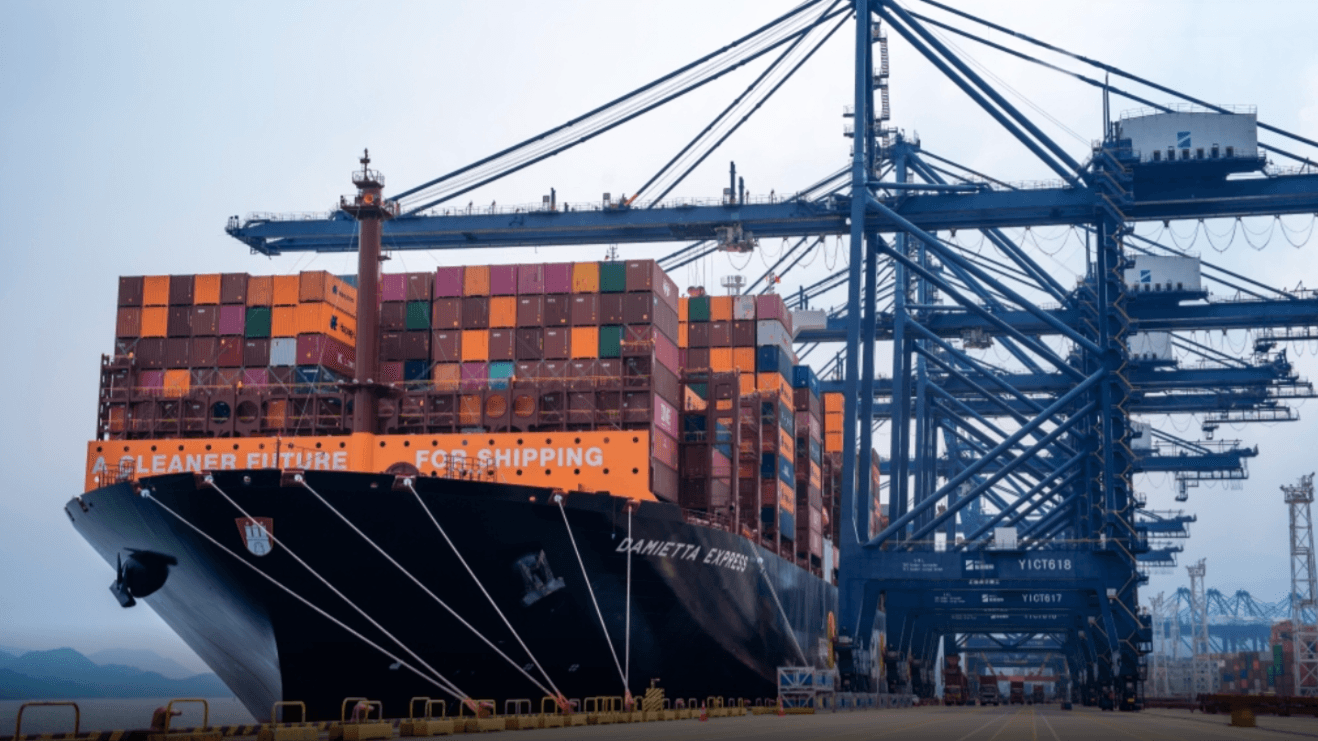
Far East shipping spot rates are softening slightly but remain high; declines are gradual and expected to continue in August. The post War sends Asia-US ocean rates soaring 234% since February appeared first on FreightWaves.
Source Lens
Industry Context
Useful background context, but lower-priority than direct platform, community, or operator intelligence.
Impact Level
medium
Use this briefing to decide whether your team needs an immediate workflow, policy, or reporting change.
Key Stat / Trigger
No single quantitative trigger surfaced in this report.
Focus on the operational implication, not just the headline.
Full Coverage
Far East container shipping rates are gradually softening and expected to decline further in August, though they are falling significantly slower than they spiked. “Spot rates on the major ocean container shipping trades out of the Far East continue to soften, edging down 1% into the U. S.
West Coast, North Europe and Mediterranean while remaining flat into the U. S. East Coast,” said Emily Stausboll, Xeneta senior shipping analyst, in an update. “There are likely to be further declines at the start of August, but the gradual softening shows how rates fall far slower than they increase during a market spike.”
The effects of the Iran war on trade routes far from the conflict’s epicenter were drastic and immediate, and were further empowered by a surge in frontloading as importers raced to beat the Trump administration’s new tariffs implemented this week. Since the start of the Iran crisis Feb.
28, spot rates have surged 231% to $6,225 per forty foot equivalent for Far East to U. S. West Coast transit, and 234% to $8,846 per FEU to the East Coast. By comparison, Far East to North Europe prices are up 135%, and Far East to Mediterranean ports, 96%, in that time.
“Some blank sailings [postponements and cancellations by carriers] are beginning to appear on trades from Asia to North America,” Stausboll said, “but even if rates are starting to soften they are still at a very healthy level for carriers who will want to make sure they have capacity available to take advantage for as long as possible.
“No individual carrier wants to be the first to pull significant capacity when competitors can step in and take their volumes, which limits the scope for capacity management to reverse the spot rate decline.” The demand decline follows a seeming early conclusion to the peak shipping season, which historically ran as late as October.
That contrasts with 2025, when Trump’s chaotic tariff policies led to a late peak as cargo owners tried to wait out higher costs. At the same time, liner rate hikes and peak season surcharges set for mid-July failed to take hold amid the demand pullback.
“Carriers will use the renewed conflict between Iran and the United States – and the associated rise in bunker costs – as justification to slow the decline in rates through surcharges,” said Stausboll.
“But operationally, nothing has changed for container shipping this week because the vast majority of vessels were not transiting the Strait of Hormuz or the Red Sea before the latest escalation and they are not doing so now. Maersk (OTC: AMKBY) and CMA CGM have restarted rotations on the Suez Canal-Red Sea route.
But there are concerns that renewed attacks by Yemen’s Houthi on tankers this week – the first since September – may curtail those operations. “The market fundamentals of rising capacity and cooling demand are working against carriers. While geopolitical tensions may slow the softening, they will not defy gravity,” Stausboll said.
Read more articles by Stuart Chirls here.
Read more: New test program puts nuclear container ships on the horizon Shipbuilders could see billions of dollars from defense spending bill Walkout by union dockworkers shuts down Oakland terminals Ocean rates weaker after tariff-driven peak season Feds plan nuke power on ships at top US container port Why it matters: Demand for stateside transportation could be hit by weaker import traffic on the trans-Pacific.
The post War sends Asia-US ocean rates soaring 234% since February appeared first on FreightWaves.
Original Source
This briefing is based on reporting from Freightwaves. Use the original post for full primary-source context.
Style
Audience