

Tequila, Trucking, and the Future of the Border
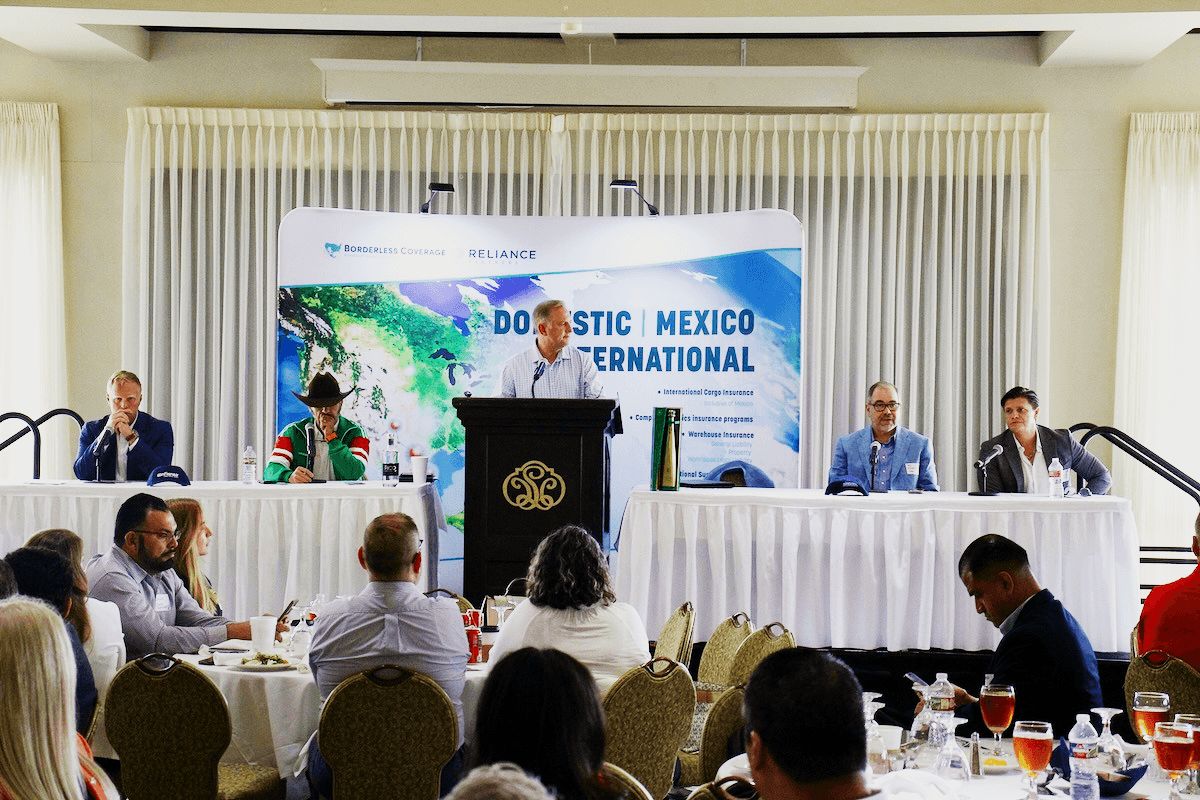
Reliance Partners acquired Borderless Coverage in 2021, and the Modernization of Cross Border event has grown each year alongside this acquisition. The post Tequila, Trucking, and the Future of the Border appeared first on FreightWaves.
Source Lens
Industry Context
Useful background context, but lower-priority than direct platform, community, or operator intelligence.
Impact Level
medium
Use this briefing to decide whether your team needs an immediate workflow, policy, or reporting change.
Key Stat / Trigger
No single quantitative trigger surfaced in this report.
Focus on the operational implication, not just the headline.
Full Coverage
What began nine years ago as a dinner gathering of roughly 20 people at a restaurant in Laredo, Texas, has grown into the largest U. S. -to-Mexico logistics event in the country.
On June 9, 2026, the 9th Annual Modernization of Cross-Border Trade (MCBT) convened at the Laredo Country Club, drawing representatives from more than 500 logistics companies eager to navigate a rapidly shifting cross-border landscape.
“The event started with only 20 people,” said Mark Vickers, founder of Borderless Coverage and Executive Vice President and Head of International Logistics at Reliance Partners, which hosts the event. “Now this is the largest U. S. to Mexico logistics event in the U. S.” That growth mirrors the trajectory of Borderless Coverage itself.
Vickers developed the company as an entrepreneurial venture. It was the first program to offer per-load, per-project, per-client cargo insurance coverage for shipments into Mexico. Reliance Partners, the largest privately held transportation and logistics insurance agency in the country, acquired Borderless Coverage in 2021.
The MCBT event grew right alongside this acquisition, evolving from an insurance-focused gathering into a premier forum for shippers, freight brokers, carriers, customs professionals, and technology providers operating across both sides of the border.
Where Tequila Met Trucking One of the most distinctive threads of this year’s event was the involvement of the tequila industry. The sponsorship story started with a feature article Vickers wrote for Tequila Aficionado exploring the risks of moving tequila between the U. S. and Mexico. The piece opened a conversation that led somewhere unexpected.
“I talked to the owners of Tequila Aficionado and asked if their network was interested in meeting logistics people,” Vickers said. The answer was yes. Top tequila brands signed on as sponsors, and the conference featured a guided tequila tasting for the assembled logistics professionals.
It was a hands-on demonstration of the kind of supply chain relationships the event was designed to foster. Tequila is the top import from Mexico into the United States, and the risks that come with moving that product across the border (cargo theft, insufficient insurance, unvetted carriers) are exactly what the MCBT event was built to address.
The 2026 sponsor lineup spanned the full breadth of the cross-border supply chain, from Descartes Systems Group and Evans Transportation to Green Corridors, Kuehne+Nagel, Averitt, and Cargado, which hosted a happy hour following the main conference sessions. It’s a far cry from the early years of the event.
“We didn’t even take sponsors the first five years,” Vickers said. “But now it’s sponsored by companies from Canada to Mexico.” Carrier Vetting at the Forefront The most urgent topic dominating this year’s conversations was one that has become impossible to ignore: how U. S.
companies can confidently vet Mexican carriers in a legal environment that now carries criminal stakes. The Trump administration’s designation of several Mexican cartels as foreign terrorist organizations has introduced a sobering liability calculation for U. S. freight brokers.
If a company tenders a shipment to a Mexican carrier with cartel ties, even unknowingly, the owner of that company could potentially face up to 20 years in federal prison for aiding and abetting a foreign terrorist organization. Combined with the recent Montgomery v.
Caribe Transport ruling, which reinforced broker liability standards for carrier selection, the imperative to vet Mexican carriers has never been more acute. “These developments have really put carrier vetting in Mexico at the forefront of the Mexican supply chain,” Vickers said.
“This is going to involve a rigorous process that Mexican carriers are not accustomed to. U. S. brokers are making Mexican carriers sign agreements and there are requirements for cargo insurance in Mexico.” For many U. S. companies, the question is no longer whether to vet their Mexican carrier partners, it’s how.
Vickers’ carrier vetting platform Confianza, developed in partnership with a Monterrey-based law firm and leading Mexican transportation tech firm, offers a solution: pre-vetted Mexican carriers that U. S. companies can work with confidently, knowing their partners have cleared a rigorous compliance and identity verification process. USMCA 2.
0 and the Green Corridors Vision The regulatory backdrop for this year’s event was particularly charged. July 1, 2026, marks the sixth anniversary of the USMCA signing, and the upcoming USMCA 2. 0 revision is set to reshape the terms of North American trade.
Expert panelists helped attendees understand what to expect from the renegotiated agreement and how to position their operations accordingly. Perhaps the most forward-looking discussion of the event centered on the Green Corridors initiative, a privately funded infrastructure project that could fundamentally transform the Laredo-Monterrey corridor. The pro
Original Source
This briefing is based on reporting from Freightwaves. Use the original post for full primary-source context.
Style
Audience