

Tariff exemptions: Ford, Nestlé and others seek relief from proposed levies
Companies are urging the Trump administration to protect additional imports from proposed Section 301 levies due to a lack of domestic availability.
Source Lens
Industry Context
Useful background context, but lower-priority than direct platform, community, or operator intelligence.
Impact Level
medium
Use this briefing to decide whether your team needs an immediate workflow, policy, or reporting change.
Key Stat / Trigger
No single quantitative trigger surfaced in this report.
Focus on the operational implication, not just the headline.
Full Coverage
An article from Tariff exemptions: Ford, Nestlé and others seek relief from proposed levies Companies are urging the Trump administration to protect additional imports from potential Section 301 levies due to a lack of domestic availability.
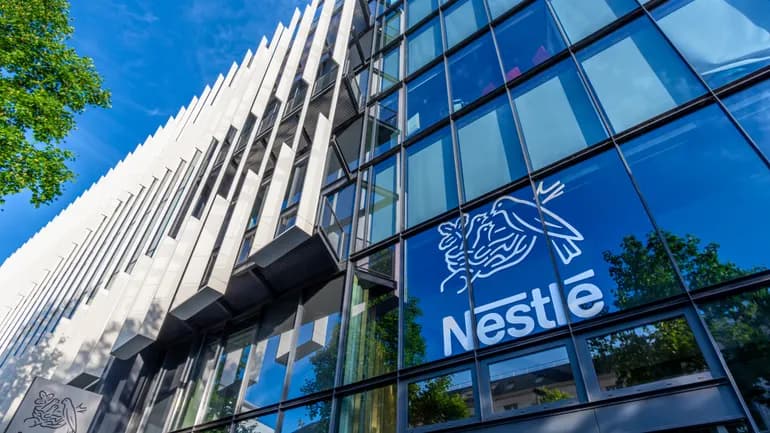
Published July 10, 2026 Phil Neuffer Lead Editor Max Garland Lead Reporter Share Copy link Email / Print License Add us on Google The Nestlé logo displayed on a building. Nestlé is one of several food manufacturers seeking tariff exemptions for goods that can't be produced in enough quantities the U. S. to meet demand.
Getty Images Listen to the article 6 min This audio is auto-generated. Please let us know if you have feedback. Major retailers and manufacturers are pushing for tariff exemptions as the Trump administration considers actions following multiple trade investigations spanning 60 trading partners.
This week, the United States Trade Representative held hearings related to proposed tariffs following Section 301 probes launched over the last year. The potential actions include a 25% levy on imports from Brazil and a 10% or 12. 5% tariff on goods from 60 trading partners.
The latter derives from USTR allegations of failure to effectively curtail products made with forced labor from entering the U. S. For both proposed tariffs, the USTR outlined a list of exempted goods that would not be covered by the levies if implemented, including entries covered by the United States-Mexico-Canada Agreement.
Additionally, the agency solicited comments from interested parties to help further refine the scope of the proposed levies. Ahead of the hearings, more than 1,500 stakeholders, including trade groups and individual businesses such as BJ's Wholesale Club and Ford Motor Co. , submitted written responses seeking additional product exemptions.
The requests cover numerous goods, including water filtration systems used for Brita filters, plastic injection molding machinery for uses in appliance manufacturing, and toys and Christmas decorations. Several companies said a lack of domestic production capacity or availability for certain goods meant exemptions were required.
Below is a detailed look at which goods retailers and manufacturers in specific industries would like shielded from potential tariffs resulting from the investigations. Retailers and manufacturers seek tariff relief The products for which companies across industries are seeking exemptions for proposed tariffs tied to trade investigations by the U. S.
Trade Representative. Retail Several retailers sought broad tariff exemptions across categories, while others requested protections for individual product types, such as salmon and olive oil.
Tractor Supply Company said the proposed forced labor tariffs would impact key sourcing markets for many of its products where domestic production is limited or not available.
“Imposing additional tariffs on essential rural goods for which there is no domestic capacity would not eliminate those foreign practices,” Seth Estep, EVP and chief merchandising officer for Tractor Supply, wrote. “Instead, this would burden a major U. S. retailer and its U. S. customers without changing the underlying sourcing constraints.”
Meanwhile, ecommerce giant eBay called for a blanket exemption for second-hand goods since the Section 301 tariffs are meant to crack down on production with forced labor.
“A tariff imposed at the point of secondary-market resale does not create any economic signal that reaches the original producer, much less any forced labor practice implicated in the good's initial manufacture,” Cathy Foster, VP of global government relations and public policy for eBay, wrote. “The tariff penalizes the resale of a good, not its production.”
Food manufacturing Food brands such as Mars Inc. , McCormick and Co. and Nestlé struck a similar chord in their exemption requests, noting that geography and climate made certain goods impossible to produce in enough quantities domestically to meet U. S. demand, necessitating importation.
For example, Mars said palm oil, largely imported from Thailand and Malaysia, should be covered by any exemptions to the proposed tariffs because domestic alternatives with equivalent quality “do not exist.”
In its appeal seeking exemptions for numerous spices and herbs, McCormick not only argued that such exemptions were necessary due to a lack of domestic availability, but that they would also “promote efficiencies in U. S. food ingredients manufacturing.”
Automotive manufacturing In its tariff proposals tied to the investigations, the USTR said that exemptions would be made for goods subject to Section 232 tariffs, such as those on cars, trucks, buses and auto parts. Ford F-150 trucks are assembled at a factory on Jan. 13, 2026, in Dearborn, Michigan. The automaker urged the U. S.
Trade Representative to consider critical technology manufacturing in considering new tariffs. Anna Moneymaker via Getty Images However, automotive manufact
Original Source
This briefing is based on reporting from Supply Chain Dive. Use the original post for full primary-source context.
Style
Audience