

Amazon Rufus Ads: What They Are, Who They Are For, and How Sellers Can Win.
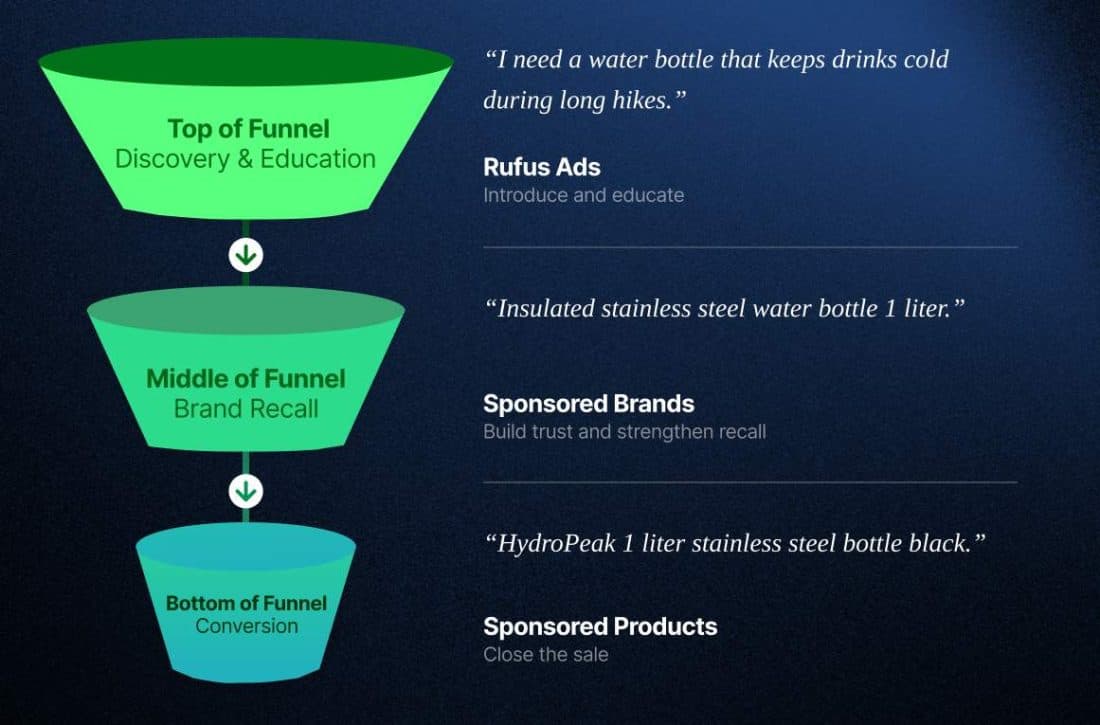
Amazon Rufus Ads (currently in beta) places sponsored products directly inside AI chat responses, shifting visibility from keyword bids to conversational relevance and intent alignment. Sellers optimizing only for keywords risk losing placement as Rufus filters by listing relevance, review strength, and contextual fit.
Listings written as keyword dumps will underperform in Rufus even with aggressive bids — the second-order effect is that listing copy quality becomes a direct ad efficiency lever. Rewrite bullet points and A+ content to answer full shopper questions, not just match search terms.
Amazon is accelerating AI-driven discovery to reduce dependence on traditional search, compressing the advantage of high-bid keyword strategies and raising the competitive floor for listing content quality across all seller tiers.
Audit your top 10 ASINs in Amazon's Search Term Report — if conversion rate is declining on long-tail queries (5+ words), your listing copy isn't answering conversational intent; rewrite bullets as question-answer format immediately.
Within 30 days, opt eligible campaigns into Rufus ad placements via Amazon DSP or Sponsored Products beta access, then segment Rufus placement data separately to measure CTR and ACOS against standard search placements.
Bottom Line
Rufus Ads rewards listing quality over bid size — keyword-only strategies lose.
Source Lens
Industry Context
Useful background context, but lower-priority than direct platform, community, or operator intelligence.
Impact Level
medium
Rufus Ads rewards listing quality over bid size — keyword-only strategies lose.
Key Stat / Trigger
No single quantitative trigger surfaced in this report.
Focus on the operational implication, not just the headline.
Full Coverage
Amazon Rufus Ads pins a drastic shift in how Amazon sellers get visibility. As online shopping moves from keyword search to conversational discovery, old-school Amazon advertising tactics are starting to take a back seat.
The problem is that most Amazon sellers and campaign managers still optimize for keywords, even after seeing a repetitive pattern of shoppers asking full questions like “Which sunscreen doesn’t make my skin oily and cause pimples?” instead of typing short search terms like “Non-Comedogenic Sunscreens”.
Rufus Amazon Ad is designed to bridge the gap between sellers and shoppers’ internet language. Rufus, an Amazon AI shopping assistant, subtly recommends ads that appear directly within the chat box. This helps sellers surface their products based on the seller’s intent, context, and relevance rather than just keywords.
This article talks about what Amazon Ads Rufus are, how they work, who they are actually for, who should wait, and how Amazon sellers can brace themselves for a blooming e-shopping experience that is becoming decisively conversational. Quick Guide: What Is Amazon Rufus? What Are Amazon Ads Rufus and How Do They Work?
Organic vs Sponsored Results in Amazon Rufus How are Amazon Rufus Ads Filtered for Product Recommendations? How Is the Amazon Rufus Ads Bidding Model Any Different From the Existing One? What Performance Metrics Really Matter? Who Should Wait Before Bidding on Amazon Rufus Ads?
Amazon Rufus Ads vs Sponsored Products vs Sponsored Brands (A Deep Dive into the Amazon Advertising Funnel) Run Ads on Amazon Rufus Wisely and What Sellers Are Still Wondering About? Challenges With Amazon Ads Rufus and How Sellers Can Solve Them Final Thoughts: Preparing for a More Conversational Amazon What Is Amazon Rufus?
What Are Amazon Ads Rufus and How Do They Work? Rufus is Amazon’s AI shopping assistant built directly into the Amazon app experience. Fundamentally, Amazon Rufus functions more like a chatty, knowledgeable shopping assistant than a conventional search bar.
The role of Rufus is to listen shopper’s questions, interpret intent, and then surface or recommend relevant products within the conversation itself. For sellers, this is very important as visibility inside Rufus is driven by how well the product aligns with the shopper’s question. Not just the product’s keywords.
On the other hand, Amazon Ads Rufus, while still in beta, is a new ad format that places a product’s ads directly inside AI-led conversations. It’s less of “who bids the most,” and more “Who fits the question”. Though the shift is subtle, it is very important. Instead of scrolling endlessly through search results, shoppers can ask real questions.
For example: Which running shoes are good for beginners? What should I look for in a beginner skincare routine? What kind of protein powder is best for muscle recovery? Amazon Rufus responds with explanations, comparisons, and product suggestions.
And rather than showing up as separate search results, Amazon Rufus ads are gently woven into a chat box where shoppers ask product-related questions, and Rufus recommends a list of products that address the shopper’s intent. For example, when a shopper asks, “What sunscreen won’t make my skin oily and dull?”
Rufus generates a response that may include product recommendations. An important thing to ponder is that some of these recommendations are organic, while others are clearly labeled as advertisements. Organic vs Sponsored Results in Amazon Rufus Of course, not everything you see in Rufus is paid. Rufus blends organic and sponsored results.
Organic visibility depends on listing relevance, review strength, performance history, and alignment with conversational queries. Sponsored visibility depends on ad eligibility, bid competitiveness, and relevance alignment. This blending is important because ad spend alone does not guarantee placement.
If your listing reads like a keyword spreadsheet, ads on Rufus may not prioritize it, even if you are bidding. A helpful way to think about Amazon ad Rufus is to compare it to influencer marketing. When an influencer creates content, some product mentions are organic, and others are sponsored, but both appear within the flow of the conversation.
Rufus operates similarly. Sponsored placements are labeled, but they are woven into AI-generated recommendations, making relevance more important than interruption. Clear communication matters. How are Amazon Rufus Ads Filtered for Product Recommendations? Unlike keyword-heavy placements, Amazon Rufus operates at a semantic level.
It attempts to understand what the shopper actually needs. This essentially means listings written in a natural, problem-solving language align better with conversational queries that the shopper asks. The product is going to be the same, but the change is in the matching logic.
This change is because Rufus decides what to surface by interpreting shoppers’ questions. It doesn’t focus on isolated search terms. It ev
Original Source
This briefing is based on reporting from SellerApp Blog. Use the original post for full primary-source context.
Style
Audience