

Tale of 2 segments at TFI: LTL steady, Truckload soaring
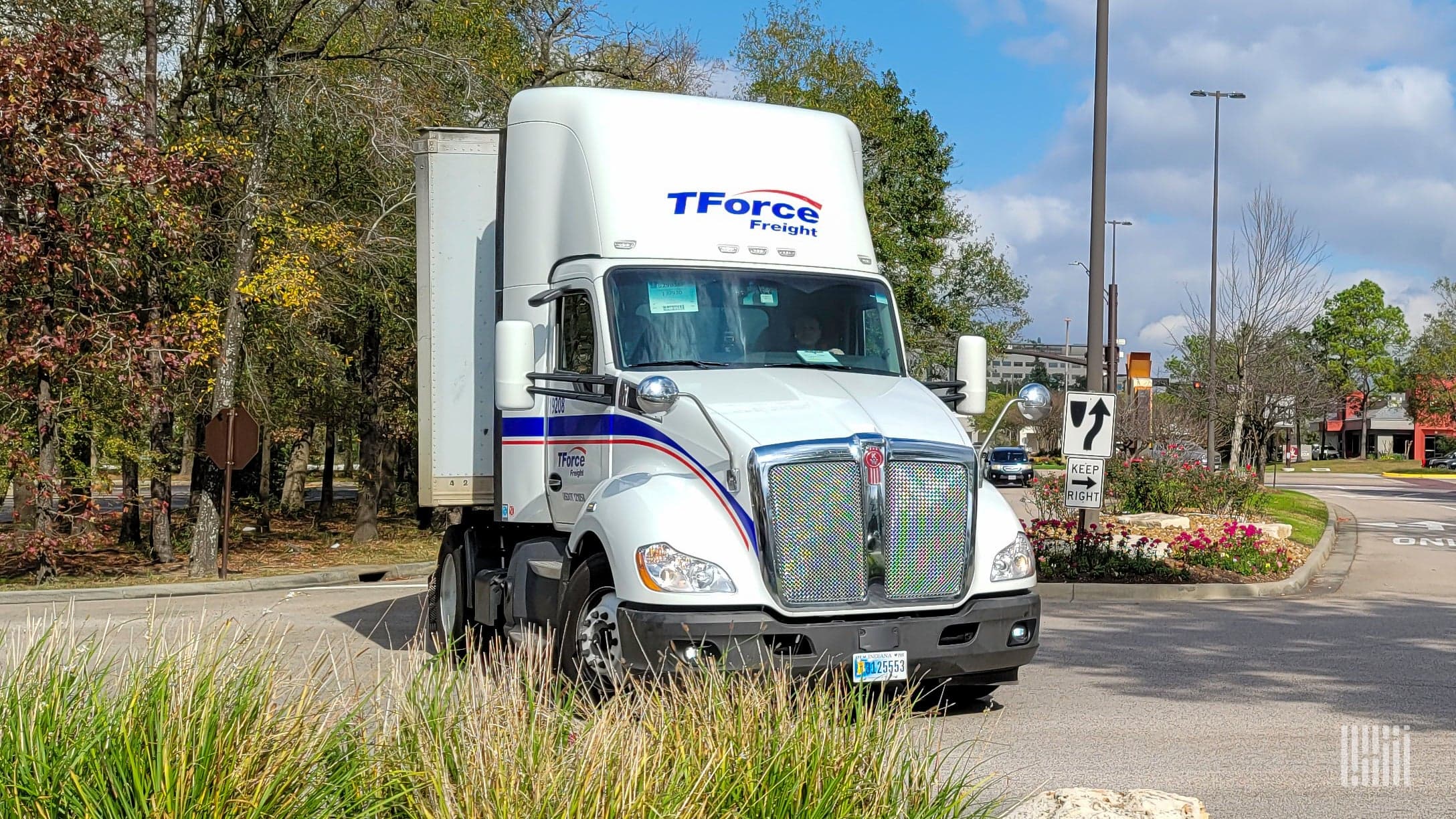
Truckload’s performance at TFI International far outstripped LTL in Q2. The post Tale of 2 segments at TFI: LTL steady, Truckload soaring appeared first on FreightWaves.
Source Lens
Industry Context
Useful background context, but lower-priority than direct platform, community, or operator intelligence.
Impact Level
medium
Use this briefing to decide whether your team needs an immediate workflow, policy, or reporting change.
Key Stat / Trigger
No single quantitative trigger surfaced in this report.
Focus on the operational implication, not just the headline.
Full Coverage
By most financial measures, the second quarter at TFI International was strong. Second quarter diluted earnings per share were up 41% to $1. 65 from the corresponding quarter a year ago. EBITDA was up more than 11%.
But underneath that, and what came through in Monday evening’s conference call with analysts, is that the rise in profitability came from the Truckload operations at TFI, as well as its Logistics segment, while LTL, which provided 41% of the revenue, improved but not as much as Truckload. window. googletag = window. googletag || {cmd: []}; googletag. cmd.
push(function() {googletag. defineSlot('/21776187881/FW-Responsive-Main_Content-Slot1', [[300, 100], [320, 50], [728, 90], [468, 60]], 'div-gpt-ad-1709668545404-0'). defineSizeMapping(gptSizeMaps. banner1). addService(googletag. pubads()); googletag. pubads(). enableSingleRequest(); googletag. pubads(). collapseEmptyDivs(); googletag.
enableServices(); }); googletag. cmd. push(function() {googletag. display('div-gpt-ad-1709668545404-0'); }); The difference between the two at TFI (NYSE: TFII) was most stark in their respective EBITDA margins. It was 18% for LTL, and 24. 1% for Truckload. (Logistics had a 16. 3% EBITDA margin). In the first quarter, the respective numbers were 12.
1% and 19. 5%. While the percentage gain was more for LTL in the quarter, that measure of profitability continues to lag Truckload. In one notable part of the conference call, CEO Alain Bedard and CFO David Saperstein talked about the differences in the markets for the two largest segments.
Supply, not demand “What we see on the pricing side of Truckload is very impressive,” Bedard said. “It’s mostly because of the supply constraint, not because demand is going through the roof.” Saperstein said in Truckload’s metric of revenue per truck per week, that measurement accelerated during the quarter.
Year-over-year, Saperstein said, that number was up 11. 1% in April, 13. 3% in May and 14. 4% in June. Bedard said the Truckload operating ratio (OR) in the first quarter was above 90%, 92. 7% to be precise. “And now we’re down to 86. 1%. I think that this is quite an accomplishment.” By contrast, LTL shipments were up 7.
5% in the quarter, but revenue per shipment was down 2%. window. googletag = window. googletag || {cmd: []}; googletag. cmd. push(function() {googletag. defineSlot('/21776187881/fw-responsive-main_content-slot3', [[728, 90], [468, 60], [320, 50], [300, 100]], 'div-gpt-ad-1665767553440-0'). defineSizeMapping(gptSizeMaps. banner1). addService(googletag.
pubads()); googletag. pubads(). enableSingleRequest(); googletag. pubads(). collapseEmptyDivs(); googletag. enableServices(); }); googletag. cmd. push(function() {googletag.
display('div-gpt-ad-1665767553440-0'); }); Bedard, asked by an analyst whether this current rising truckload market was different from past bullish periods, said that was “absolutely right.” “In a normal trucking environment, guys used to make a lot of money when the demand was high.” he said.
“It could last a month, it could last a year, it could last 18 months.” After that, demand would decline and the bull market would be over. “What I like about this market, which I’ve never seen before in 30 years, is now it’s the supply,” Bedard said. “I think this is more of a permanent thing than we’ve ever seen before.”
More volume in LTL means more costs In the company’s LTL operations, the rise in second quarter LTL volume–a 7. 53% increase in shipments year-on-year–was not an unalloyed good development at TFI, Bedard said. window. googletag = window. googletag || {cmd: []}; googletag. cmd. push(function() {googletag.
defineSlot('/21776187881/fw-responsive-main_content-slot4', [[300, 100], [320, 50], [728, 90], [468, 60]], 'div-gpt-ad-1709668086344-0'). defineSizeMapping(gptSizeMaps. banner1). addService(googletag. pubads()); googletag. pubads(). enableSingleRequest(); googletag. pubads(). collapseEmptyDivs(); googletag. enableServices(); }); googletag. cmd.
push(function() {googletag. display('div-gpt-ad-1709668086344-0'); }); “We incurred way too many costs in our second quarter operation because of this huge surge in volume,” Bedard said. “But our service suffered also.” Saperstein added that TFI is implementing changes in its LTL pricing, aided by technology.
“We now have tools where we’re taking spreadsheets with about 500,000 lines and tons of columns, tons of data,” he said. With technology tools, “we’re able to really isolate the problematic lanes, the problematic freight. And then we’re using that to help our pricing team go in and be real surgical and move faster.
We’ve able to treat large amounts of data in a way that we haven’t been able to in the past.” Daseke’s impact In Truckload, besides the loss of supply as a benefit, Bedard cited changes in the company’s specialized operations, much of which can be traced back to its acquisition of publicly-traded flatbed operator Daseke in 2024.
TFI’s financial performance was aided by a drop in depreciation of property and equipment, down 5. 6% year-on
Original Source
This briefing is based on reporting from Freightwaves. Use the original post for full primary-source context.
Style
Audience