

The Supreme Court and the White House Just Changed Everything for Freight Brokers, NVOCCs, Customs Brokers, Freight Forwarders, and Warehouse Operators
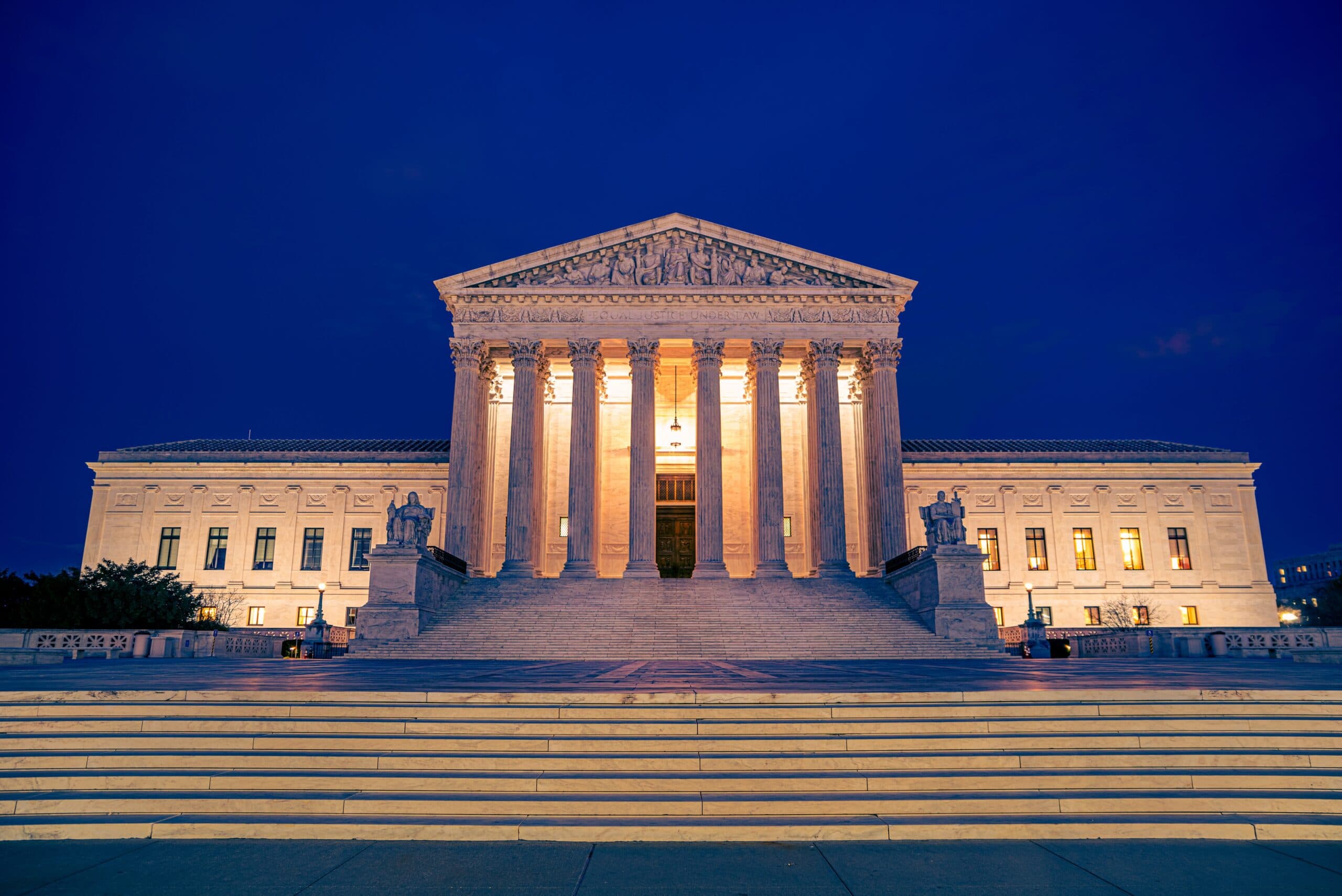
(The views expressed here are solely those of the author and do not necessarily represent the views of FreightWaves or its affiliates.) On May 22, 2026, the United States Supreme Court handed down a unanimous decision in Montgomery v. Caribe Transport II that removed a legal shield freight brokers have relied on for decades. Eleven […] The post The Supreme Court and the White House Just Changed Everything for Freight Brokers, NVOCCs, Customs Brokers, Freight Forwarders, and Warehouse Operators a
Source Lens
Industry Context
Useful background context, but lower-priority than direct platform, community, or operator intelligence.
Impact Level
medium
Use this briefing to decide whether your team needs an immediate workflow, policy, or reporting change.
Key Stat / Trigger
No single quantitative trigger surfaced in this report.
Focus on the operational implication, not just the headline.
Full Coverage
(The views expressed here are solely those of the author and do not necessarily represent the views of FreightWaves or its affiliates.) On May 22, 2026, the United States Supreme Court handed down a unanimous decision in Montgomery v. Caribe Transport II that removed a legal shield freight brokers have relied on for decades.
Eleven days later, a White House Executive Order extended compliance obligations across the entire logistics chain — targeting forced labor, misclassification, undervaluation, and illegal transshipment with criminal enforcement authority. These two events did not create new problems.
They exposed problems that already existed and handed plaintiffs’ attorneys and federal prosecutors the tools to act on them. The question every logistics operator should be asking right now is not whether they are compliant. It is whether they can prove it — cryptographically, at every handoff, in real time, in a format that holds up in federal court.
The answer, for most of the industry, is no. The question is not whether you are compliant. It is whether you can prove it — at every handoff, in real time, in a format that holds up in federal court. Here is what each entity type now faces and what the new documentation standard actually requires. 01 · FREIGHT BROKERS The preemption shield is gone.
Reasonable care is now a forensic standard. For twenty years, freight brokers operated behind a federal preemption shield. The Carmack Amendment and the FAAAA gave brokers a defensible argument that state negligent hiring claims did not apply to them. Montgomery v. Caribe Transport II eliminated that argument unanimously.
The Court’s holding is precise: state negligent carrier selection claims against freight brokers are not preempted by federal law. This means a plaintiff whose cargo was damaged, lost, or involved in an accident can now sue the freight broker directly for failing to exercise reasonable care in selecting the carrier. The critical word is reasonable.
The Court did not define it. That definition will be written in discovery, deposition, and verdict over the next five years. But the direction is unmistakable: reasonable care is moving toward a documentation standard, not an intention standard. Checking a carrier once at onboarding is no longer reasonable care.
A carrier who passes your FMCSA check at 9am can have their authority suspended by noon. You find out when the claim lands — and your onboarding record is the only documentation you have.
What reasonable care now requires for freight brokers: Live carrier screening at every load assignment — not cached, not periodic, not at onboarding only OFAC SDN and BIS Entity List verification at every handoff — not just at initial carrier setup ELD transit monitoring that is tamper-evident and cryptographically sealed A court-ready compliance certificate that documents every verification event with a forensic timestamp The freight broker who can produce that documentation when a plaintiff’s attorney requests discovery is in a fundamentally different legal position than the one who cannot.
The documentation does not eliminate liability. It defines the battlefield. 02 · NVOCCs You issue the bill of lading. You carry carrier-grade liability. Your OFAC exposure just doubled. Non-Vessel Operating Common Carriers occupy a uniquely exposed position in the post-Montgomery landscape.
Unlike freight brokers who arrange transportation, NVOCCs issue their own House Bills of Lading. They are carriers in the eyes of the law — which means they owe carrier-grade duties to shippers even though they do not operate the vessels.
This creates a compliance obligation that freight brokers do not face: the NVOCC is responsible for every party in the chain they assemble. The ocean carrier they book. The drayage operator at origin. The warehouse handling the cargo at the foreign port.
If any one of those parties appears on OFAC’s Specially Designated Nationals list — before, during, or after the shipment moves — the NVOCC has exposure. Civil OFAC violations can reach $377,700 per incident. The defense of ‘I’m just the forwarder’ carries no legal weight. NVOCCs are not forwarders. They are carriers. The compounding problem is timing.
OFAC adds and removes entities from the SDN list continuously. A consignee who was clean when the booking was confirmed may be listed by the time the vessel departs. An ocean carrier who was compliant when the service contract was signed may be flagged during transit.
The standard NVOCC compliance process — periodic screening, manual checks, annual reviews — does not address this exposure. It documents that you screened once. It cannot document that the party was clean at every moment that matters.
What the new standard requires for NVOCCs: live OFAC, BIS, IMO Registry, and Port State Control screening at every booking confirmation, vessel departure, and final delivery event, sealed to an immutable ledger with a forensic timestamp. Not a spreadsheet. No
Original Source
This briefing is based on reporting from Freightwaves. Use the original post for full primary-source context.
Style
Audience