

Russia, Strait of Hormuz combining to drive diesel higher after declines
It isn’t just what is going on in the Middle East that it starting to propel diesel prices higher. The post Russia, Strait of Hormuz combining to drive diesel higher after declines appeared first on FreightWaves.
Source Lens
Industry Context
Useful background context, but lower-priority than direct platform, community, or operator intelligence.
Impact Level
medium
Use this briefing to decide whether your team needs an immediate workflow, policy, or reporting change.
Key Stat / Trigger
No single quantitative trigger surfaced in this report.
Focus on the operational implication, not just the headline.
Full Coverage
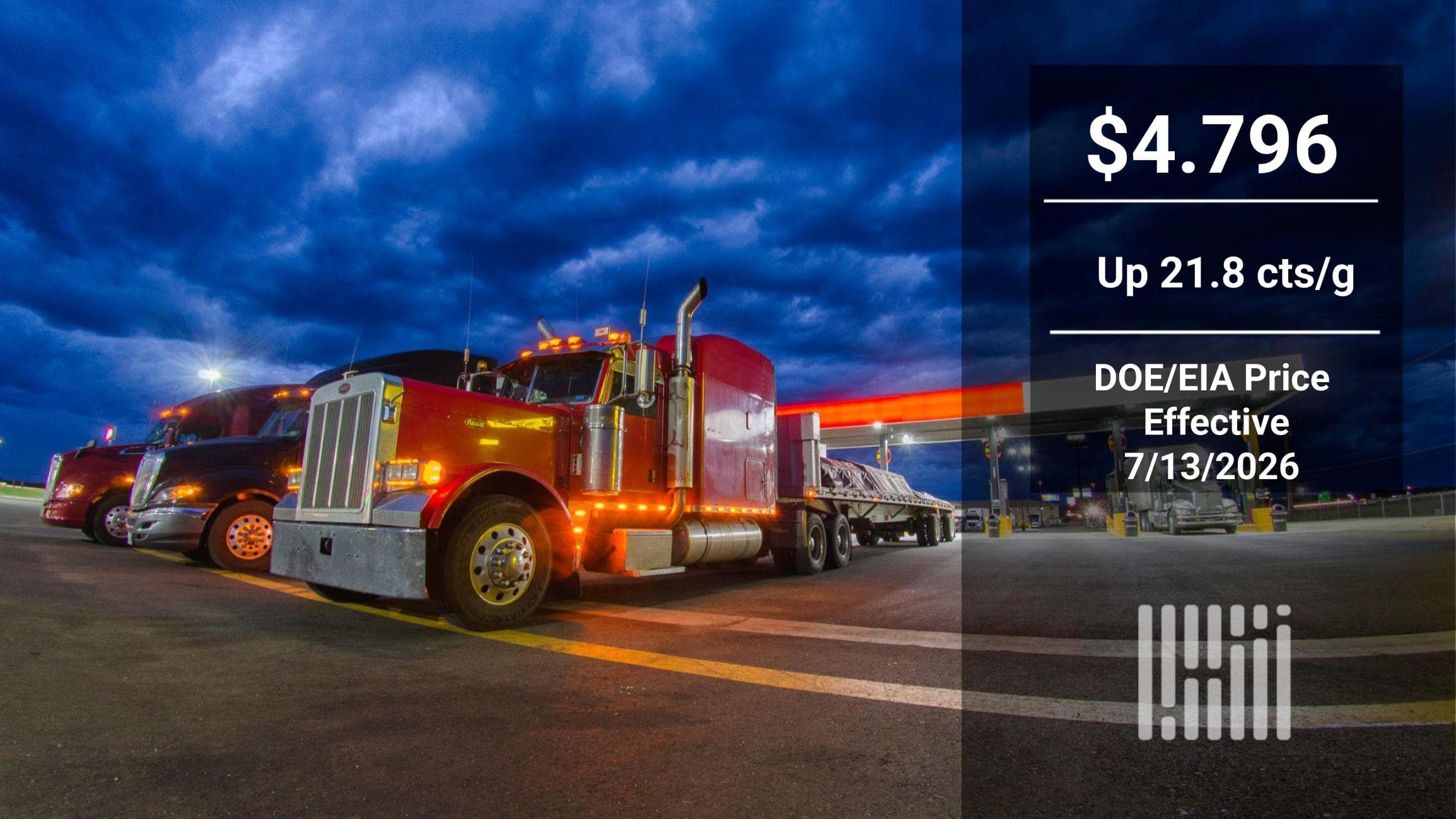
The benchmark price used for most fuel surcharges moved higher after nine consecutive increases with the prospect of even higher prices increasingly likely. The Department of Energy/Energy Information Administration average weekly retail diesel price rose 21. 8 cents/gallon to $4. 796/g, effective Monday and published Tuesday.
The increase retraces only a relatively small part of the nine-week decline; it is still less than where the price was just four weeks ago. It is also 84. 3 cts/g less than where it was in the final week before the consecutive declines.
But this week’s increase is starting to look like only the tip of the iceberg, given how markets have reacted to the latest eruption in military activity in the Persian Gulf and what can easily be described as chaos in knowing whether the Strait of Hormuz is open to traffic and how much it might cost to move a ship through there.
Increase in futures In the futures market, the price of ultra low sulfur diesel (ULSD) has soared in recent days. After a recent cyclical low settlement of $3. 1822/g on July 2, the deteriorating situation in the Gulf and the fact that Strait of Hormuz traffic has slowed drastically has seen ULSD climb to a settlement Monday of $3.
8236/g, an increase of just over 20% in six trading days. The Monday settlement is closer to the post-war high settlement of $4. 6084/g set on March 20 than it is to the final settlement of $2. 596/g before the war started over the weekend of February 28-March 1. The increase in prices continued Tuesday. At approximately 11:15 a. m. EDT, ULSD was up 9.
54 cts/g to $3. 9190/g, an increase of 2. 5%. But that marked a pullback from the intraday high which crossed the $4 mark, reaching as much as $4. 0242/g.
Russia’s impact While the oil market focus is inevitably on what is going on in the Persian Gulf and the Strait of Hormuz, the impact from Ukrainian attacks on Russian infrastructure is a growing threat to the supplies of oil products, diesel in particular.
According to press reports, the analytics firm of Kpler reported Tuesday that Russia’s volumes coming out of its refining sector had fallen to 21-year lows. Russia already had a ban on exports in place, but losing capacity means the country might need to import supplies and is even further away from lifting that ban.
Russian refinery runs are down to about 3. 8 million b/d, the Kpler report said, with about 4. 3 million b/d of capacity on the shelf due to the Ukrainian attacks. Kpler reported that at least 25 Russian refineries had been the targets of drone strikes.
In an interview last week with CNBC, Amrita Sen of Energy Aspects said Russian diesel exports historically had been in excess of 1 million b/d. “Last week it was only 270,000 barrels per day and now it is going to go down to a negligible level,” she said. Spread widening Diesel is moving higher at a faster pace than crude.
A comparison of the front month settlements between Brent crude, the world benchmark, and ULSD on CME produced a spread of about $1. 84/g Monday. That is one of the highest levels since the war began. On the last day of trading before the war commenced, that spread was about 87 cts/g.
More articles by John Kingston Index of driver pay, product of two companies, is surging Illinois employee driver v. contractor lawsuit now a class action fight Proposed EPA change keeps NoX limits in place, impacts other truck regulations The post Russia, Strait of Hormuz combining to drive diesel higher after declines appeared first on FreightWaves.
Original Source
This briefing is based on reporting from Freightwaves. Use the original post for full primary-source context.
Style
Audience