Amazon DSP ROI: How Enterprise Brands Measure Advertising Impact
Amazon DSP ROI influences more business decisions than any audience strategy, creative test, or bidding tactic. Not because the campaigns are underperforming, but because they’re often measured using the wrong metrics. When stakeholders rely on ACoS or last-click attribution alone, they undervalue DSP’s true contribution to customer acquisition and long-term growth. SellerApp’s 2026 State of… The post Amazon DSP ROI: How Enterprise Brands Measure Advertising Impact appeared first on SellerApp Bl
Source Lens
Industry Context
Useful background context, but lower-priority than direct platform, community, or operator intelligence.
Impact Level
medium
Use this briefing to decide whether your team needs an immediate workflow, policy, or reporting change.
Key Stat / Trigger
No single quantitative trigger surfaced in this report.
Focus on the operational implication, not just the headline.
Full Coverage
Amazon DSP ROI influences more business decisions than any audience strategy, creative test, or bidding tactic. Not because the campaigns are underperforming, but because they’re often measured using the wrong metrics.
When stakeholders rely on ACoS or last-click attribution alone, they undervalue DSP’s true contribution to customer acquisition and long-term growth. SellerApp’s 2026 State of Amazon Advertising report, built from $3B+ in managed ad spend across 33,000+ brands, found that DSPs’ share of total Amazon ad spend grew from 17. 7% to 23. 4% across 2025.
More than one in three DSP-attributed purchases came from customers who had never bought from the brand before, and DSP clicks grew 156% year over year in Q1 2026. These signals point to a channel that’s expanding customer acquisition and demand generation, even if that impact isn’t fully reflected in traditional last-click metrics.
Amazon DSP isn’t underperforming. It’s often being undermeasured. You’ve been there. Three months into a DSP campaign, your client pulls up the dashboard, squints at the ACoS, and says, “This is worse than before we started.” And you’re sitting there knowing the campaign is working. New customers are coming in. Branded search is up.
Organic rank is quietly improving. You just can’t prove any of it before they start cutting budget. That’s not a DSP problem. That’s a reporting problem. In this guide, you’ll find the complete framework for measuring, reporting, and defending Amazon DSP ROI in a way that clients actually understand and trust, before the first invoice hits, not after.
Quick GuideWhy Your Best DSP Work Looks Like Failure on a Client DashboardWhat Amazon DSP Advertising ROI Actually Looks LikeAmazon DSP KPIs That Prove ROI (When ACoS Can’t)Amazon DSP ROI Measurement: Attribution That Clients TrustThe Anatomy of a DSP Report Clients Actually UnderstandHow SellerApp Simplifies Amazon DSP ROI ReportingProving Amazon DSP ROI in Client Conversations: Objection HandlingSet the ROI Narrative Before Launch, Not After the First InvoiceConclusion: From ACoS Obsession to Total Growth AccountingFAQs Why Your Best DSP Work Looks Like Failure on a Client Dashboard The root of most DSP client conflicts isn’t performance.
It’s measurement. When you apply a Sponsored Products metric to a demand creation channel, you get numbers that look broken even when the underlying strategy is working perfectly. Understanding why that happens is the first thing you have to get right before anything else in this playbook matters.
amazon dsp advertising roi How ACoS Rewards Demand Capture and Punishes Demand Creation ACoS was built for Sponsored Products. It measures how much ad spend it took to generate a direct, last-click attributed sale. That model works fine when someone searches “vitamin C serum,” sees your ad, clicks, and buys. Clean. Simple. One-to-one.
But Amazon DSP doesn’t work that way. DSP is an impression-based channel. You’re showing ads to people who are browsing, watching content, living their lives. They’re not raising their hand yet. You’re creating the intent before they even know they need you. Think of it this way. Sponsored Products is like a salesperson at the checkout counter.
When the customer walks up ready to buy, they close the deal. ACoS measures how expensive that salesperson is per sale. DSP is like a billboard on the highway. It puts your brand in someone’s head. Three days later, they search Amazon for your product category and convert through a Sponsored Products ad. The SP ad gets credit.
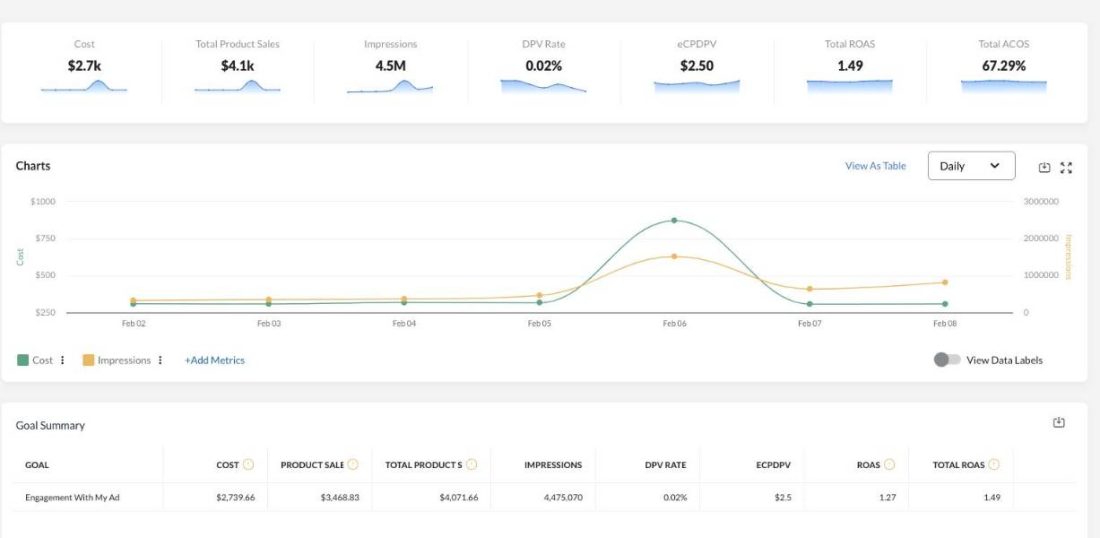
The DSP campaign gets nothing, even though it started the whole journey. This is why brands who judge Amazon DSP ROI purely through ACoS are reading the wrong scorecard entirely. Amazon DSP ACoS vs ROAS (Why Neither Metric Alone Tells the Full Story) Let’s say you’re running DSP for a pet food brand. Your DSP ACoS looks ugly, around 65%.
Your client is concerned. But here’s what the dashboard isn’t showing you. That same campaign is driving a 36. 5% new-to-brand purchase rate. That is customer acquisition, and it has a lifetime value that ACoS will never capture. ROAS gives you a slightly better picture because it flips the equation and at least tells you whether you’re generating returns.
SellerApp’s benchmark data puts DSP video ROAS at 2. 4X on average across brand objectives. Not as flashy as your top Sponsored Products campaigns, but remember, those SP campaigns are often harvesting demand that DSP prospecting created. ACoS and ROAS are outcome metrics for demand capture. Amazon DSP ROI requires demand creation metrics.
They’re different games with different scoreboards. The “Lower ACoS by Cutting DSP Spend” Illusion Clients Fall For This is the dangerous one. A client sees high blended ACoS and tells the agency to cut DSP spend. The agency cuts it. ACoS drops. Everybody celebrates.
Then 60 days later, Sponsored Products efficiency starts declining too, because DSP was quietly feeding the top of the funnel, keeping branded
Original Source
This briefing is based on reporting from SellerApp Blog. Use the original post for full primary-source context.
Style
Audience